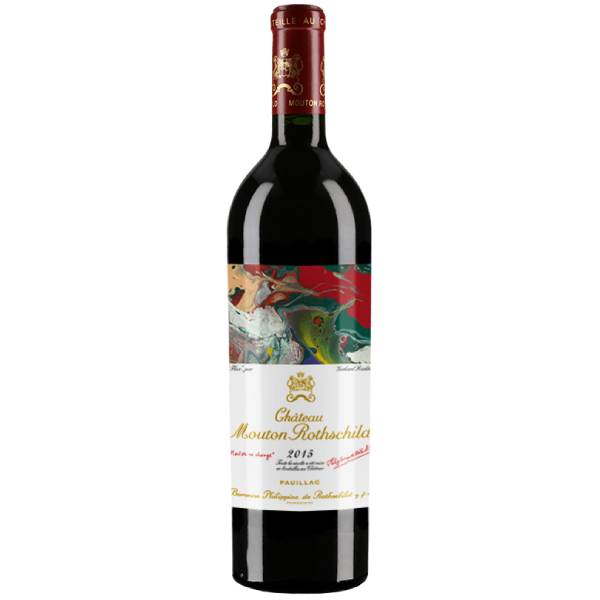
2015 (Premiers Crus)
฿฿฿฿
SaleRated 99/100 by James Suckling (top 3% of their reviews).
From our sommelier team
A Pauillac First Growth from the Rothschild family estate, elevated to First Growth status in 1973, the only change made to the original 1855 Bordeaux classification.
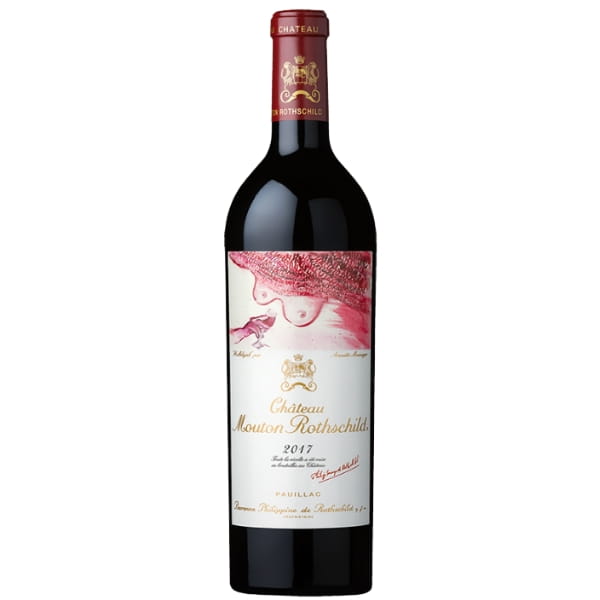
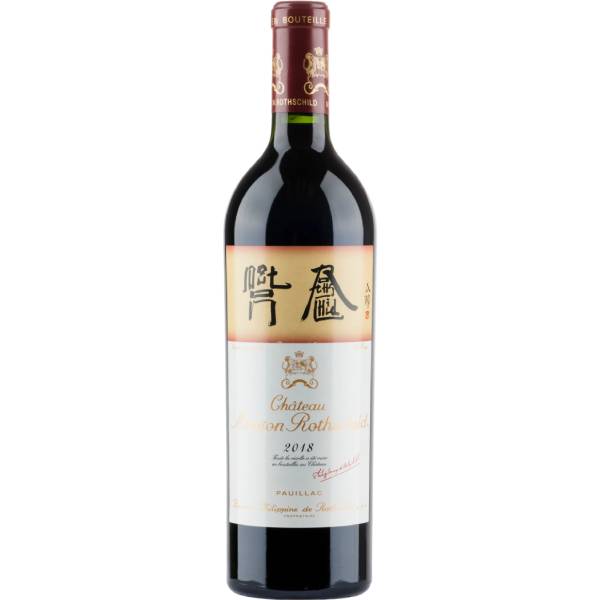
Château Mouton Rothschild is a Pauillac estate whose wine was classified a Second Growth in the original 1855 Bordeaux classification, despite fetching prices on par with the First Growths even at the time. Baron Philippe de Rothschild spent nearly two decades lobbying for reclassification, and in 1973 the French government under Agriculture Minister Jacques Chirac formally elevated Mouton to First Growth status, the only amendment ever made to the 1855 hierarchy (aside from the separate 1856 addition of Château Cantemerle). The estate marked the occasion with a label bearing the motto "Premier je suis, second je fus, Mouton ne change" (First I am, second I was, Mouton does not change). Mouton is also known for commissioning a different contemporary artist to create original artwork for its label nearly every vintage, a tradition that began in 1945 with artist Philippe Jullian's "V for Victory" design marking the end of the Second World War. The wine itself is a Cabernet Sauvignon-dominant Bordeaux blend typical of Pauillac's gravel-soil terroir, built for long cellaring.
Producer history
The Rothschild family's ownership of what became Château Mouton Rothschild dates to the mid-19th century, with Baron Philippe de Rothschild taking over management of the estate in the 1920s and driving much of its modern reputation, including pioneering estate-bottling in Bordeaux and the artist-label program he initiated in 1945. His decades-long campaign to overturn Mouton's 1855 Second Growth ranking culminated in the 1973 reclassification to First Growth. The estate remains associated with the Rothschild family name and is one of the most recognized producers in Bordeaux, both for the wine and for the label art itself, which has featured commissioned works by numerous well-known artists over the decades.
Signature pairings
- Roast rack of venison — A classic Pauillac pairing: the wine's firm, gravel-soil tannin and cassis-cedar profile need the density and slight gaminess of venison to show balance rather than austerity.
- Roasted duck breast with red wine jus — Duck's fat renders and coats the palate, softening the wine's structured tannin, while a reduction-based jus bridges the dish to the wine's own dark-fruit and savory notes.
- Aged hard cheeses (Comté or aged cheddar) — Firm, nutty aged cheeses provide fat and salt without overwhelming aromatics, letting the wine's tannin resolve gently, a traditional way to finish a Bordeaux First Growth at the table.
In 1924, Baron Philippe de Rothschild made a decision that would reshape all of Bordeaux: he began château-bottling his own wine, a practice then considered radical and now universal across the Médoc. That same instinct for deliberate transgression culminated in 1973 when Mouton became the sole estate ever reclassified under the 1855 system — promoted from Second to First Growth by ministerial decree, prompting the motto: Premier je suis, second je fus, Mouton ne change.
The Plateau de Mouton sits at 27 m elevation in northern Pauillac, its soils composed of Günzian gravel descending over 5 metres onto clay-limestone and iron-rich marl. That extraordinary depth drains aggressively while the gravel mass retains heat, accelerating phenolic ripeness in Cabernet Sauvignon and concentrating the dark-fruit density that defines Mouton's hedonistic register.
Grapes are hand-harvested and gravity-fed into 44 oak fermentation vats — one of the last such regimes in the Médoc — enabling parcel-by-parcel vinification with minimal mechanical stress. Malolactic fermentation occurs in tank; the wine then ages 19–22 months in 100% new French oak barriques (medium toast), first in the 100-metre Grand Chai designed by Charles Siclis in 1926. Fined with egg white before bottling. Only the finest parcels — at most 50% of estate production — qualify as Grand Vin.
The 2015 vintage is not individually documented in the château's published notes, but falls between the structured 2014 and the opulent 2016; Petit Verdot was absent from blends through 2015, making this a Cabernet Sauvignon–Merlot–Cabernet Franc construction. Approach with patience; the 2016 drinks from 2026, suggesting 2015 rewards cellaring through the late 2020s at minimum.
Details
- Country
- France
- Region
- Bordeaux
- Subregion
- Pauillac
- Variety
- Cabernet Sauvignon, Merlot, Cabernet Franc
- Vintage
- 2015 **
- Bottle size
- 750 ml
** Vintage may change — please confirm with our team before ordering.
Taste profile
- Body
- Full
- Acidity
- Medium
- Tannin
- High
Pairs well with
- Lamb dishes
- Cured meats & charcuterie
- Grilled red meat & steak
- Duck & game birds
- Mexican & Latin
Sommelier’s pick: Roasted rack of lamb with black truffle jus · Dry-aged côte de bœuf with bone marrow butter · Braised Wagyu short rib with morel mushrooms
Interested? Talk to us
Message us to check item availability and information.
Community rating
Loading reviews…