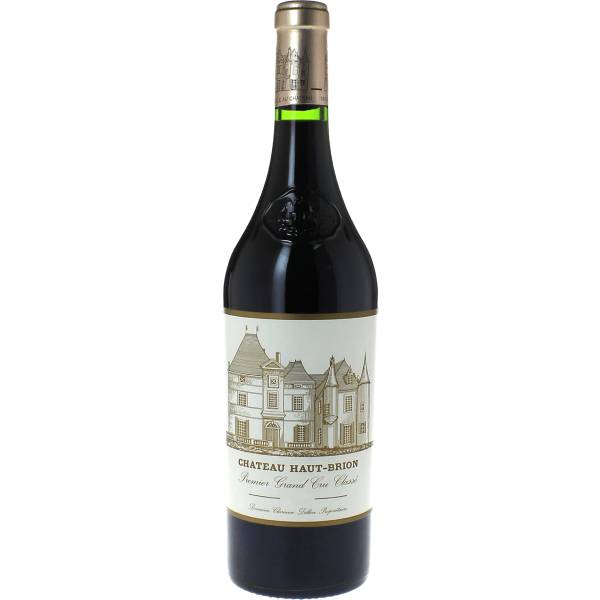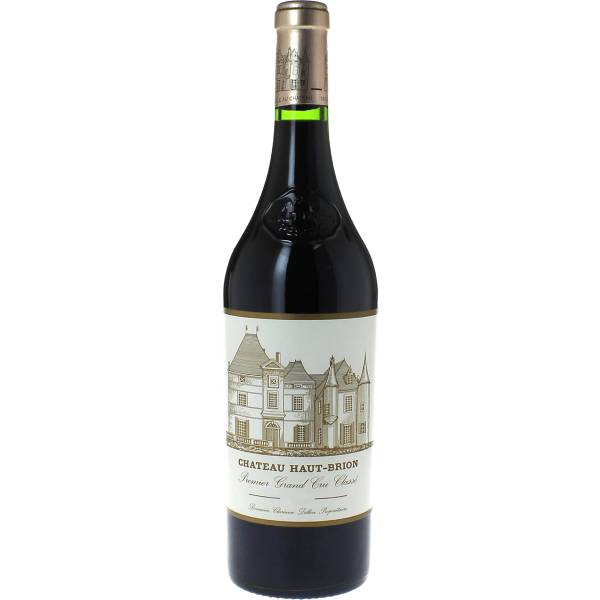
Chateau Haut-Brion 1er Grand Cru Classe 2019
฿฿฿฿
SaleRated 100/100 by James Suckling (top 1% of their reviews).
From our sommelier team
The only Graves estate among the five First Growths of the 1855 classification, and the only First Growth located outside the Médoc — a Bordeaux blend built on distinctive gravelly Pessac-Léognan soils.
Château Haut-Brion sits in the Pessac-Léognan appellation within Graves, on gravelly soils composed of quartz-rich stones over clay, sand, limestone, and shelly sand subsoil — a terroir distinct from the Médoc's gravel mounds. Its vineyard history is exceptionally old even by Bordeaux standards, with winegrowing on the site traceable back to Roman-era Gaul and documented viticulture from the early 16th century, predating its Médoc First Growth peers. The estate's reputation was already established internationally by the 17th century; Samuel Pepys praised the wine by name in his diary in 1663, an early instance of a Bordeaux château being marketed and recognized as a named brand rather than a generic claret. In the 1855 classification, drawn up for the Paris International Exhibition, Haut-Brion was the sole Graves property included among the Médoc-dominated First Growths, a recognition of quality that by then had already stood for centuries rather than a new judgment. The wine is a classic Left Bank Cabernet Sauvignon-led blend with Merlot and Cabernet Franc, typically showing structured tannin, gravelly minerality, and a savory, tobacco-inflected profile alongside dark fruit.
Producer history
The estate's viticultural roots are documented from the early 1500s, making it one of the oldest continuously recognized wine properties in Bordeaux. Ownership passed through various French families before American banker Clarence Dillon purchased the château in 1935 for 2.3 million francs, after a chance visit the previous year. Dillon installed his nephew Seymour Weller as president of the operating company, a post Weller held for roughly five decades while modernizing the estate's facilities; longtime régisseur Georges Delmas, who had directed the property since 1921, was retained through the transition. Weller retired in 1975 and was succeeded by Joan Dillon (Clarence's granddaughter, later Duchesse de Mouchy); her son Prince Robert of Luxembourg became president of Domaine Clarence Dillon in 2008 and continues to lead the company. The Dillon family's ninety-year-plus stewardship is the longest continuous ownership of any major Bordeaux estate by a single family, notable in particular for being American.
Signature pairings
- Roast rack of veal with morel sauce — Veal's delicate richness and earthy morels complement the wine's savory, gravelly minerality without overwhelming its structured but not overly heavy tannin.
- Aged Comté or a firm washed-rind cheese — A classic Bordeaux cheese-course pairing: firm, nutty cheese matches the wine's tannic backbone while its savory depth doesn't compete with delicate fruit notes.
- Grilled beef larb with toasted rice (ลาบเนื้อ) — Larb's grilled beef and toasted rice powder provide savory, earthy weight that can stand up to Haut-Brion's tannin, though this pairing works best with a milder preparation — heavier chili use would clash with the wine's structure, so this is a moderate-heat call rather than a full-heat version.
When Samuel Pepys recorded drinking 'Ho Bryan' at the Royall Oak Tavern in 1663, he was describing wine from a property that had already been producing documented grand vin for over a century — and one that would be classified in 1855 as a special exception, the sole non-Médoc estate in the entire First Growth tier. That singular status is not honorary; it is geological. Haut-Brion sits on two ancient gravel croupes in Pessac, just 5 km from central Bordeaux, where rare Günzian gravel — Pleistocene-era quartz pebbles found nowhere else on the Left Bank — drains aggressively while retaining daytime heat, and the surrounding urban fabric creates a warmer microclimate that consistently delivers among the earliest harvests in Bordeaux, with more reliable phenolic ripeness than any Médoc peer. Fermentation occurs in Haut-Brion's proprietary double-skinned stainless steel vats (the estate introduced stainless steel to Bordeaux in 1961), followed by 14–18 days maceration with gentle remontage using selected Davis 522 yeast. Blending is completed unusually early — by November or December of the harvest year, before oak influence begins — then the wine ages 18–24 months in French oak from the estate's own cooperage, new-oak percentage calibrated to vintage weight. Bottled unfiltered. The 2019 growing season delivered a cool summer with ideal, gradual ripening: the result is a wine of superb richness-to-freshness equilibrium, silky tannins, and subtle Günzian minerality, with the higher Merlot proportion (~45%) giving characteristic suppleness absent from Médoc First Growths. Drink 2027–2055.
Details
- Country
- France
- Region
- Bordeaux
- Subregion
- Pessac-Léognan
- Variety
- Merlot, Cabernet Sauvignon, Cabernet Franc
- Vintage
- 2019 **
- Bottle size
- 750 ml
** Vintage may change — please confirm with our team before ordering.
Taste profile
- Body
- Full
- Acidity
- Medium-High
- Tannin
- Medium-High
Pairs well with
- Duck & game birds
- Cured meats & charcuterie
- Pork dishes
- Hard & aged cheese
- Lamb dishes
Sommelier’s pick: Roasted Périgord duck breast with black truffle jus · Grilled Wagyu ribeye with bone marrow butter · Braised Ibérico pork cheek with smoked paprika and lentils
Interested? Talk to us
Message us to check item availability and information.
Community rating
Loading reviews…