 Log in to view
฿฿฿฿
Researched by our team from producer and independent sources — not supplied by the seller.
Vines have grown on the site since the fourteenth century, and Thomas Jefferson rated the vineyard first quality in 1787. The property was divided during the French Revolution, reunited in 1841, and the Societe Civile de Chateau Latour was formed in 1842. Latour was named a First Growth in the 1855 Classification, and the present chateau was completed in 1864.
Family control, which had passed through the de Clauzel and then the Segur lines, ended in 1963, when the Segur heirs, by then named de Beaumont, sold three-quarters of the shares to Pearson Group interests under Lord Cowdray; Henri Martin and Jean-Paul Gardere were appointed managers and Latour became the first First Growth to replace its oak fermenting vats with temperature-controlled stainless steel.
Allied Lyons bought the estate in 1989 for around 110 million pounds, and sold it in 1993 to Francois Pinault, who acquired it through his holding company Artemis for about 86 million pounds and owns it still. Frederic Engerer joined in 1995, was appointed manager in 1998, and is now president and chief executive.
Roast rack of lamb with thyme and garlic
The firm Cabernet Sauvignon tannins bind to the fat and protein in lamb, softening the wine's structure on the palate. Roasted herb and garlic aromatics sit alongside the savoury, cedar-edged character mature Pauillac develops.
Grilled beef short rib with black pepper and coriander root (ซี่โครงวัวย่างพริกไทยดำรากผักชี)
A Thai grill preparation seasoned with black pepper, garlic and coriander root rather than chilli keeps the dish savoury, so the wine's tannin is met by charred beef fat instead of capsaicin heat. Chilli-forward versions would amplify the tannic grip and should be avoided.
Aged Comte, twenty-four months
A hard, nutty aged cow's-milk cheese has enough fat and salt to round out the tannins without the pungency that would clash with a structured Cabernet blend. Its long, savoury finish runs parallel to the wine's.
Product information compiled from producer, importer and reference sources.
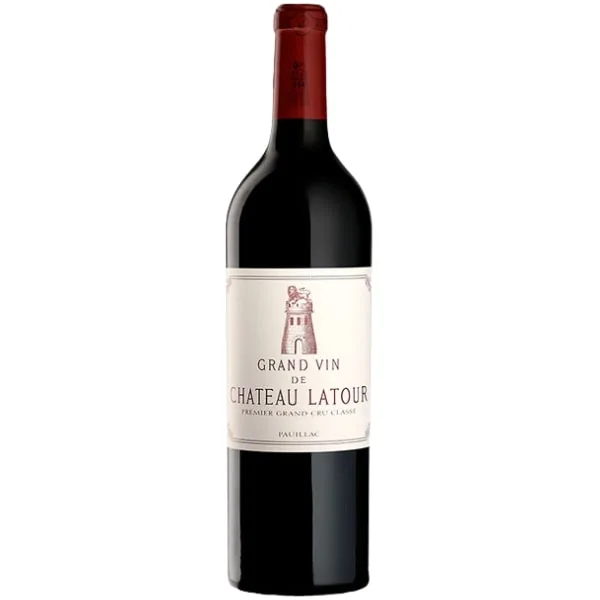
L'Enclos Grand Vin from Latour's first post-en-primeur era: deep gravel croupes, 100% new French oak, released only when deemed ready.
In 2012, Château Latour became the first First Growth to abandon the en primeur system entirely — releasing wines only when the estate judges them ready to drink, a commercial rupture no peer has replicated. The 2013 Grand Vin is among the earliest expressions of that philosophy, arriving on the market years after the vintage rather than months.
L'Enclos, the 47-hectare walled parcel just 300 metres from the Gironde Estuary, provides the sole source: deep gravel croupes over blue, red, and grey clay-slate subsoil, farmed biodynamically with horses since 2008 to preserve soil structure. The Gironde's
moderating influence — reducing frost risk and slowing ripening — is precisely what allows Latour to maintain quality in a cool, challenging year like 2013, where other Pauillac estates struggled.
Vinification proceeds parcel-by-parcel in 80 temperature-controlled stainless steel vats, with approximately three weeks of skin contact and malolactic fermentation completed in tank before the wine moves to 100% new French oak barriques for 18–24 months in one of the Médoc's only subterranean barrel cellars, dug below the water table.
The 2013 skews toward the typical Grand Vin blend of roughly 75–80% Cabernet Sauvignon with Merlot and Cabernet Franc, the cooler season preserving firm tannic architecture and graphite-driven austerity over opulence. Latour's vintage consistency — its defining structural advantage over the other four First Growths — makes 2013 a genuine expression of L'Enclos terroir rather than a compromise year.
Sommelier’s pick: Roasted rack of lamb with rosemary jus · Dry-aged côte de boeuf with bone marrow butter · Braised short rib with black truffle gremolata
Loading notes…
Tasted this?
Ask us on LINE.
Ask about this item