 Log in to view
฿฿฿
Rated 96/100 by Wine Enthusiast (top 12% of their reviews).
WNLQ9 vintage signal, averaged from Wine Enthusiast Wine Vintage Chart 2026 Edition's 3 closely-agreeing Bordeaux 2017 ratings (Bordeaux Pomerol/Saint-Emilion; Bordeaux Medoc; Bordeaux Graves Red).
A vintage grade rates the growing season in this wine’s region — not this specific bottle. Source.
Researched by our team from producer and independent sources — not supplied by the seller.
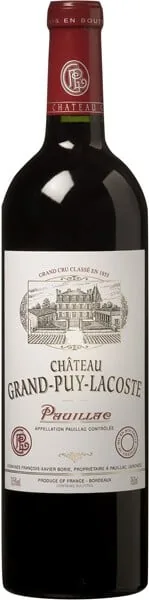
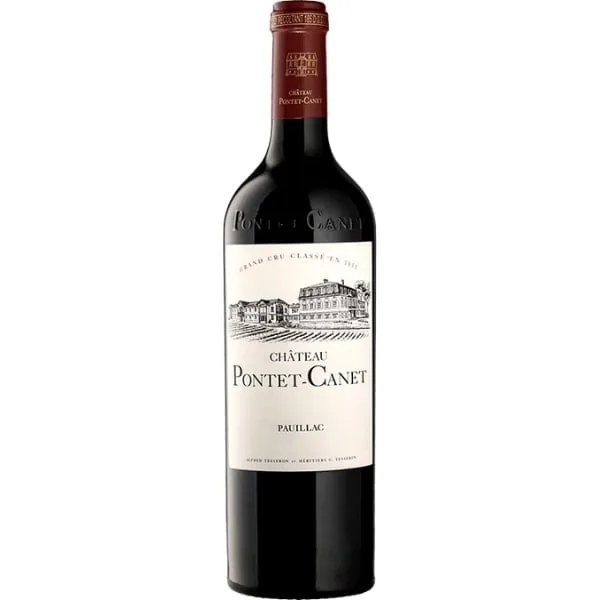
A Pauillac red from around 81 hectares of deep gravel over clay and limestone, in almost a single block of vines next to Mouton Rothschild. The blend averages roughly 62 percent Cabernet Sauvignon, 32 percent Merlot, 4 percent Cabernet Franc and 2 percent Petit Verdot.
Since 2012 a portion of the crop — reported at up to a quarter — has been aged in large amphorae alongside French oak barrels rather than in barrel alone, a choice that gives the wine less overt oak sweetness than is typical for the appellation.
Grilled lamb chops with rosemary
Classic Pauillac match: the char and lamb fat tame Cabernet Sauvignon's tannic frame while rosemary meets the wine's savoury edge.
Braised beef short rib
Long-braised collagen and a reduced sauce give a tannic Cabernet-led red the weight and fat it needs to sit comfortably.
Roast venison loin with beetroot
Lean game and earthy root vegetables suit a wine whose amphora-aged component leans savoury rather than sweetly oaked.
Product information compiled from producer, importer and reference sources.
Biodynamic 5th Growth from Günz-era gravel over limestone; indigenous-yeast fermentation, 35% concrete dolia aging — Pauillac redrawn without oak dominance.
When Alfred Tesseron certified all 81 hectares of Pontet-Canet under both Ecocert and Biodyvin in 2010 — the first Médoc classified growth to do so — the decision was not cosmetic: it forced a complete rethinking of extraction, vessel choice, and cellar design, culminating in a 2017 facility built with hemp insulation and 12-volt LED lighting to eliminate electromagnetic interference during élevage.
The estate's core plateau sits on Günz-era Garonne gravel over limestone bedrock, poor and sharply drained, concentrating Cabernet Sauvignon into tight, mineral-driven fruit; a secondary zone of clay-limestone closer to the Gironde carries the ≈32% Merlot component, adding mid-palate density without diluting structure.
Hand harvest with double manual sorting, hand destemming above the vat (introduced 2017), and gravity-fed transfer into custom 40 hl conical concrete tanks precede indigenous-yeast fermentation with soft extraction. Élevage runs 16–18 months across three
vessels: ≈50% new French oak barriques, 35% custom limestone-and-cement dolia (introduced 2012, a vessel type unprecedented at this classification level in Bordeaux), and 15% second-fill French oak.
The 2017 vintage delivered a cooler, more tension-driven Pauillac than the opulent 2016, with the dolia fraction preserving fruit clarity and saline minerality. Drink 2025–2042.
Sommelier’s pick: Rack of lamb with herbed jus and flageolet beans · Roasted côte de bœuf with bone marrow butter · Duck confit with lentilles du Puy
Loading notes…
Tasted this?
Ask us on LINE.
Ask about this item