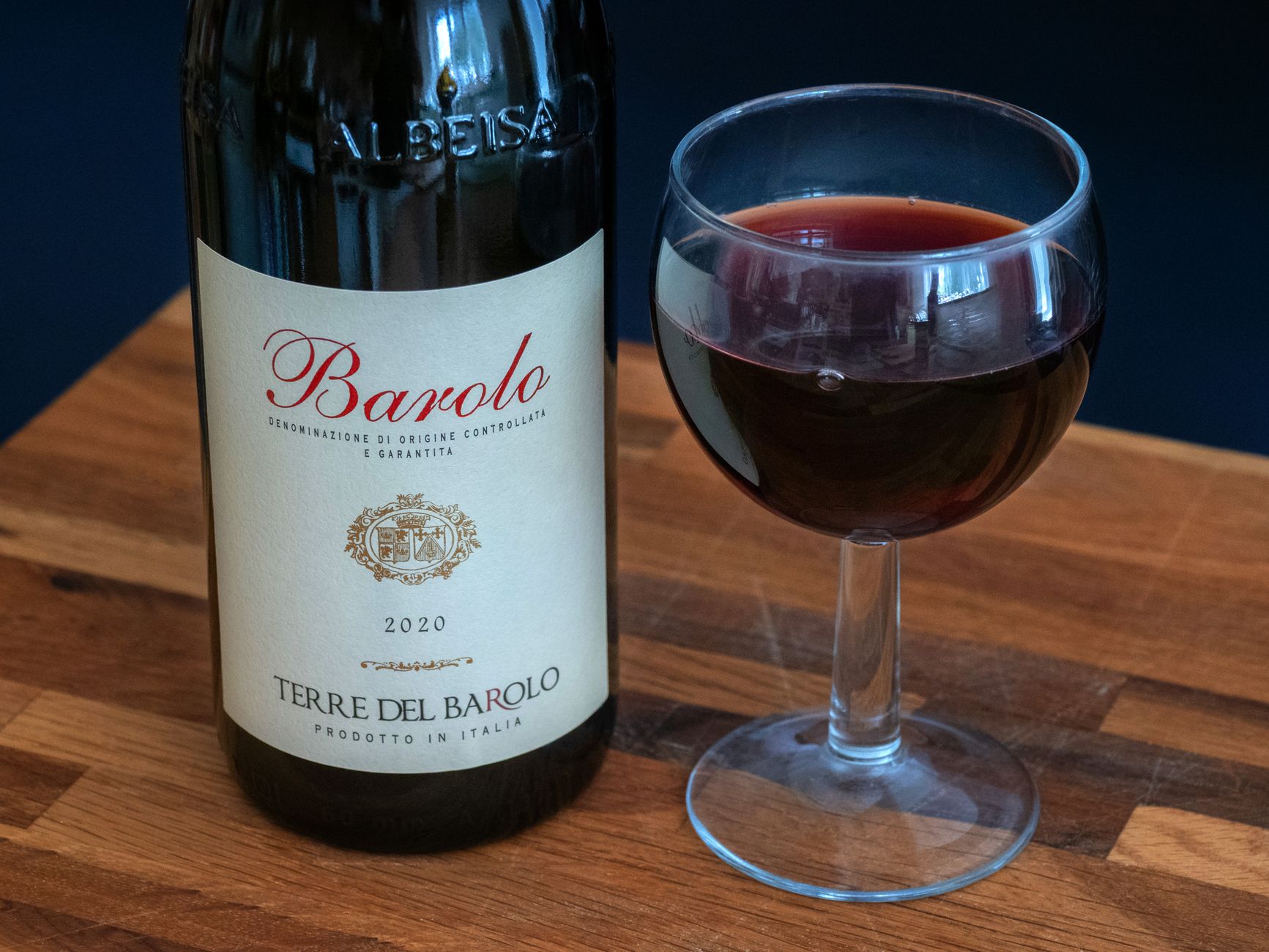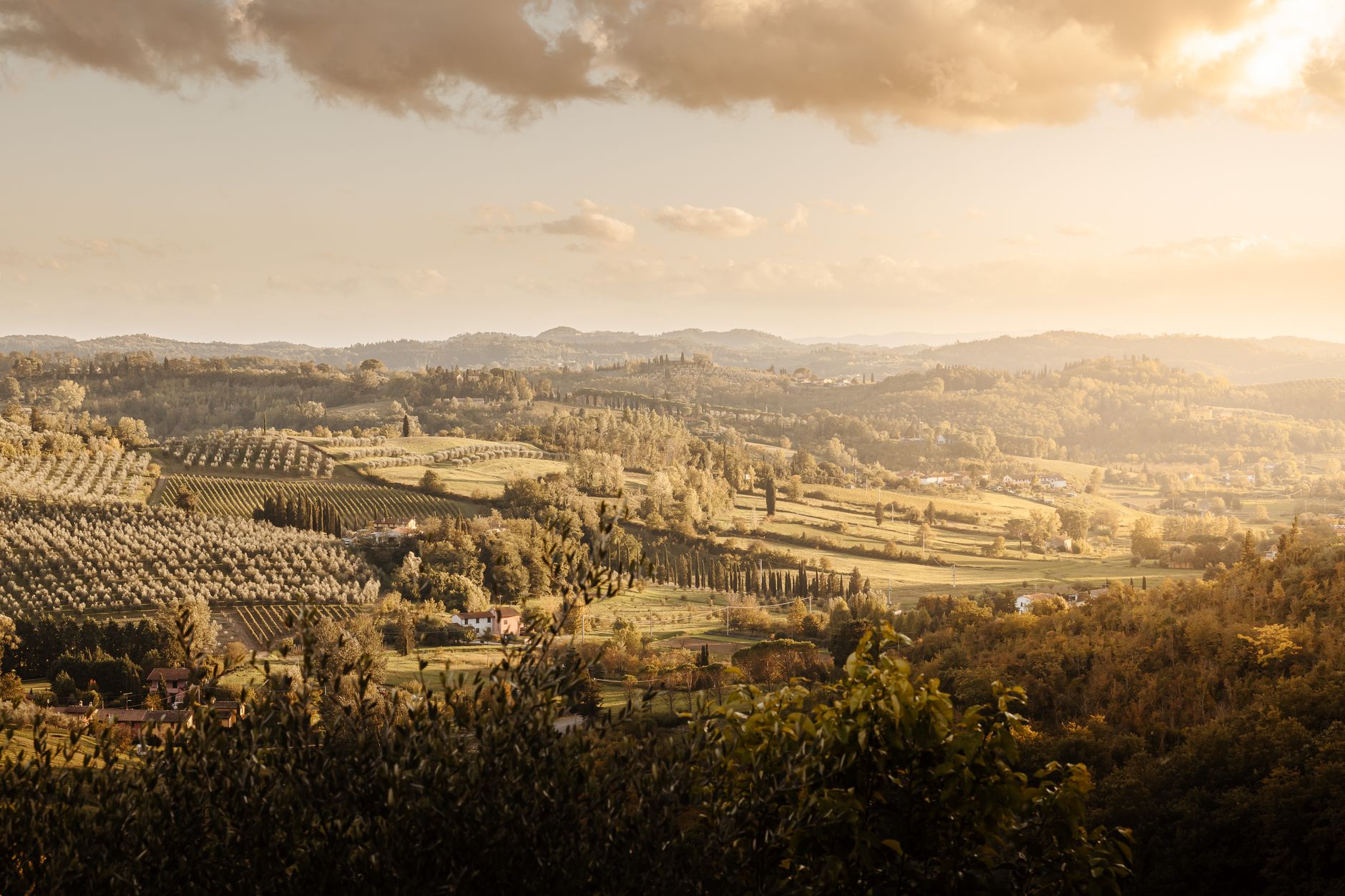
The most famous wine region in Italy is also the most misunderstood. Ask someone in Bangkok what Chianti is and they'll picture the straw-bottled house wine at an Italian trattoria. Ask about Brunello and they'll nod vaguely and mention it's expensive. Mention Super Tuscans and watch the confusion settle in.
All three come from the same region. All three are built on the same grape. And yet the gap between a ฿750 Chianti and a ฿5,000 Brunello is not just price — it's philosophy, geography, law, and five decades of winemaking argument. Here is how to make sense of it.
Sangiovese: The Grape Behind Everything
Before you touch a label, know this: Tuscany runs on Sangiovese. It is the backbone of Chianti, the sole permitted grape in Brunello di Montalcino, and a co-star in most Super Tuscans. Understanding Tuscany without understanding Sangiovese is like understanding Burgundy without Pinot Noir — you're reading the wrong map.
Sangiovese is a high-acid, medium-to-high tannin grape with a signature flavour profile of sour cherry, dried herbs, leather, and earthy iron. It is not a fruit-bomb. It does not taste like Australian Shiraz or Californian Cabernet. What it lacks in sweetness it compensates for in structure and longevity — the best examples from Montalcino and Montepulciano age for twenty to thirty years without effort.
The grape's behaviour changes dramatically with altitude, clone, and the winemaker's intervention. Which is exactly why Chianti and Brunello taste so different despite sharing the same DNA.

Chianti, Chianti Classico, Gran Selezione: The Three Tiers
This is the distinction most people miss, and it costs them money or underwhelms them on a Tuesday night.
Generic Chianti (฿700–900)
The Chianti DOCG zone is enormous — it sprawls across central Tuscany from Florence to Siena and beyond. Wines labelled simply "Chianti" can include Sangiovese blended with other permitted grapes, with minimum aging requirements of just a few months. The best are bright, food-friendly, and punchy at the price. The worst are thin and forgettable. As Wine Folly puts it: "Chianti is a place, not just a wine style — and not all of it is created equal."
Piccini Collezione Oro Chianti Riserva DOCG — ฿649
Chianti Classico (฿1,100–2,000)
The Chianti Classico DOCG is the historic original heart of the Chianti zone — the hills between Florence and Siena. Wines must be at least 80% Sangiovese, aged a minimum of twelve months. The black rooster on the neck label (Gallo Nero) is your signal. The flavours are tighter, more structured, and more serious than generic Chianti. This is the tier worth paying for as a regular weeknight pour.
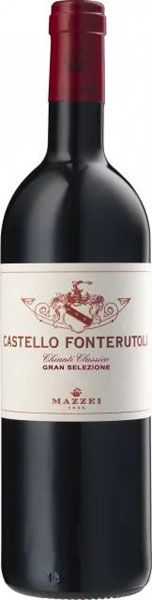
Castello di Fonterutoli Chianti Classico DOCG — ฿1,200
Chianti Classico Gran Selezione (฿2,500–4,000)
Introduced in 2014, Gran Selezione is the apex of the Chianti Classico pyramid — single vineyard or best-barrel selections, aged a minimum of thirty months, with at least three months in bottle. These are wines you open deliberately, with food, and ideally with two to three years of patience if you buy on release. At Bangkok prices they sit just below entry Brunello, and in good vintages they give Brunello serious competition.
Castello di Ama San Lorenzo Chianti Classico Gran Selezione DOCG — ฿3,700
Brunello di Montalcino: Why the Price Is Justified
South of Siena, the hill town of Montalcino sits at elevations between 250 and 600 metres. The climate is warmer and drier than the Chianti zone, and the soils shift from the galestro slate of Chianti Classico to a patchwork of clay, limestone, and sandy tufo. Into this landscape, a local clone of Sangiovese — Sangiovese Grosso, nicknamed Brunello — produces wines of extraordinary concentration and structural longevity.
Brunello di Montalcino DOCG is one of Italy's most tightly regulated appellations:
- 100% Sangiovese Grosso (no blending permitted)
- Minimum aging: 5 years from harvest (6 years for Riserva), including at least 2 years in oak and 4 months in bottle
- Release date: five years after the vintage year on the label
The result is wines that arrive to market already mature by most standards, and that continue to develop for another fifteen to twenty-five years. Decanter describes Brunello as "one of the most age-worthy red wines in the world" — and on that point, there is no argument.

At Bangkok prices, entry Brunello from a reliable producer in a good vintage lands at ฿3,000–4,500. Top-tier producers — Biondi-Santi, Soldera, Poggio di Sotto — start at ฿6,000 and climb quickly. The premium is real, but so is the wine.
Siro Pacenti Pelagrilli Brunello di Montalcino DOCG — ฿3,200
Vino Nobile di Montepulciano: The Middle Ground
Tucked between Chianti Classico and Brunello sits Vino Nobile di Montepulciano DOCG — a wine made from Prugnolo Gentile, yet another local Sangiovese clone. It is less austere than Brunello, more structured than Chianti Classico, and often better value than either. In Bangkok it typically lands at ฿1,500–2,500. If you're trying to bring a guest up from Chianti to Brunello territory without the price shock, Vino Nobile is the bridge.
The Super Tuscan Rebellion
In 1971, Antinori's chief winemaker Giacomo Tachis did something that infuriated the Italian wine establishment: he blended Cabernet Sauvignon and Cabernet Franc into Sangiovese, added the wine to new French barriques instead of the obligatory large Slavonian oak casks, and aged it far longer than the rules permitted. The wine was Tignanello.
Because it broke the DOCG rules for Chianti Classico, it could not be labelled as such. Antinori released it as Vino da Tavola — table wine, the lowest category in Italian law. The irony was spectacular: one of Italy's most ambitious and expensive wines was legally classified below the cheapest plonk.
The establishment was furious. Consumers were bewildered. And then the critics tasted it.
Tignanello caused a recalibration of what Italian wine could be. It proved that the DOC and DOCG rules — created to protect tradition — were also caging innovation. A generation of Tuscan producers followed Antinori's lead: blending international varieties, using new oak, abandoning the appellation system that constrained them. These wines were called Super Tuscans — a nickname invented by journalists, never an official category.
Italy eventually created a legal home for them: IGT Toscana (Indicazione Geografica Tipica), a looser designation that permits non-traditional blends. Today, Tignanello, Sassicaia, and Ornellaia all carry the IGT label — and all command prices that dwarf most DOCG wines.
Bolgheri and the Coastal Style
The Super Tuscan story has a second chapter on the Tyrrhenian coast. Bolgheri, a small DOC in the Maremma flatlands near Livorno, is the spiritual home of the coastal Super Tuscans — and the origin of Sassicaia, the wine that arguably started everything even before Tignanello.
Mario Incisa della Rocchetta planted Cabernet Sauvignon in Bolgheri in the 1940s, inspired by Bordeaux. For decades the wine was made privately for family and friends. When it went commercial in 1968, critics dismissed it. By 1985 it was winning international blind tastings against first-growth Bordeaux.
Today Bolgheri is home to Sassicaia, Ornellaia, and Masseto — Merlot-dominant, Pomerol-rivalling wines that have established the Maremma coast as one of Italy's most prestigious addresses. The style here is richer and more internationally inflected than the Sangiovese-driven interior: think dark fruit, cedar, and graphite rather than sour cherry and dried herbs.
Ornellaia Bolgheri DOC Superiore — ฿12,800
Tuscany at a Glance: Wine Tiers, Pairings, and Bangkok Prices
| Wine | Grape(s) | Bangkok Price | Best Paired With |
|---|---|---|---|
| Chianti DOCG | Sangiovese + blends | ฿700–900 | Pizza, pasta al pomodoro, casual steak |
| Chianti Classico | 80%+ Sangiovese | ฿1,100–2,000 | Bistecca, pappardelle with ragù, hard cheese |
| Chianti Classico Gran Selezione | 100% Sangiovese (single vyd) | ฿2,500–4,000 | Slow-braised pork, aged Pecorino, lamb |
| Vino Nobile di Montepulciano | Prugnolo Gentile | ฿1,500–2,500 | Bistecca, wild boar, duck |
| Brunello di Montalcino | Sangiovese Grosso | ฿3,000–6,000+ | Aged beef, truffle dishes, dry-aged lamb |
| Super Tuscan (IGT) — interior | Sangiovese + Cab/Merlot | ฿2,500–7,000 | Braised short rib, beef tartare, hard aged cheese |
| Super Tuscan (IGT) — Bolgheri | Cab Sauvignon/Merlot-led | ฿5,000–15,000+ | Wagyu, venison, mushroom risotto |
Keep reading: Chardonnay · Wine Designations Explained · all Wine stories.
FAQ
What is a Super Tuscan wine?
A Super Tuscan is an informal term — not a legal classification — for Tuscan wines made outside the traditional DOCG rules. Most blend Sangiovese with international varieties like Cabernet Sauvignon, Merlot, or Syrah, or use techniques (new French oak, extended maceration) that were prohibited under the historic Chianti regulations. Because they broke the rules, they were legally classified as IGT Toscana. The most famous Super Tuscans — Tignanello, Sassicaia, Ornellaia — now sell for more than almost any DOCG wine from the same region.
Is Brunello di Montalcino worth the price in Bangkok?
For the right occasion, yes. Brunello arrives to market already five or more years old, built to age for another fifteen to twenty. What you're paying for is not just grapes and oak — it's the rarity of a single vineyard zone, strict production controls, and genuine time. At ฿3,000–4,500 for a quality producer in a strong vintage (2015, 2016, 2019 are all outstanding), Brunello competes with Burgundy Village or Napa Cabernet at similar Bangkok price points, and arguably ages better than either. If you're drinking it within two years of release, you're not giving it a fair chance.
What is the difference between Chianti and Chianti Classico?
Geography and standards. Generic Chianti comes from a large zone across central Tuscany with relatively loose blending and aging rules. Chianti Classico is a separate, historic DOCG covering the original core zone between Florence and Siena. It requires a minimum of 80% Sangiovese, stricter aging, and carries the black rooster (Gallo Nero) seal. Chianti Classico consistently delivers more structure, complexity, and ageability than generic Chianti — and costs roughly 40–60% more in Bangkok for good reason.
How do I know if a Tuscan wine will age well?
Three signals: producer reputation, vintage quality, and classification. Brunello and Gran Selezione are built to age by design. For Super Tuscans, check whether the blend is Sangiovese-led (more austere and longer-lived) or Cabernet/Merlot-led (more approachable young but still capable of a decade-plus). Vintages 2015, 2016, 2019, and 2020 are all considered outstanding in Tuscany — wines from those years have the concentration and structure to reward patience. If cellaring isn't an option, lean toward Chianti Classico at the ฿1,500–2,000 range, which drinks well on release.
Can I pair Tuscan reds with Thai food?
With care. High-acid, medium-tannin wines like Chianti Classico handle herbaceous and meat-based Thai dishes better than you'd expect — a Chianti with laab or grilled pork neck is not a bad move. Avoid pairing heavy Brunello or structured Super Tuscans with very spicy dishes — the tannins amplify heat. Where Tuscan reds shine on a Bangkok table is with grilled meats: a proper Chianti Classico with charcoal-grilled pork, or a Vino Nobile alongside a dry-aged ribeye, is a combination that needs no apology.
All bottles in stock at WNLQ9 as of July 2026. Prices in THB. Sale prices as marked.