Spain plants more vineyard hectares than any country on earth — yet nine out of ten buyers at the wine shop reach straight for Rioja. What they're missing is one of the most diverse, characterful, and frankly underpriced wine landscapes in the world. This guide is your map.
Why Spain Is the World's Most-Planted Wine Country
With roughly 966,000 hectares under vine, Spain leads the globe in planted vineyard area — more than France, more than Italy. The geography explains it: vast sun-drenched mesetas, Atlantic-cooled coastlines in the northwest, Mediterranean foothills in Catalonia, and everything in between. Each of these climatic zones produces wines with a distinct character that no other country can replicate.
Despite that breadth, Spain's export story has historically been dominated by a single region: Rioja. That's partly marketing, partly history, and partly the fact that Rioja genuinely makes excellent wine. But it means the other regions have been developing quietly in the background — raising quality, lowering prices relative to their French and Italian peers, and waiting for buyers to notice. The wait is over.
#1 Planted Country
Spain has more vineyard land than France or Italy, yet produces less volume — old vines, low yields, concentrated flavors.
Extraordinary Diversity
Atlantic coast to semi-arid interior plateau: Spain's terroirs span more climate zones than almost any other wine nation.
Exceptional Value
A decade-aged Gran Reserva routinely costs half what a comparable Bordeaux demands. The gap is real and persistent.
Rioja Refresher: Crianza, Reserva, Gran Reserva Explained
Before venturing elsewhere, it's worth locking in the language of Rioja — because the same aging classification system carries across many Spanish DOs and gives buyers a reliable quality signal at a glance.
| Classification | Minimum Barrel Aging | Minimum Bottle Aging | Total Minimum Aging | What to Expect |
|---|---|---|---|---|
| Joven (Young) | None required | None required | Released same year | Fruity, fresh, light tannins — drink now |
| Crianza | 1 year in oak | 6 months | 2 years total | Entry-level complexity, vanilla notes, approachable |
| Reserva | 1 year in oak | 2 years | 3 years total | Structured, spice-forward, begins to show elegance |
| Gran Reserva | 2 years in oak | 3 years | 5 years total | Complex, tertiary aromas, leather & earth, cellar-worthy |
Tempranillo is the hero grape in Rioja — leathery, spicy, and beautifully suited to long oak aging. The best Gran Reservas from houses like Muga, La Rioja Alta, or López de Heredia can age gracefully for two to three decades. For Bangkok's humid climate, a Reserva from a good vintage is the sweet spot: enough complexity to reward attention, drink-ready without needing a cellar.
🍷 Sommelier Note
The oak used in Rioja matters enormously. Traditional producers use American oak, which imparts strong vanilla and coconut character. Modern producers prefer French oak for more subtle spice and creaminess. Neither is objectively superior — but if you find American-oak Rioja too oaky, look for labels that say "French oak" or simply try a younger Reserva from a cooler vintage.
Ribera del Duero — Spain's Answer to Bordeaux
Follow the Duero River east from the Portuguese border into the high plateau of Castile, and you enter Ribera del Duero — a region that produces some of the most structured, age-worthy red wines in Europe. The altitude here is brutal: vineyards sit at 850 to 900 meters above sea level, where warm days give phenolic ripeness and cold nights preserve acidity. The result is Tempranillo with muscle.
Local growers call their Tempranillo Tinto Fino or Tinta del País — a slightly different clone from Rioja's, yielding wines that are darker, more tannic, and more intensely fruity. If Rioja is silk, Ribera del Duero is velvet. The undisputed benchmark is Vega Sicilia's Único, which commands Petrus-level prices; but producers like Bodegas Protos and Pago de Carraovejas offer extraordinary quality for a fraction of the cost.
For pairing, think grilled ribeye, braised short rib, aged cheeses, or anything with umami depth. A good Ribera Reserva will stand up to anything a Bangkok steakhouse can throw at it.
🍷 Sommelier Note
Ribera del Duero wines are sometimes underestimated when tasted young because the tannins can feel dry and grippy. Decant any Reserva or Gran Reserva for at least 45 minutes before serving, or better yet, buy and hold for 3–5 years. The transformation is remarkable.
Rías Baixas — Briny Albariño for Bangkok's Seafood
Pivot to the far northwest corner of Spain, to Galicia — a green, rain-soaked region more climatically similar to Bordeaux or Northern Portugal than the sun-baked interior. Here, in the sheltered inlets of the Atlantic coastline, grows Albariño: Spain's most exciting white grape, and one of the most food-friendly whites in the world.
Albariño from Rías Baixas is everything a Bangkok seafood dinner asks for. It is bone-dry, vibrantly acidic, and carries flavors of white peach, lemon zest, and a distinctive saline minerality that the locals call salitre — the sea's own fingerprint on the wine. It's medium-bodied enough to handle a cream-sauced seafood linguine but light enough not to overwhelm delicate steamed fish.
Drink it young, within 2–3 years of vintage. Chill to 8–10°C. Pair it with raw oysters, grilled prawns, sea bass ceviche, or pad see ew with tofu. Few wines bridge European technique and Southeast Asian ingredients as naturally as a well-made Albariño.
🍷 Sommelier Note
Don't confuse Albariño with Alvarinho — the same grape grown across the river in Portugal's Vinho Verde region. The Portuguese version is typically lighter and slightly spritzy; Rías Baixas Albariño tends to be fuller and more aromatic. Both are excellent, but they're not interchangeable.
Priorat — Mountain Garnacha, Tiny Production, Huge Quality
Ninety minutes southwest of Barcelona, hidden in the corrugated hills of Catalonia, lies Priorat — one of only two Spanish regions to hold the coveted DOCa (Denominación de Origen Calificada) designation alongside Rioja. The classification exists for a reason. Priorat is extraordinary.
The secret is the soil: llicorella, a black slate and quartz schist that shimmers in the sunlight and forces vine roots down meters deep to find water. The resulting wines from old-vine Garnacha (Grenache) and Carignan are impossibly concentrated — dark fruit, violets, graphite, and an iron-like minerality that you can almost taste with your nose. They are also low in alcohol by modern standards, typically 14–15%, with genuine elegance despite their weight.
Production is tiny. The region covers just 1,800 hectares, and the best plots are worked by hand on near-vertical slopes. This is why Priorat commands high prices — not marketing, but the genuine scarcity of meticulous small-volume winemaking. Producers like Álvaro Palacios (whose L'Ermita is Spain's most collectable wine) and Clos Mogador set the benchmark. Expect to pay for it — but the experience justifies every baht.
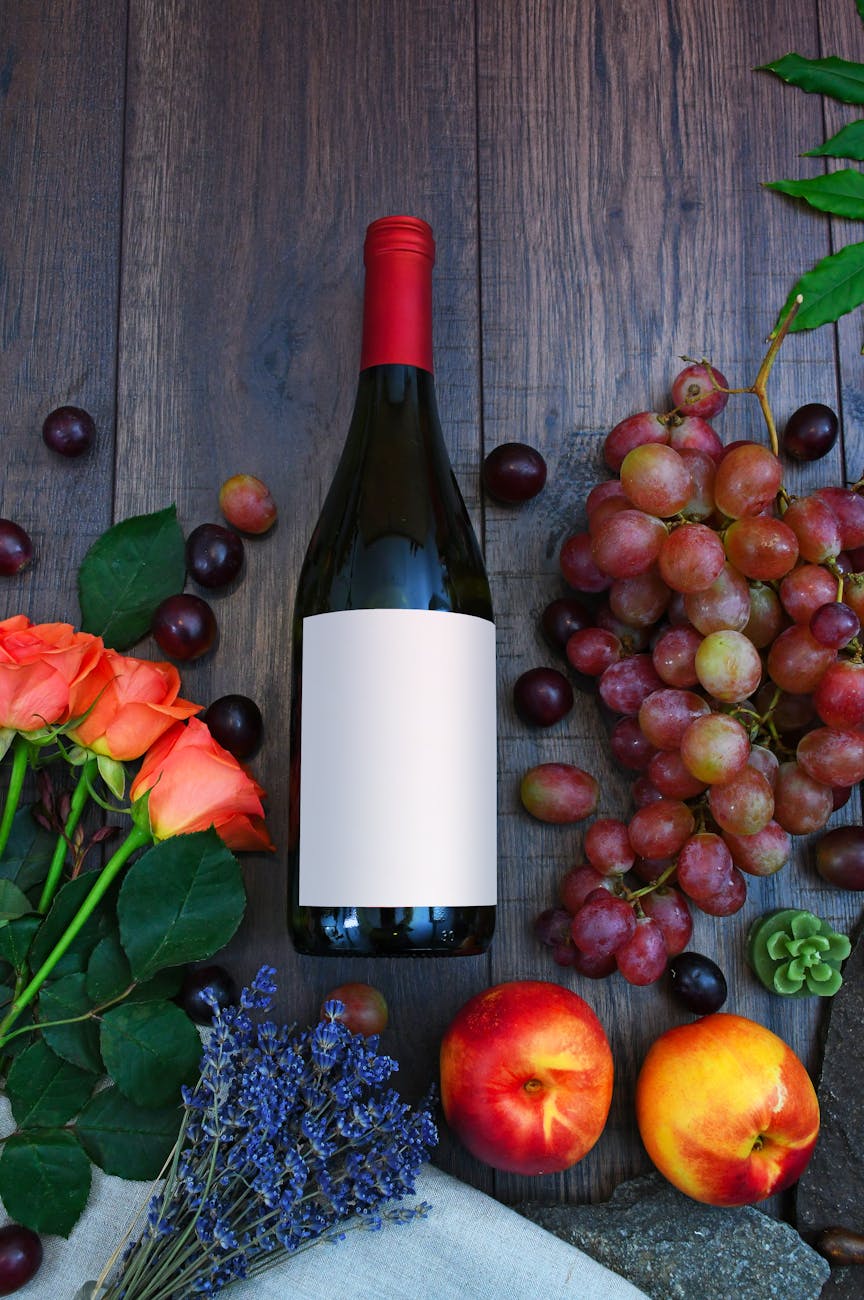
Old-vine Garnacha poured in Priorat style: deep ruby, nearly opaque at the center, with purple-violet rim — the hallmark of concentrated mountain Grenache from llicorella slate soils.
Rueda — Spain's Best White Wine Region
Rueda sits on the Castilian plateau just west of Ribera del Duero, and while its red-wine neighbor gets all the glory, Rueda quietly turns out the best value white wines Spain produces. The grape is Verdejo — not to be confused with Portugal's Verdelho — and it is a revelation for anyone who thinks Spanish wine is only about reds.
Verdejo is aromatic, crisp, and slightly nutty in the best way — think green apple, fennel frond, white herbs, and a textural density that Sauvignon Blanc rarely achieves. At its best, Rueda Verdejo rivals good Sancerre at a quarter of the price. The altitude and continental climate (hot days, cold nights, very little rainfall) gives the wine focus and tension.
Bodegas Protos, José Pariente, and Belondrade are the names to know. For Bangkok dining: pair Rueda Verdejo with light curries, herb-forward salads, grilled chicken, or anything with citrus in the sauce. It is also one of the rare wines that works beautifully as an aperitif at room temperature — or even over a large single ice cube on a hot Bangkok afternoon.
The Value Case: Why Spanish Wine Punches Above Its Price
Here is the number that should make every Bangkok wine buyer pay attention: a Rioja Gran Reserva from a respected producer, with five or more years in barrel and bottle before release, routinely retails in Thailand for ฿1,200–฿1,800. A comparable Bordeaux — similar aging, similar winery reputation — would cost ฿4,000 to ฿6,000. The gap is not explained by quality. It is explained by demand, and demand is a lagging indicator.
The value equation holds across the Spanish spectrum. Ribera del Duero Reservas at ฿800–฿1,200 compete with Burgundy Premiers Crus at three times the price. Rías Baixas Albariño at ฿700–฿900 matches the freshness of Chablis Premier Cru at ฿2,000+. Rueda Verdejo at ฿600–฿800 rivals Sancerre at ฿1,800.
This is not a permanent discount. As the international wine press continues to discover Spain's secondary regions, prices will rise. The window for buying excellent Spanish wine at structurally low prices is open now, not indefinitely.
🍷 Sommelier Note
The single best-value move in Spanish wine right now is a Gran Reserva Rioja from a reputable producer at under ฿1,500. You are getting a wine that has been legally required to age for a minimum of five years before it reaches you — built-in patience, at no extra charge. Compare that to paying the same money for a young Bordeaux you still need to cellar for a decade.
Our Spanish Wine Picks — Available Now
Every bottle below ships from our Bangkok warehouse. We've arranged them by ascending price so you can match your budget to the right experience — from an entry-level Catalan red to the Rioja benchmark that inspired this guide.
Entry Level — Catalonia Reds (฿559–฿629)
Torres Sangre de Toro (฿559, on sale) is the essential entry point — a Catalonian red blend built on Garnacha and Carignan that has been Torres's calling card for decades. Medium-bodied, darkly fruity, and unfussy. Torres Coronas (฿619, on sale) steps up with a Tempranillo-forward expression from Penedès — lighter in structure than Rioja but with lovely red cherry and herbal character that makes it one of the most versatile food wines in the range.
Spanish Style — Red & White Blends (฿629)
The Finca Fella Cala Rey Tempranillo Syrah (฿629) delivers a modern Spanish red built for everyday drinking — Tempranillo's cherry fruit amplified by Syrah's peppery depth. At the same price, the Finca Fella Cala Rey Verdejo Sauvignon Blanc (฿629) is your introduction to Rueda-inspired winemaking: aromatic, fresh, and ideal served cold with grilled fish or a green papaya salad.
Benchmark Whites (฿769–฿799)
Bodegas Protos Verdejo Rueda D.O. (฿769) is the white wine equivalent of the Muga Reserva below — the textbook expression of what Rueda does best. Crisp, slightly nutty, herbaceous, and refreshing. It is one of the finest everyday whites we stock at any price. Torres Viña Esmeralda (฿799) takes a different direction entirely: a classic Torres blend of Gewürztraminer and Moscatel that is aromatic, off-dry, and exquisitely perfumed. Pair it with spicy Thai food to watch the two systems harmonize beautifully.
The Rioja Benchmark (฿1,290)
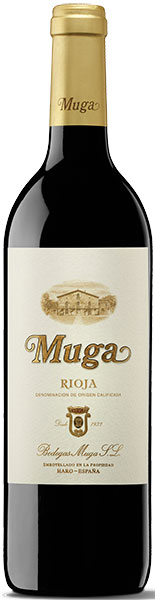
Bodegas Muga Rioja Reserva DOC (฿1,758, on sale) is the wine this guide was built around. Muga is one of Rioja's most storied traditional houses, still gravity-filtering, still fining with egg whites, still aging in wood cooperaged in-house. The Reserva sees 24 months in a mix of French and American oak followed by further bottle aging before release. The result is textbook Rioja at its finest: cedar, dried cherry, leather, and violets, with tannins that are present but polished. If you drink one bottle from this list, make it this one.
Keep reading: Champagne for Celebrations · Languedoc-Roussillon · all Wine stories.
Frequently Asked Questions
What is the difference between Reserva and Gran Reserva?
Both designations are legal aging guarantees, not just marketing labels. A Reserva must age for a minimum of three years total (at least one in oak barrel), while a Gran Reserva must age for at least five years total (at least two in oak and three in bottle). In practice, this means a Gran Reserva reaches you already mature and drinking well — the winery has done the waiting for you. The quality bar is also higher: most producers only make Gran Reserva in exceptional vintages, selecting their best grapes for the category. For buyers who don't have a cellar, Gran Reserva is the smarter choice: you're paying for aging you'd otherwise have to do yourself.
What is Tempranillo?
Tempranillo is Spain's most important red grape variety and the backbone of Rioja and Ribera del Duero. The name comes from the Spanish word temprano (early), because it ripens several weeks ahead of most other varieties. On the palate, Tempranillo is medium to full-bodied with flavors of red cherry, plum, dried fig, and tobacco, often with notes of leather and cedar when aged in oak. It has relatively moderate tannins and acidity compared to Cabernet Sauvignon or Nebbiolo, which makes it approachable even when young. Outside Spain, Tempranillo is grown in Portugal (where it's called Tinta Roriz or Aragonez), Argentina, and parts of Australia and California, but nowhere does it achieve the complexity of its Spanish homeland.
What is Albariño?
Albariño is a white grape variety grown primarily in Rías Baixas, Galicia, in the far northwest of Spain. It produces dry, aromatic wines with high natural acidity and distinctive flavors of white peach, apricot, lemon peel, and grapefruit, often underscored by a saline, mineral quality derived from the Atlantic influence and granite soils of the region. Albariño typically sees no oak and is meant to be consumed young and fresh — usually within two to three years of harvest. It is considered one of the world's great food-friendly white wines, especially with seafood and shellfish. In Portugal, the same grape is called Alvarinho and forms the backbone of Vinho Verde.
Is Spanish wine better value than French wine?
For most price brackets, yes — significantly so. The price premium attached to French wine is largely driven by the international prestige of Bordeaux and Burgundy, which sets expectations for the entire French category. Spanish wines of equivalent or superior quality — particularly aged Rioja Gran Reserva, structured Ribera del Duero Reserva, and fresh Rías Baixas Albariño — are routinely priced 40–60% below their French equivalents in Bangkok's retail market. The gap narrows at the very high end (Vega Sicilia or Álvaro Palacios's single-vineyard Priorats are not cheap), but across the ฿500–฿2,000 range where most buyers shop, Spain offers the clearest quality-per-baht ratio of any major wine-producing country currently available in Thailand.