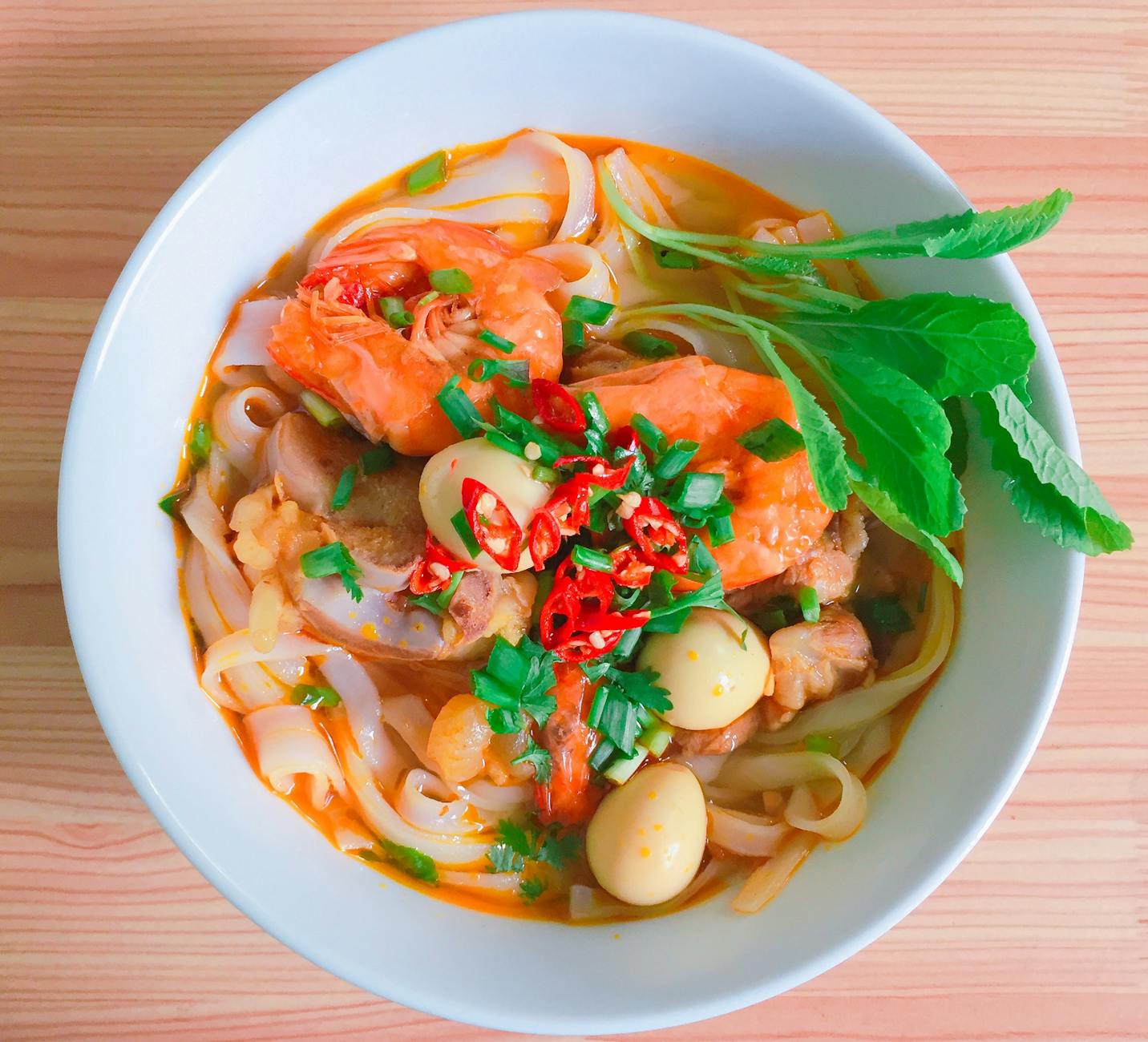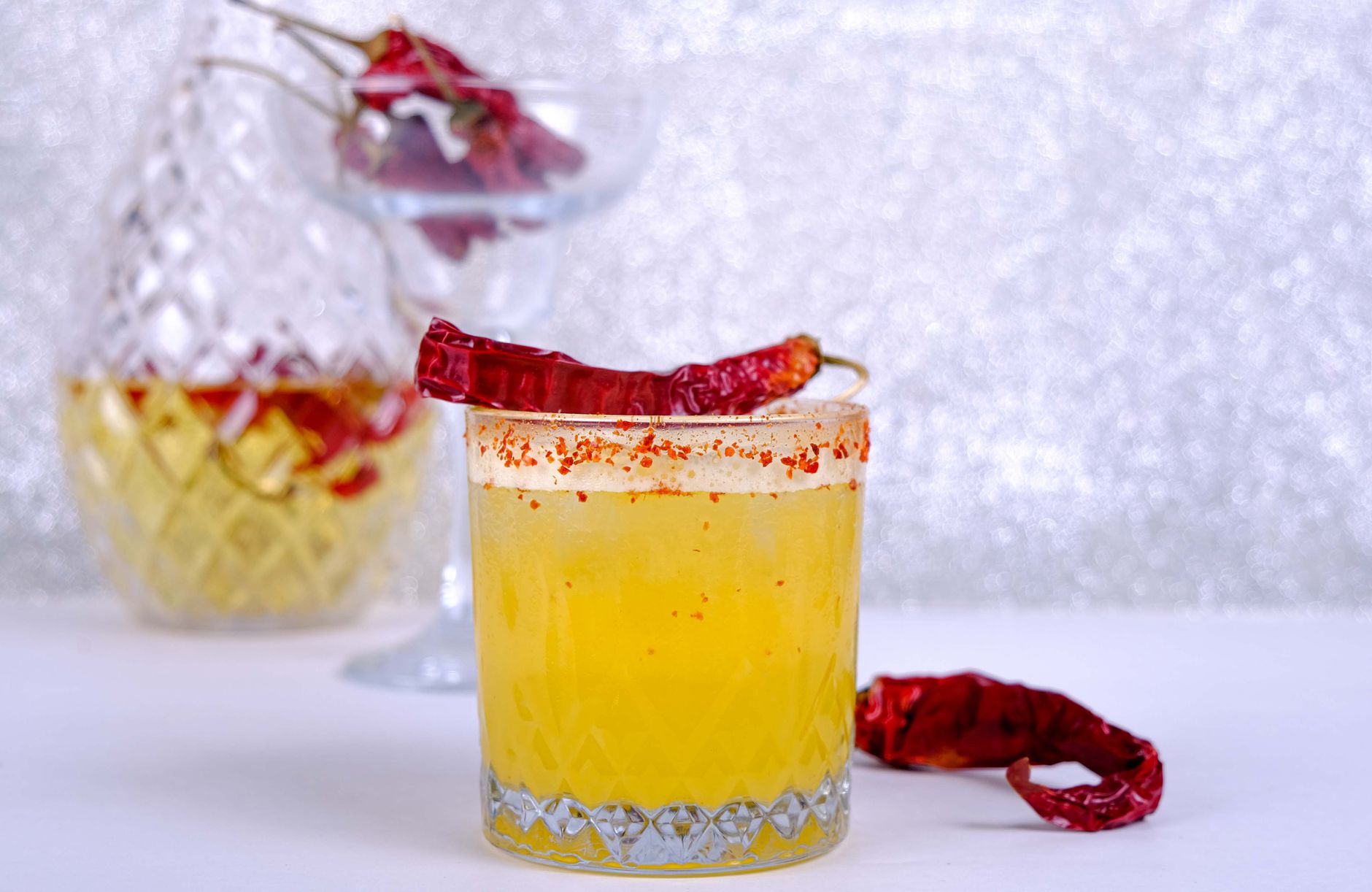
Capsaicin doesn't actually burn you. That searing sensation when you bite into a bird's eye chilli — the one that makes your eyes water over a bowl of pad kra pao — is your brain being tricked. Capsaicin binds to TRPV1 receptors, the same pain sensors that respond to genuine heat above 43°C. No tissue damage is happening. Your nervous system simply can't tell the difference.
This matters enormously for wine. Because once you understand that chilli heat is a neurological signal rather than a physical one, you can manipulate it — with the right glass of wine. The wrong glass, however, will turn a medium-spicy green curry into something that feels like punishment.
Here is the science, the rules that follow from it, and exactly which bottles to open with every Thai dish on the table.
Why Most Wine Makes Spicy Food Worse
The Alcohol Problem
Alcohol is a solvent. It dissolves capsaicin and carries it more efficiently across your mouth's mucous membranes, amplifying the TRPV1 signal. A wine at 14.5% alcohol genuinely makes spicy food feel hotter — not as a matter of personal sensitivity, but as measurable physiology. This is why a glass of Barolo with laab feels like an act of aggression. The wine is adding fuel to the fire.
The threshold that most food scientists point to: stay under 13% ABV when eating spicy food. At 12–12.5%, you're in a safe zone. At 14%+, you're compounding the problem.
The Tannin Problem
Tannins bind to salivary proteins, stripping moisture from the mouth's protective lining. In isolation, this creates the pleasant drying sensation you associate with good red Bordeaux. Alongside chilli heat, it creates something far less pleasant: a harsh, bitter, astringent sensation that amplifies perceived spice and leaves your mouth raw.
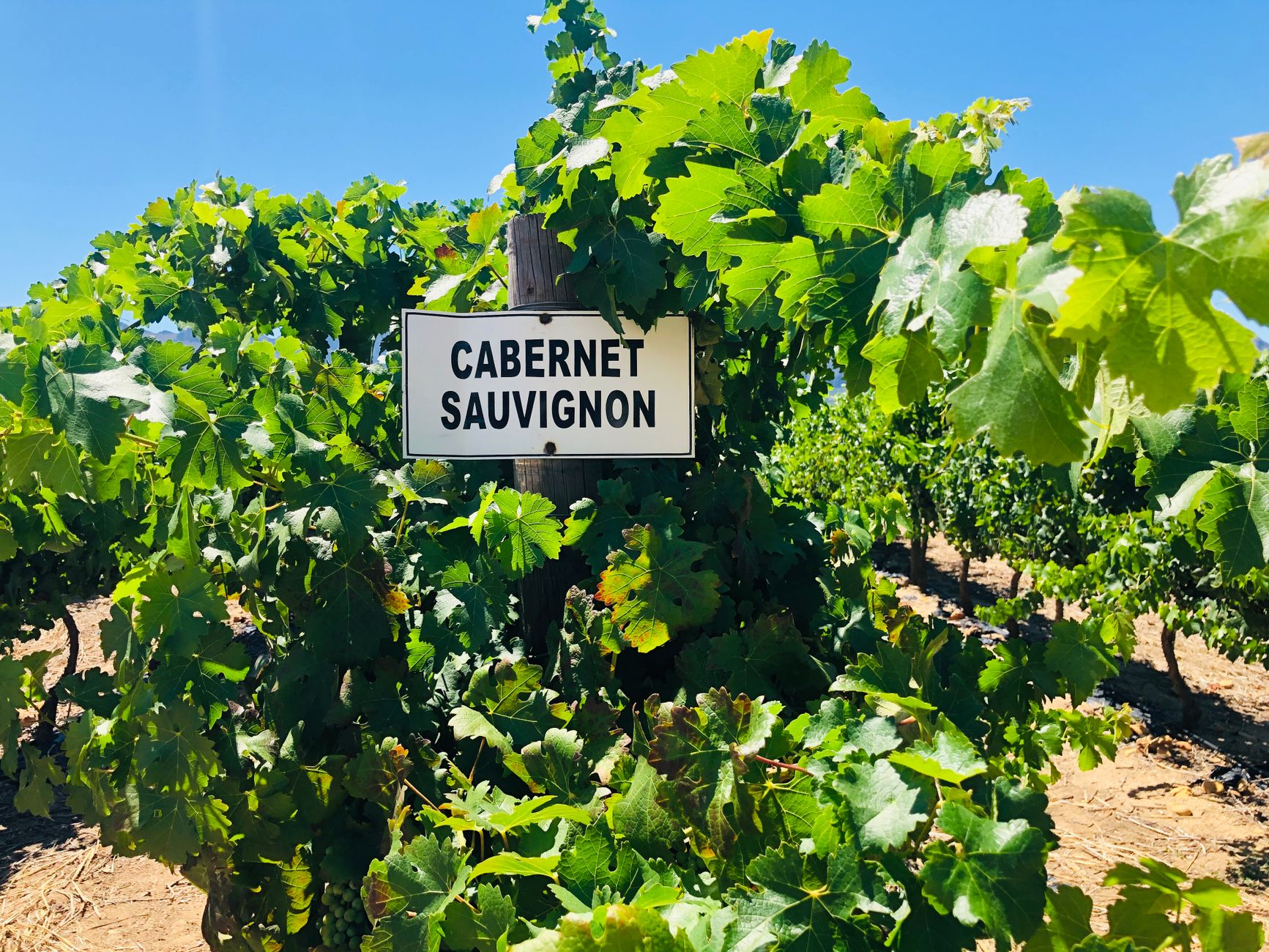
This is why Cabernet Sauvignon, Nebbiolo, and heavily oaked Syrah are the wrong bottles to open alongside Thai food. Their tannin structure, which is a feature in other contexts, becomes a liability here.
Wine Folly's pairing guide puts it plainly: "High tannin plus high spice equals harshness." It's not subjective taste. It's chemistry.
What Actually Works: Residual Sugar and High Acid
Here's the good news. Residual sugar — even a modest 5–15 grams per litre, which reads as "off-dry" rather than "sweet" — competes with capsaicin at the receptor level. Sugar molecules partially block TRPV1 uptake, reducing the perceived heat. An off-dry Riesling isn't just refreshing alongside a Thai curry. It is, at a molecular level, turning down the chilli's volume.
High acidity performs a different function: it cuts through the richness of coconut milk curries and resets the palate between bites, preventing capsaicin from accumulating. Wines with bright, mouthwatering acidity keep the meal lively rather than numbing.
The Three Rules
- Low alcohol — under 13% ABV, ideally 11.5–12.5%
- Low tannin — whites, rosé, or the lightest possible reds
- Slightly sweet or high acid — off-dry (5–15g/L RS) or very crisp and dry
Every bottle that works with Thai food obeys at least two of these rules. The best pairings hit all three.
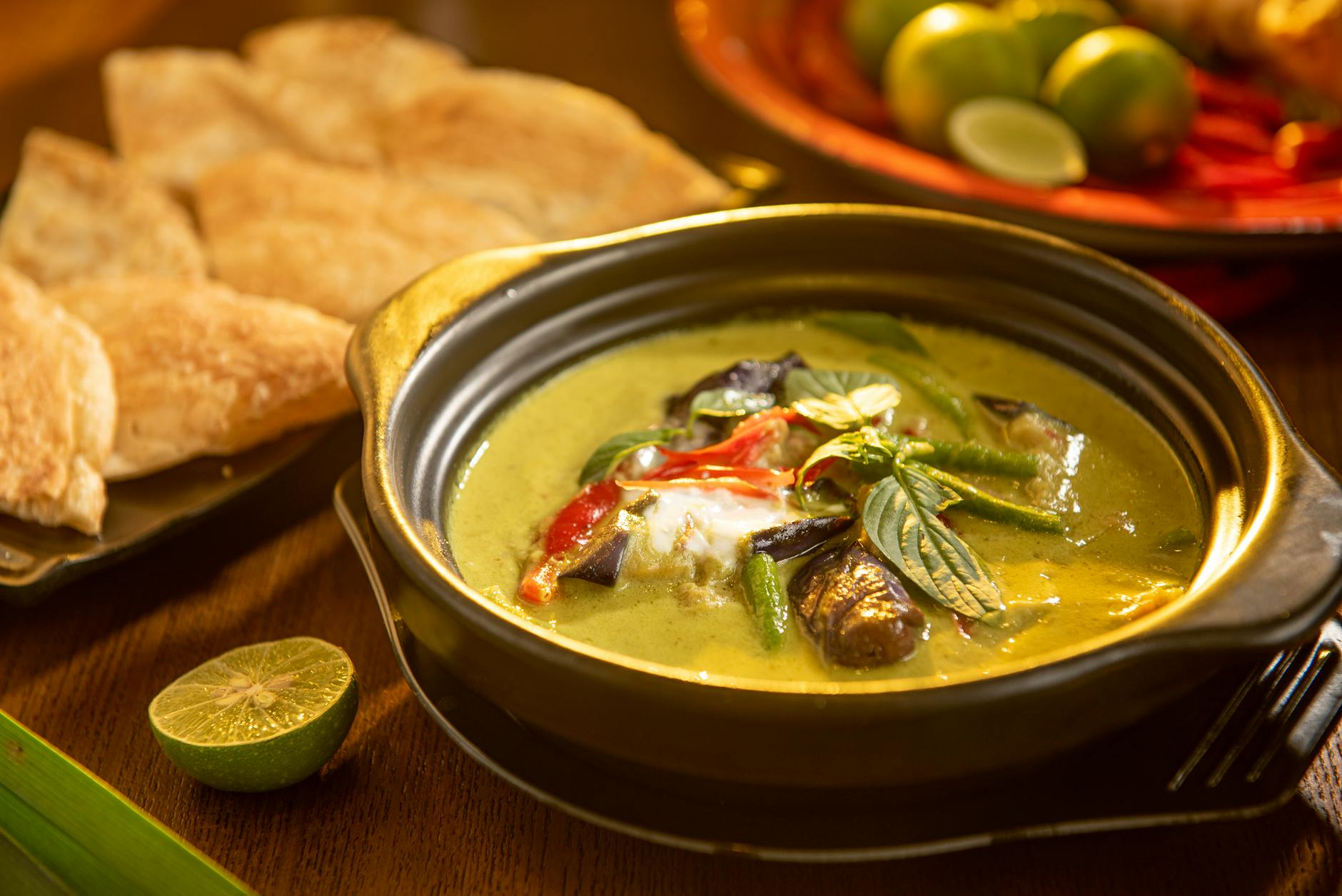
The Thai Heat Spectrum: Dish by Dish
Thai cuisine isn't monolithic. The heat level varies enormously by dish, and your wine choice should move accordingly.
Mild Heat — Massaman, Yellow Curry, Khao Soi
These dishes bring warmth rather than fire. Coconut milk is dominant, spice is aromatic (cinnamon, cardamom, star anise), and chilli presence is restrained. You have the most flexibility here.
Pinot Grigio — dry, light-bodied, high acid — works beautifully. It doesn't compete with the dish's subtlety, and its clean citrus notes cut through the coconut fat. An off-dry rosé is equally strong here, adding just enough fruit sweetness to mirror the curry's gentle warmth.
St. Paul's Pinot Grigio Alto Adige DOC — ฿1,200
Whispering Angel Rosé, Provence — ฿1,049 (sale)
Medium Heat — Green Curry, Pad Thai, Penang Curry
This is where residual sugar becomes essential. Green curry's fresh chilli base and fish sauce salinity need a wine that can push back without fighting.
An Alsatian Gewürztraminer is the classic match — and the science explains why. Its lychee, rose petal, and ginger aromatics echo Thai herbs, its naturally lower alcohol (often 12.5–13%) keeps the heat manageable, and its slight off-dry finish provides capsaicin relief. Decanter magazine specifically names Gewürztraminer as the benchmark pairing for aromatic Asian spice — the aromatic symmetry between the wine and the cuisine is unmatched.
For pad Thai — lighter, nuttier, with tamarind's sweet-sour complexity — a German Kabinett Riesling at 8–9% ABV is the precision choice. The low alcohol is dramatic relief, and the apple-lime acidity echoes the dish's own tartness.
Heim Gewurztraminer Imperial, Alsace — ฿1,069 (sale)
Dr. Loosen Dr. L Riesling Dry, Mosel — ฿765 (sale)
Intense Heat — Som Tam, Laab, Pad Kra Pao
These dishes are built on serious chilli volume. Som tam uses raw bird's eye chillis in quantity. Laab's toasted rice powder and herb mixture carries heat that builds with every bite. Pad kra pao at full heat is one of Bangkok's most confrontational dishes.
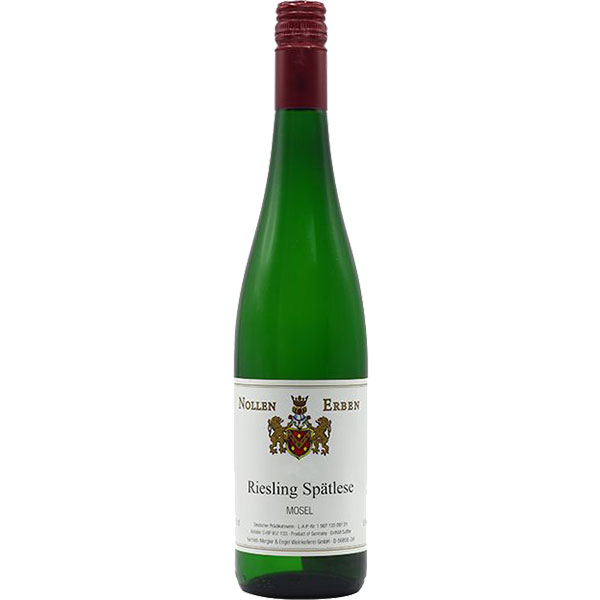
Here, your only effective tool is maximum residual sugar combined with minimum alcohol. A German Riesling Spätlese or Auslese (7–9% ABV, 20–40g/L RS) is the correct answer. The sweetness is not incidental — it is doing active work against the TRPV1 signal. A lightly chilled Pinot Noir — specifically a Burgundy or New Zealand style at 12.5% ABV or below — can work with laab if you prefer red. The key is low tannin and low alcohol. Anything heavier will suffer.
Weingut Robert Weil Riesling Rheingau Tradition — ฿1,200
Casillero del Diablo Pinot Noir, Chile/Aconcagua — ฿519 (sale)
The Chilli Heat vs Wine Style Decision Table
| Dish / Heat Level | Avoid | Consider | Best Match |
|---|---|---|---|
| Massaman / Yellow curry (mild) | Tannic reds | Dry Pinot Grigio | Off-dry rosé |
| Khao soi (mild–medium) | Oaked Chardonnay | Dry Riesling | Gewürztraminer |
| Green curry (medium) | Cabernet, Shiraz | Pinot Grigio | Gewürztraminer |
| Pad Thai (medium) | Anything 14%+ | Off-dry rosé | Kabinett Riesling |
| Penang curry (medium–hot) | Barolo, Bordeaux | Light Pinot Noir | Off-dry Riesling |
| Som tam (hot) | All tannic reds | Light Pinot Noir | Spätlese Riesling |
| Laab (hot) | Anything 13.5%+ | Light Pinot Noir | Auslese Riesling |
| Pad kra pao (very hot) | All reds, dry whites | Gewürztraminer | Riesling Auslese |
The Bangkok Context
There's a layer to this conversation that doesn't appear in European wine guides: you are eating this food in Bangkok in July, which means you've already survived 35°C heat and 85% humidity to get to the table. Your body is running warm before the first chilli hits.
This tips the calculation further toward lower-alcohol, high-acid, refreshingly cold wines. A Riesling served at 8°C from an ice bucket isn't just a flavour preference — it's temperature management. The contrast between a chilled glass and the ambient heat makes every sip more effective.
This is also why oaked Chardonnay fails so completely in this context. Its full body and low acidity provide no refreshment, no contrast, no relief. It sits heavy in the heat outside and amplifies the heat inside. Same logic applies to any skin-contact orange wine with grippy tannins, however fashionable they are elsewhere.
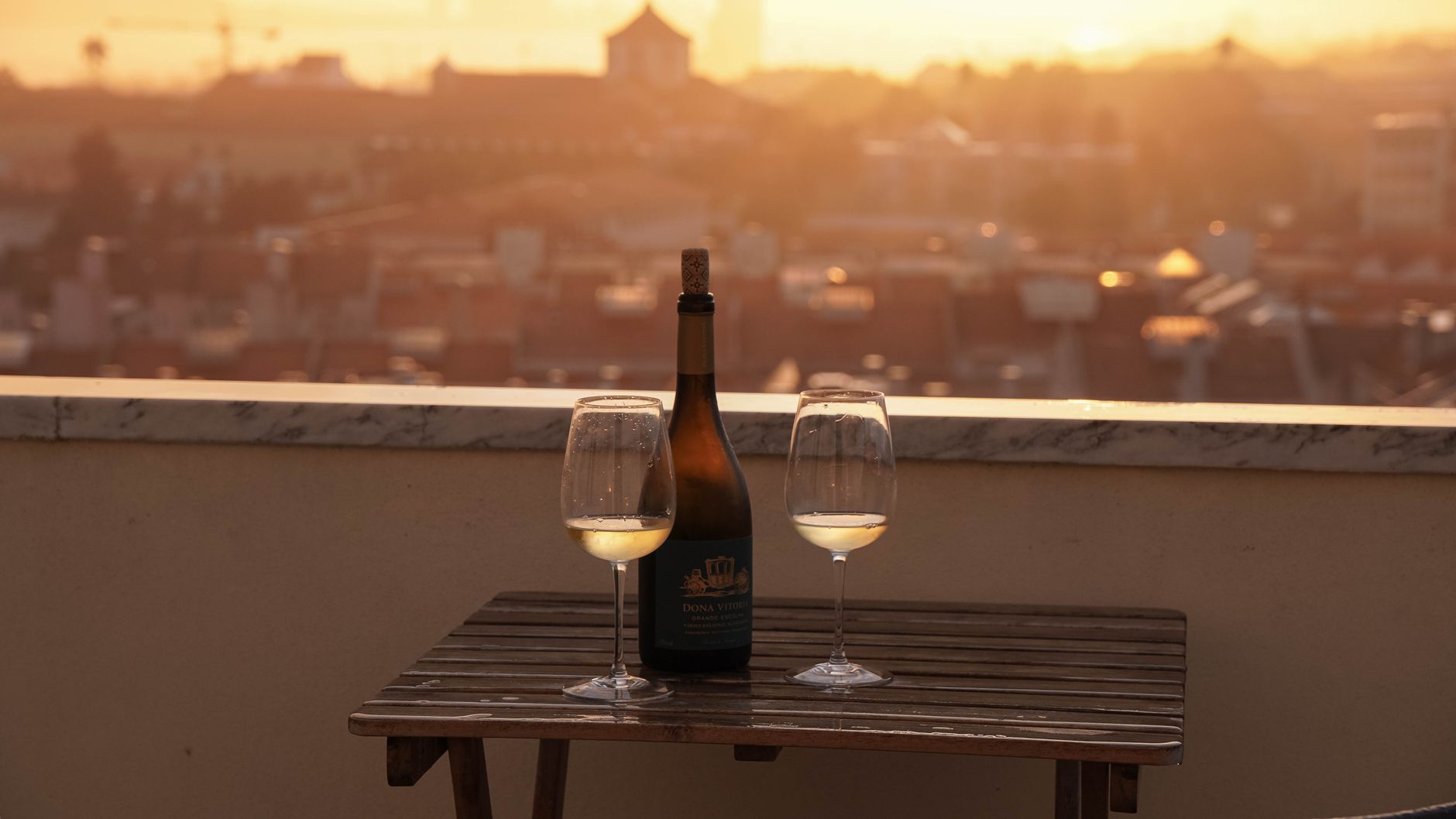
Trimbach Gewurztraminer, Alsace — ฿1,289
What Never Works (And Why)
- Barolo / Nebbiolo — 14%+ alcohol + extreme tannin. Double punishment.
- Cabernet Sauvignon — High tannin, high alcohol. The worst pairing in the Thai food canon.
- Oaked Chardonnay — Low acid, full body, no residual sugar. No tools to combat heat.
- Shiraz / Syrah at 14.5% — Alcohol amplifies TRPV1 to an unpleasant degree.
- Amarone — Everything wrong at once — 17% ABV, concentrated tannin, zero residual sugar.
If someone hands you a glass of any of the above with a plate of som tam, drink water.
Keep reading: Tuscany Deep Dive · Piedmont · all Wine stories.
FAQ
Does wine actually work with spicy food, or should I just drink beer?
Wine works — but it requires the right selection. Beer's carbonation provides temporary relief (CO₂ briefly suppresses TRPV1 activity), but a well-chosen off-dry Riesling or Gewürztraminer does more sustained work because of its residual sugar. The short answer: wine works better than beer if you pick correctly, and worse than water if you pick wrong.
Can I ever drink red wine with Thai food?
Yes, but the margin for error is narrow. You need a red with genuinely low tannin under 13% ABV — think a village-level Burgundy Pinot Noir, a Beaujolais Cru (Morgon or Fleurie), or a light Gamay served slightly chilled at around 14°C. These wines have minimal tannin and enough fruit brightness to survive mild-to-medium Thai heat. Anything heavier than this will fight the food and lose.
Why do some people swear by Champagne with spicy food?
They're right, and the science supports it. Champagne (and quality sparkling wines generally) brings three things that help: high acidity, low alcohol relative to most still wines (typically 12–12.5%), and carbonation that provides brief TRPV1 relief. A Blanc de Blancs Champagne or a Crémant d'Alsace is genuinely one of the better matches for spring rolls, light curries, and seafood dishes with chilli. The bubbles also make the meal feel more festive, which doesn't hurt.
How sweet does the wine need to be?
Not very. You're not looking for dessert-sweet, which would feel cloying against savoury food. You're looking for off-dry — the faint perception of sweetness that rounds the finish without making the wine taste like juice. In Riesling terms, this is Kabinett or Spätlese level, typically 8–25g/L residual sugar. In Gewürztraminer, the grape's natural ripeness usually delivers this without any "late harvest" designation needed. If the back label says "dry," it may still work if the acidity is high; if it says "oaked," set it aside.
What's the best value pairing for everyday Thai cooking at home in Bangkok?
A German Riesling Kabinett in the ฿765–1,200 range is the best-value, most-versatile choice. It handles mild through medium-hot dishes, has low enough alcohol to be drunk in the Bangkok heat without heaviness, and its bright acidity resets the palate between bites better than almost anything else at the price point. Keep two bottles chilled at all times if you cook Thai regularly. Second choice: an Alsatian Gewürztraminer, which shares the food-friendly aromatic character without the German label complexity.
All bottles in stock at WNLQ9 as of July 2026. Prices in THB. Sale prices as marked.