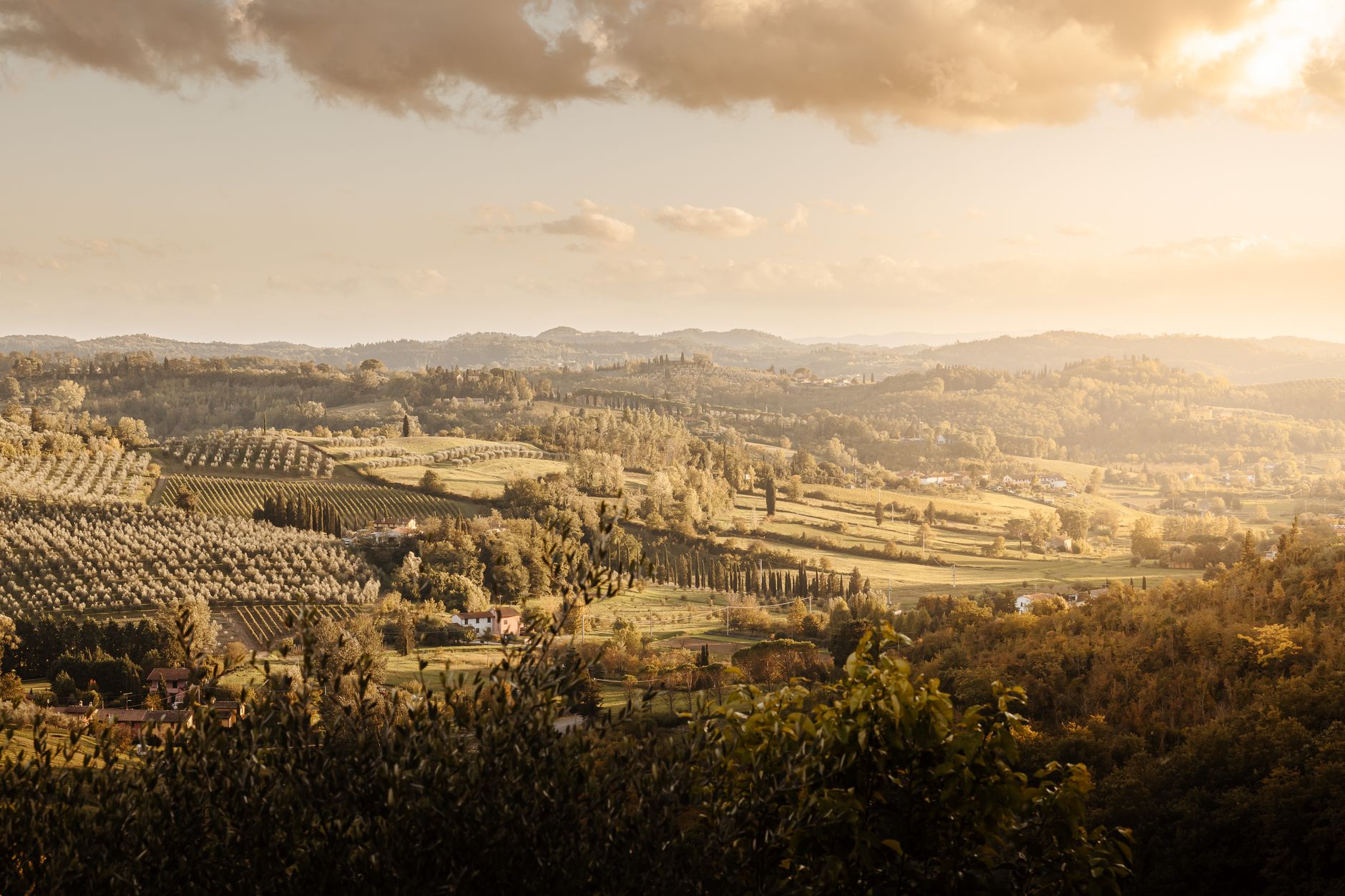
There is a wine made from a grape that contradicts itself at every turn: pale garnet in the glass (you'd mistake it for a light red), yet so tannic it needs a decade to soften, so acidic it cuts through the richest braised meats, so aromatically complex it can smell simultaneously of roses and tar. That wine is Barolo. That grape is Nebbiolo. And the region that produces it — Piedmont, in northwest Italy — is rightly called the Burgundy of Italy, though the two have almost nothing in common except their capacity to inspire obsession.
This is your complete Barolo wine guide: what Barolo is, how Barbaresco differs, why Langhe Nebbiolo is the smarter entry point, and what to buy in Bangkok right now.
Nebbiolo: The Grape That Breaks the Rules
 The Nebbiolo grape: small, thick-skinned, deceptively pale in the glass — and ferociously tannic on the palate.
Most wine drinkers learn early that deep color equals big tannins. Nebbiolo laughs at that rule. Despite producing some of the most aggressively tannic red wines in the world, Nebbiolo is relatively pale — a translucent garnet that turns brick-orange at the rim with age. Under ultraviolet light you can sometimes read a newspaper through a glass of Barolo.
The paradox is chemical. Nebbiolo's tannins are abundant and grippy — the kind that make your gums stick to your teeth in youth — but its pigmentation comes from different compounds than those tannins. High acid (often 6–8 g/L tartaric equivalent) sharpens everything further. The result is a wine that demands time.
What you get in return: a nose unlike anything else in Italy. Rose petals, dried violets, tar (that signature "catrame"), cherries, tobacco, leather, and — in mature Barolo — a haunting mineral quality that serious collectors describe as truffle and dried herbs. The Langhe hills are Nebbiolo's sole great home. Planted almost anywhere else in the world, it produces pleasant but distinctly ordinary wine. Here, it produces legend.
"Wine of Kings, King of Wines"
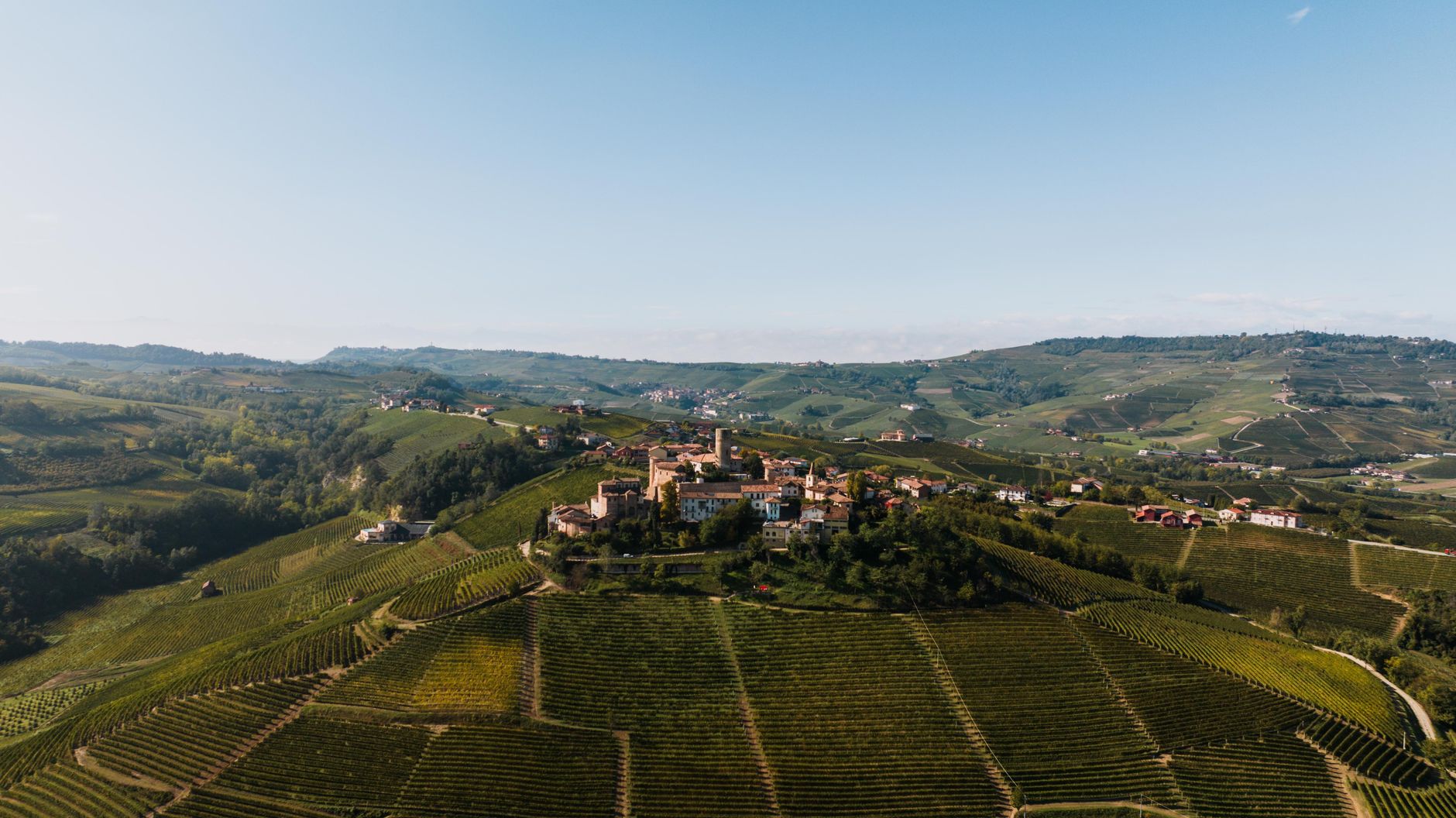
The phrase — il vino dei re, il re dei vini — was coined in the courts of the House of Savoy, the royal family that ruled Piedmont and unified Italy in the 19th century. Barolo as we know it today was partly shaped by French oenologist Louis Oudart, who helped local producers move from sweet, partially fermented versions of the wine to the fully dry style that could age for decades.
The Savoy court drank it. Cavour served it at diplomatic dinners. And a wine that had been a rustic local curiosity became Italy's most prestigious red — a status it has held, with occasional challenges from Tuscany's Super Tuscans and Amarone from the Veneto, ever since.
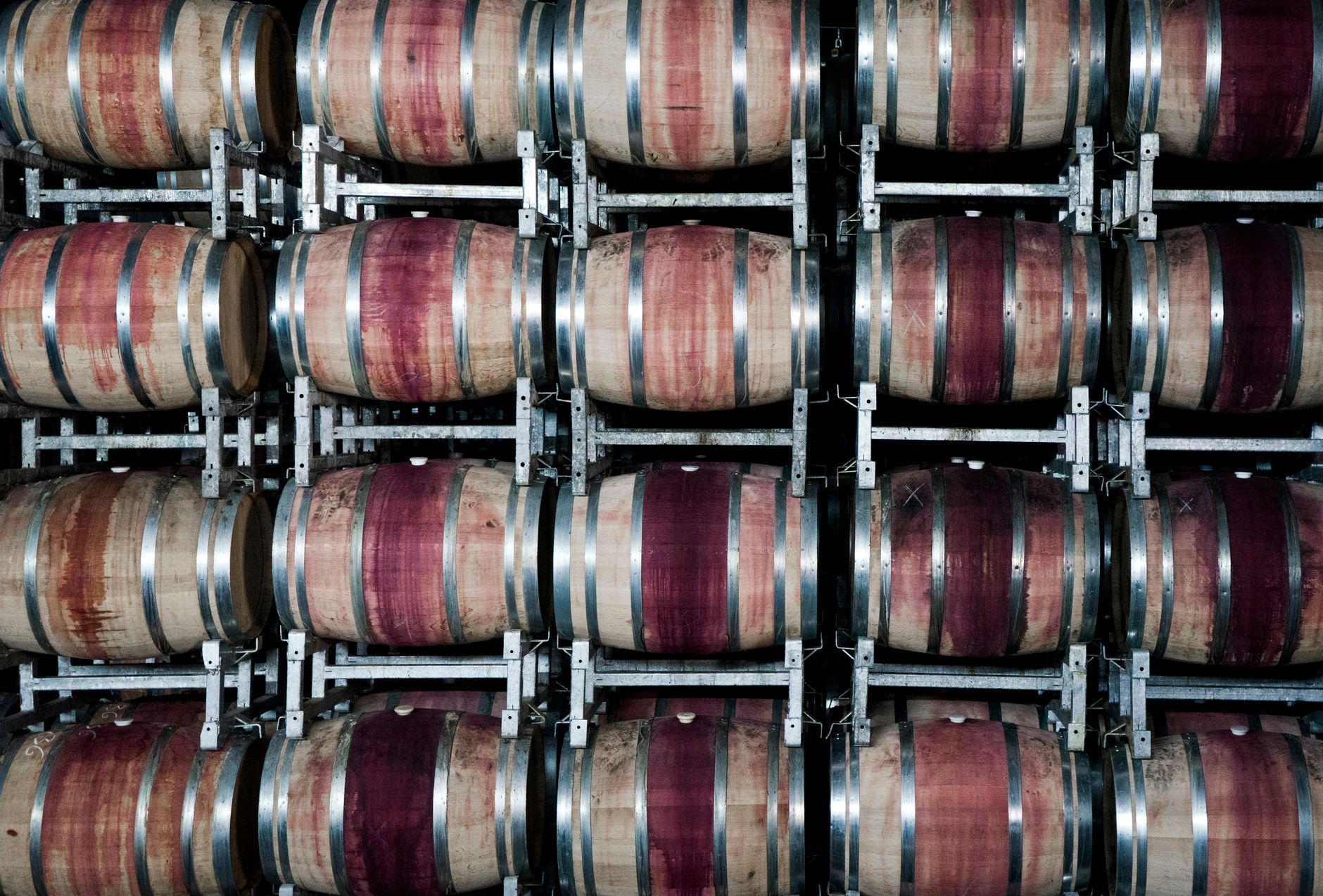 Traditional Slavonian oak botti — some holding 5,000 to 15,000 litres — are still used by traditionalist Barolo producers. The wine aged in these large barrels develops slowly and can last 30+ years.
Barolo DOCG: The Rules and the Communes
Barolo DOCG covers 11 communes in the Langhe hills, south of the town of Alba in Cuneo province. The wine must be made from 100% Nebbiolo and aged a minimum of 38 months total, of which at least 18 must be in oak. Riserva versions require 62 months total. These are among the strictest aging requirements of any Italian DOCG.
Five communes produce the vast majority of serious Barolo, and each has a distinct character driven by soil:
La Morra and Barolo village — The Elegant South
La Morra and the village of Barolo itself sit on Tortonian soils — older, more calcareous blue-grey marl (Helvetian limestone). Wines here tend to be the most aromatic and approachable of the zone: floral, perfumed, accessible earlier. Think roses and red fruit rather than tar and iron. If you're opening a Barolo young (which, frankly, is a mistake, but we've all done it), reach for La Morra.
Castiglione Falletto — The Middle Ground
The smallest of the five major communes by area, Castiglione Falletto sits where the two main soil types overlap. Its wines show both power and elegance — often considered the most "complete" Barolo expression, though that's a sommelier's polite way of saying it's hard to pin down.
Serralunga d'Alba — The Powerhouse
Serralunga d'Alba sits on Helvetian soils — harder, more compact Lequio sandstone and marl. Wines here are austere and structured in youth, deeply tannic, and built for the very long haul. The famous Giacomo Conterno Monfortino — arguably the most collected Barolo in the world — comes from Serralunga. Do not open these young. Do not even think about it.
Barolo MGA (Menzioni Geografiche Aggiuntive)
Since 2010, Barolo has had an official single-vineyard system: Menzioni Geografiche Aggiuntive, or MGAs — the Piedmontese equivalent of Burgundy's Premier Cru and Grand Cru. There are 181 registered MGAs. The most storied include Cannubi (Barolo village), Brunate (La Morra/Barolo), Rocche dell'Annunziata (La Morra), and Vigna Rionda (Serralunga). When you see an MGA on a label, you are looking at a single-vineyard bottling — and usually a significantly higher price.
The Barolo Wars: Traditionalists vs. Modernists
No wine region in Italy has been more publicly torn by stylistic debate. The "Barolo Wars" of the 1980s and 1990s pitted two camps against each other:
The Traditionalists practiced long maceration — 30, 60, sometimes 90 days of skin contact to extract maximum tannin and structure. They aged the wine in large Slavonian oak botti (casks of 5,000–15,000 litres), which impart minimal oak flavour but allow slow, gradual oxidation. The wines needed 15–20+ years to open up. Producers like Giacomo Conterno, Bartolo Mascarello, and Bruno Giacosa were the standard-bearers.
The Modernists took cues from Bordeaux and Burgundy. They reduced maceration time, used rotary fermenters to extract colour quickly without excessive tannin, and aged in small French barriques (225-litre barrels), often new, which add vanilla and toast. The wines were approachable in 5–8 years. Elio Altare, Paolo Scavino, and Luciano Sandrone led this camp. The critic Robert Parker gave the modernist wines high scores; traditionalists were appalled.
The war is largely over now — or rather, both sides won. Most serious producers today occupy the middle ground: moderate maceration, a mix of large oak and some smaller barrels, wines that balance structure with accessibility. But the distinction still shapes how you buy: a wine labelled "tradizionale" or from a well-known traditionalist house is likely closed for at least a decade. A modernist bottling may open pleasingly at 7–8 years.
According to Decanter's comprehensive Barolo guide, the best strategy for most collectors today is to buy from both camps — traditionalist for the cellar, modernist for the dinner table.
Barbaresco DOCG: Barolo's Elegant Counterpart
 The village of Barbaresco, with its characteristic medieval tower, sits at the heart of one of Italy's most underrated great wine appellations.
Barbaresco DOCG covers just three communes northeast of Alba: Barbaresco, Neive, and Treiso. The zone is smaller than Barolo — roughly 700 hectares under vine versus Barolo's 2,000+ — and the wines are often called Barolo's "feminine" counterpart, a description Jancis Robinson herself notes is both useful and slightly patronising.
What it actually means: Barbaresco's soils are predominantly Tortonian (the same calcareous blue-grey marl as La Morra), and the zone sits slightly lower in altitude with better sun exposure. Nebbiolo ripens earlier and develops more aromatic intensity with slightly less structural ferocity than Serralunga Barolo. The wines are still tannic — this is Nebbiolo — but they come around faster, typically drinkable at 8–12 years rather than 12–20.
Aging requirements are shorter too: 26 months minimum (9 in oak), or 50 months for Riserva. The finest producers include Bruno Giacosa, Gaja (the modernist standard-bearer, whose Angelo Gaja controversially declassified his single-vineyard Barbarescos to Langhe Nebbiolo in the 1990s to have more freedom on blending), and Produttori del Barbaresco — a cooperative that remains one of the most reliable sources of outstanding value in the entire appellation.
The Quick Comparison: Barolo vs Barbaresco vs Langhe Nebbiolo
| Barolo DOCG | Barbaresco DOCG | Langhe Nebbiolo DOC | |
|---|---|---|---|
| Zone | 11 communes, Cuneo | 3 communes, near Alba | Langhe hills broadly |
| Hectares | ~2,000 ha | ~700 ha | Widely variable |
| Minimum aging | 38 months (62 Riserva) | 26 months (50 Riserva) | None (typically 12–18 months) |
| Style | Full, austere, tannic | Elegant, aromatic, slightly earlier maturing | Fresher, lighter, approachable early |
| Drinkability | 10–20+ years | 8–12 years | 2–5 years |
| Bangkok price range | ฿3,000–8,000+ | ฿2,500–4,000 | ฿1,200–2,000 |
| Best for | Serious collectors, long cellar | Premium gifting, dinner party centrepiece | Introduction to Nebbiolo, everyday drinking |
Where to Start: The Langhe Nebbiolo Entry Point

If you have never had Nebbiolo, do not open a serious Barolo first. It will be closed, tannic, and bewildering — not because the wine is poor, but because it is not yet ready. Start with Langhe Nebbiolo DOC instead.
Langhe Nebbiolo uses the same grape across the broader Langhe zone, with no mandatory aging in wood and often a lighter touch from the winemaker. The wines show Nebbiolo's signature rose petal and sour cherry character without the fortress walls of tannin that a young Barolo erects. At ฿1,200–2,000 in Bangkok, it is also one of the best-value introductions to a serious grape category that exists.
Cordero di Montezemolo Langhe Nebbiolo DOC (฿1,800). From a La Morra family estate farming the same hill since 1340. Clean, fragrant, honest Nebbiolo — roses, dried cherry, a whisper of tar. Exactly what the category should taste like, at a price that makes it repeatable.
Bruno Giacosa Nebbiolo d'Alba (฿2,000). Nebbiolo d'Alba DOC (a sibling designation to Langhe Nebbiolo) from the producer many consider the greatest in Piedmont. More structured than most entry-level Nebbiolo but still approachable. This is a benchmark bottle — the kind you open to understand what the grape is capable of before graduating to Barolo.
Barbaresco: The Smarter Buy Right Now
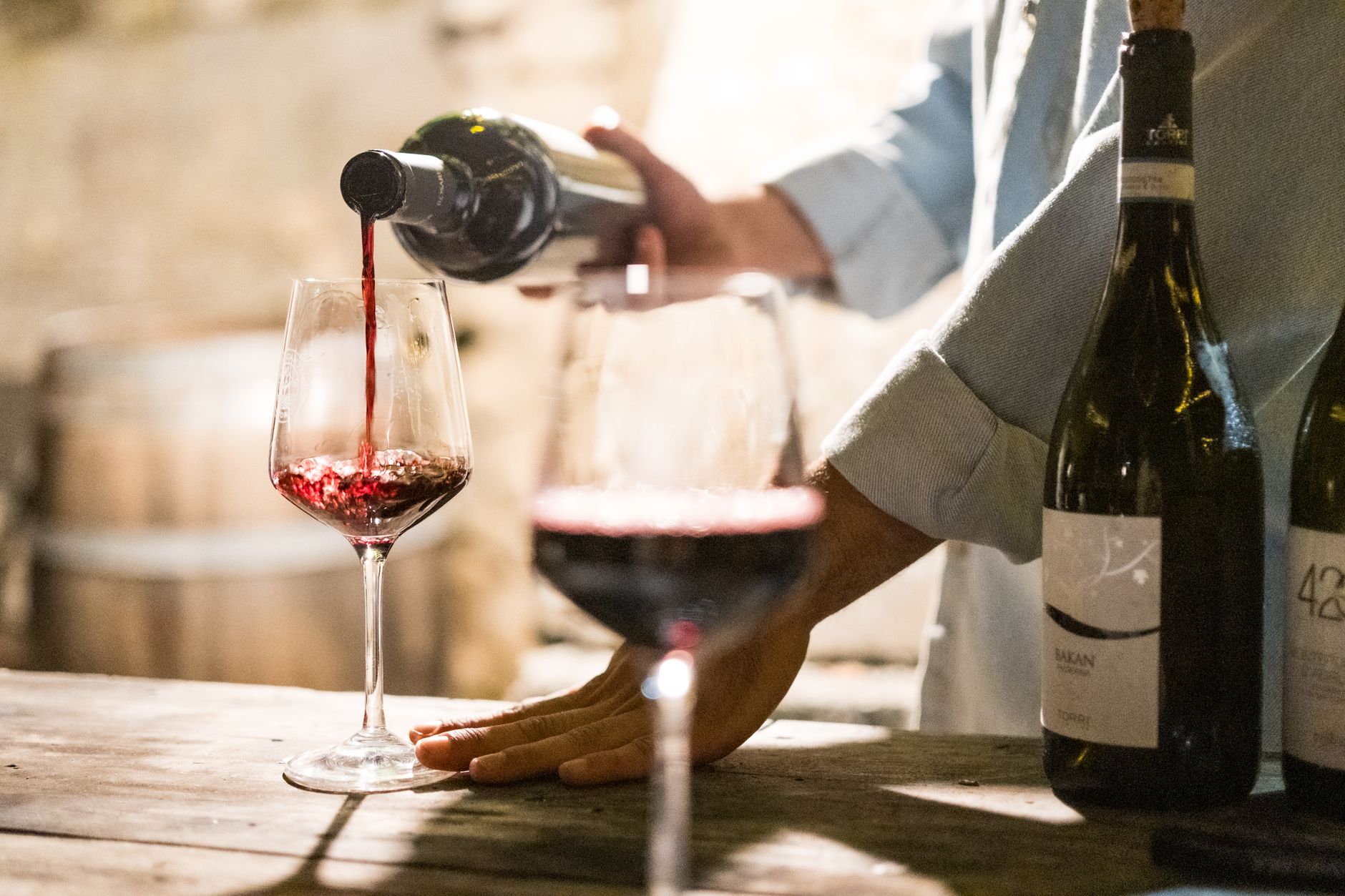
For Bangkok wine buyers who want Nebbiolo at its expressive best without the 15-year wait, Barbaresco is the answer. The appellation's smaller size means quality is more consistent; the wines mature faster; and the price ceiling is lower than comparable Barolo.
Massolino Barbaresco DOCG (฿2,550). Massolino is a Serralunga d'Alba house best known for Barolo, and its Barbaresco is one of the most reliable bottles in the category — aged in large Slavonian oak in the traditional manner. Needs 2–3 years of breathing on opening; ideally, open a 2018 or 2019 vintage now or hold until 2028.
Prunotto Barbaresco Bric Turot DOCG (฿2,500). Prunotto is an Antinori-owned house with roots going back to the 1920s as a co-op. Their Barbaresco is classic in style — dark fruit, rose, anise, substantial but approachable tannin. A reliable choice for a dinner centrepiece where you want something serious but not cellared.
Barolo: When You're Ready to Commit
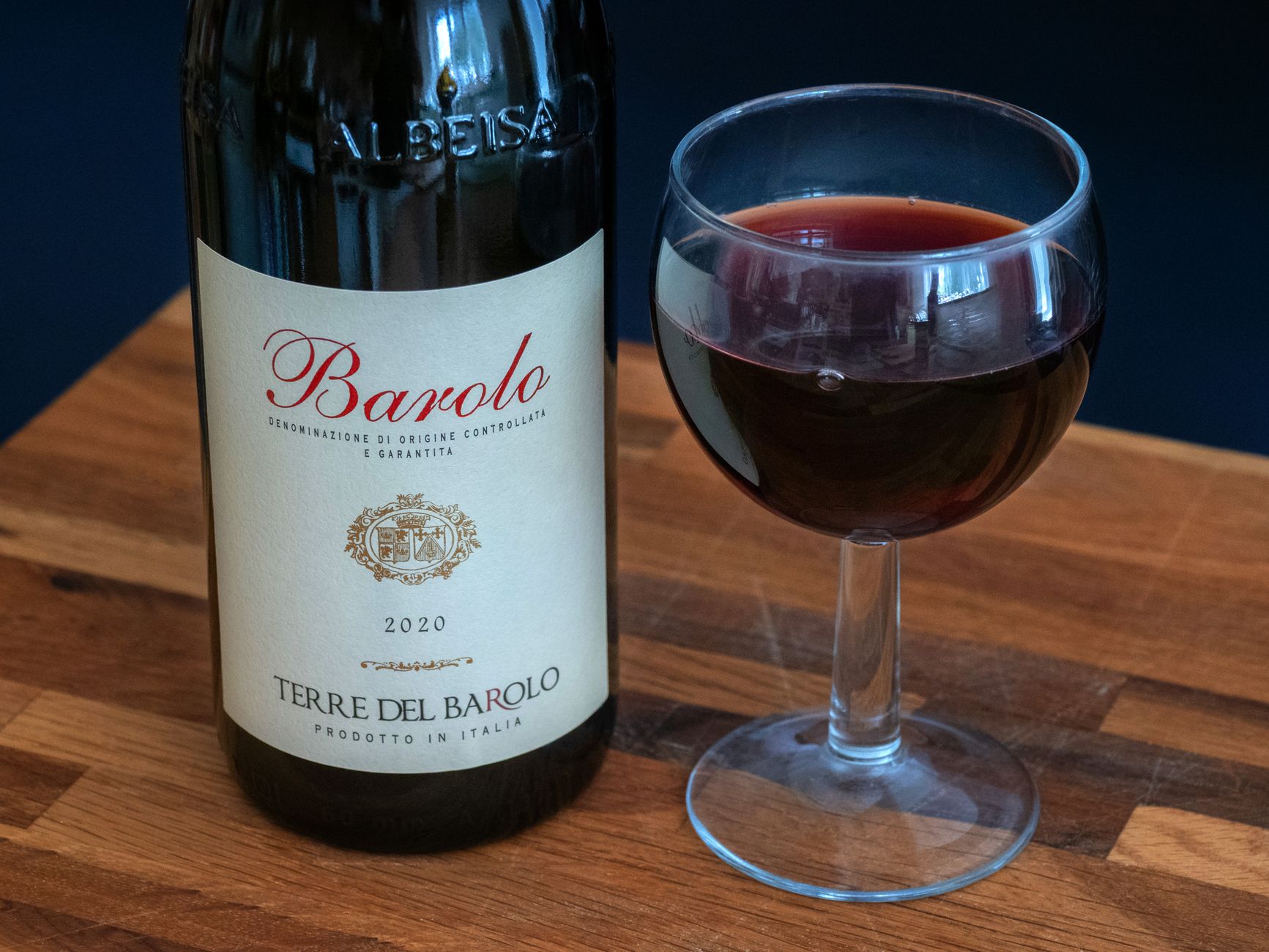
Barolo is not an impulse purchase. The right approach is to buy two bottles of a good vintage, drink one at 10 years to see where it's going, and open the second at 15. Budget for that.
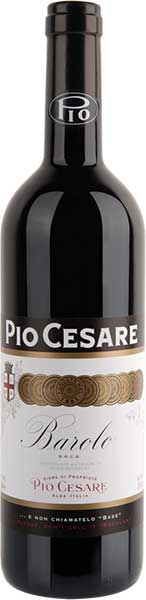
Pio Cesare Barolo DOCG (฿2,799). The classic first Barolo. Pio Cesare has blended fruit from across the zone since 1881, and the estate Barolo carries a 96-point rating at a price no single-vineyard bottling can touch. Traditional in style — tar, rose, firm tannin — and the reference point for what the King of Wines means.
Ceretto Barolo "Prapo" DOCG (organic) (฿6,775). Ceretto is one of the great modernist houses of Alba. Prapo is a single-vineyard MGA in Serralunga d'Alba — deeper and more structured than the floral La Morra style, with the mineral spine Serralunga is famous for. Built to cellar; a serious step-up Barolo for a Bangkok collection.
Sommelier's Note: Buying Barolo in Bangkok
"The single biggest mistake buyers make with Barolo is drinking it too young. If the vintage on your bottle is 2020 or later, put it in your cellar and forget about it. Open the 2015s and 2016s now — both are legendary vintages and should be hitting their stride. If you want Nebbiolo tonight, open a Langhe Nebbiolo or a young Barbaresco with 90 minutes of decanting."
— WNLQ9 Sommelier Team
Bangkok's heat and humidity make a temperature-controlled storage solution essential for any bottle you plan to hold longer than six months. Wine stored above 25°C accelerates aging unpredictably. Barolo that should last 20 years can deteriorate in 5 if stored warm.
Keep reading: Wine Designations Explained · Tuscany Deep Dive · all Wine stories.
FAQ
What is Barolo wine?
Barolo is a DOCG red wine from the Langhe hills of Piedmont in northwest Italy, made from 100% Nebbiolo grapes. It is required by law to be aged a minimum of 38 months before release (62 months for Riserva), of which at least 18 months must be in oak. Barolo is known for its high tannin, high acidity, relatively pale garnet colour, and complex aromas of roses, tar, dried cherry, tobacco, and leather. The best examples can age 20–30 years or more.
What is the difference between Barolo and Barbaresco?
Both are made from 100% Nebbiolo in adjacent zones near Alba in Piedmont, but they differ in scale, style, and aging requirements. Barolo covers a larger area (11 communes), requires longer aging (38 months minimum), and tends to be more tannic and structured — needing a longer cellar time. Barbaresco covers a smaller zone (3 communes), requires 26 months minimum aging, and produces wines that are generally more aromatic and accessible earlier. Barbaresco is often described as more "elegant"; Barolo as more "powerful." Both are serious, age-worthy wines.
How long can you age Barolo?
A well-made Barolo from a good vintage can age comfortably for 20–30 years. The 2010, 2013, 2015, and 2016 vintages are widely considered exceptional and will age for decades. Most producers recommend not opening Barolo for at least 8–10 years after the vintage date; traditionalist-style Barolos from Serralunga d'Alba often need 15+ years. The key is proper storage: consistent temperature (ideally 12–14°C), darkness, and humidity around 70%.
What food pairs well with Barolo and Barbaresco?
Piedmont's own cuisine is the natural answer: braised beef (brasato al Barolo), lamb, slow-cooked wild boar, roasted game birds, aged cheeses like Parmigiano-Reggiano and Castelmagno, and white truffles. In a Bangkok context, Barolo and Barbaresco are surprisingly good with dishes that have some fat and umami depth: slow-cooked pork rib, duck breast, or rich mushroom-based preparations. The high acidity cuts through fat beautifully; the tannins need protein to soften against.
Is Langhe Nebbiolo worth buying if I can't afford Barolo?
Absolutely — it's one of the best introductions to any serious grape category at this price point. Langhe Nebbiolo DOC is made from the same Nebbiolo grape, often from younger vines or plots not classified for Barolo or Barbaresco production, with less mandatory wood aging. The wines are lighter, fresher, and approachable young, typically at ฿1,200–2,000 in Bangkok. Think of it as the "village Burgundy" equivalent — a genuine expression of Nebbiolo's character without the structural intensity that demands long aging.
All bottles in stock at WNLQ9 as of July 2026. Prices in THB. Sale prices as marked.