 Log in to view
฿฿฿฿
Rated 100/100 by Wine Advocate (top 1% of their reviews).
Researched by our team from producer and independent sources — not supplied by the seller.
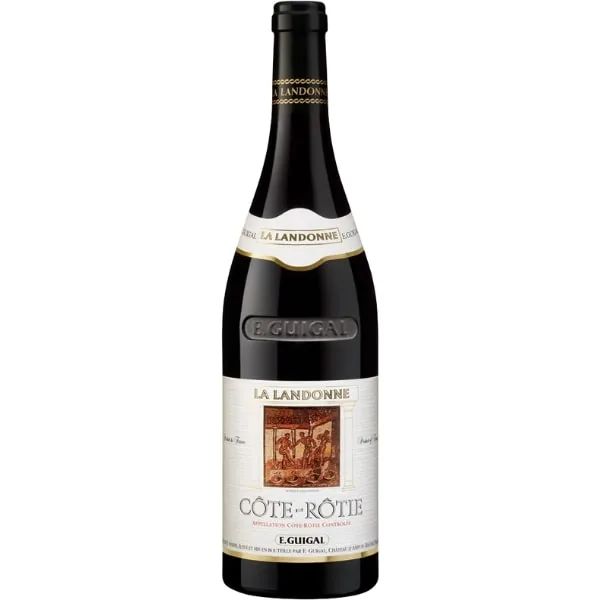
A powerful, structured single-vineyard Northern Rhône Syrah — the biggest and most tannic of Guigal's three 'La La' cuvées, built for long cellaring rather than early drinking.
La Landonne comes from a steep, roughly 2-hectare parcel on the Côte Brune that Marcel Guigal assembled parcel-by-parcel from multiple growers beginning in the early 1960s, replanting it in 1975 and releasing the first vintage in 1978. It sits at the northern
end of the Côte Brune and is typically the last of Guigal's Côte-Rôtie sites to ripen, so the stems reach full lignification and the fruit is fermented whole-cluster, undestemmed.
The wine is 100% Syrah, aged around 42 months in new French oak — the same extended-oak regime used across all three La La wines. Of the trio, La Landonne is consistently the darkest, densest, and most tannic: iron-rich clay-limestone soil gives it a mineral, almost bloody edge alongside blackberry, grilled meat, tobacco, graphite, and truffle tones.
Where La Mouline is prized for perfume and silkiness and La Turque sits between the two, La Landonne is the structural, brooding member of the set, and it is the slowest to open — commonly needing a decade or more in bottle before the tannins integrate.
E. Guigal was founded in Ampuis in 1946 by Étienne Guigal, who had arrived in the Rhône at age 14 in 1924 and worked at the Vidal-Fleury house before starting his own. His son Marcel took over winemaking duties in 1961 while still a teenager and, together with
his father, built the estate's reputation, notably through the introduction of the single-vineyard 'La La' Côte-Rôties (La Mouline in 1966, La Turque and La Landonne later).
Marcel's son Philippe (born 1975, the year the La Landonne vines were replanted) joined the winery in the early 1990s and became winemaker in 1997, now representing the third generation overseeing viticulture and winemaking. The firm acquired the historic Vidal-Fleury négociant house in the early 1980s and purchased Château d'Ampuis in 1995, which anchors its Côte-Rôtie holdings today.
Guigal is widely credited with restoring Côte-Rôtie's international reputation in the late 20th century.
Charcoal-grilled ribeye or wagyu beef
The wine's dense tannin and smoky, grilled-meat character mirror charred beef fat and char, while the meat's protein and fat soften the tannic structure.
Braised lamb shank with herbes de Provence
Slow-braised lamb's richness and herbal notes echo the wine's tobacco and truffle tones, and the fat coats the palate to buffer the firm tannins.
Massaman beef curry (แกงมัสมั่นเนื้อ)
Massaman is one of the mildest Thai curries, low in capsaicin, and its warm spices (cinnamon, cardamom) and slow-cooked beef richness align with the wine's dark spice and structure without provoking a chili-tannin clash.
Product information compiled from producer, importer and reference sources.
Elegant Côte-Rôtie Syrah with dark fruit, pepper spice, and mineral complexity—a benchmark Northern Rhône expression.
E. Guigal's La Landonne represents the pinnacle of Côte-Rôtie craftsmanship. This 100% Syrah showcases the terroir's volcanic slate and granite soils through a layered profile: dark plum and black pepper on entry, evolving through smoky oak and leather in the mid-palate, finishing with mineral precision and subtle tar notes.
Medium-full body and balanced tannin structure reward both immediate enjoyment and cellaring potential.
** Vintage may change — please confirm with our team.
Loading notes…
Tasted this?
Ask us on LINE.
Ask about this item