 Log in to view
฿฿฿฿
Rated 96/100 by Wine Enthusiast (top 12% of their reviews).
WNLQ9 vintage signal, averaged from Wine Enthusiast Wine Vintage Chart 2026 Edition's 3 closely-agreeing Bordeaux 2000 ratings (Bordeaux Pomerol/Saint-Emilion; Bordeaux Medoc; Bordeaux Graves Red).
A vintage grade rates the growing season in this wine’s region — not this specific bottle. Source.
Researched by our team from producer and independent sources — not supplied by the seller.
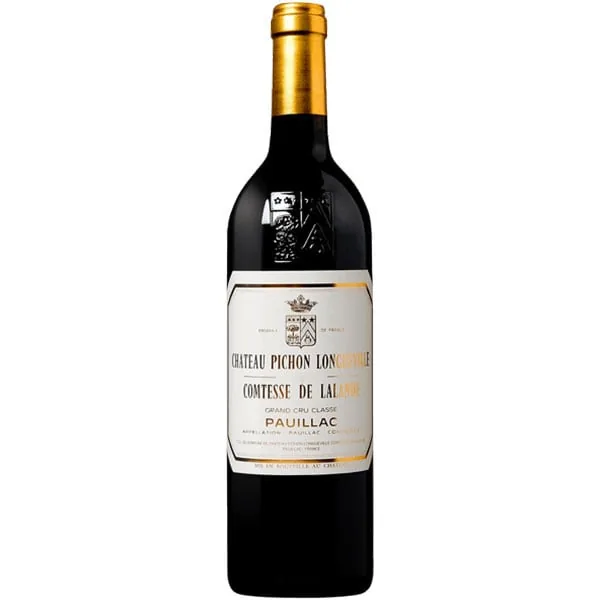
An elegant, aromatic Pauillac distinguished by an unusually high proportion of Merlot for the appellation, giving black plum and blackcurrant fruit, softer tannin, and a more perfumed, 'feminine' character than its Cabernet-dominant Pauillac neighbors — including its own sister estate, Pichon Baron.
Pichon Comtesse's higher Merlot content (historically around a third of the blend, sometimes more) is atypical for Pauillac, where Cabernet Sauvignon normally dominates — this is the technical reason the wine reads as softer and more approachable young than most classified Pauillac growths.
The estate shares its origin with Pichon Baron: founded in the late 17th century by Pierre de Rauzan, it passed to the Pichon Longueville family via an 1694 marriage, then was divided among the family's children in 1850, with the larger three-fifths share going to Virginie de Pichon Longueville, Comtesse de Lalande — giving the estate its name and its own château built in the style of Bordeaux's Hôtel de Lalande.
The Miailhe family (Édouard and Louis) purchased the château in 1925; Édouard's daughter, May-Eliane de Lencquesaing, later ran the estate and built its modern reputation. In 2006 de Lencquesaing sold a majority stake to the Rouzaud family, owners of Champagne house Louis Roederer, who invested in replanting and a new cellar starting in 2009 and moved the property toward biodynamic farming.
Roast duck breast with tamarind or plum glaze
The wine's Merlot-driven plum and blackcurrant fruit and softer tannin mirror the sweet-tart glaze and richness of duck without needing the aggressive tannin management a Cabernet-dominant wine would require.
Grilled pork neck (kor moo yang) with a mild dipping sauce (คอหมูย่าง)
The char and fat of grilled pork neck suit the wine's fruit-forward profile, and this dish is typically served with a lime-based dip that can be moderated in chili, keeping the pairing away from a heat clash.
Very spicy nam prik or chili-dominant relishes
Despite its softer tannin, the wine's oak and moderate acidity still don't hold up well against high chili heat; genuinely fiery dishes are better paired with something more acid-driven or off-dry.
Product information compiled from producer, importer and reference sources.
Elegant 2000 Pauillac blend: dark fruit, cedar, and tobacco complexity from two decades of graceful aging.
Château Pichon Longueville Comtesse de Lalande's 2000 vintage represents a mature expression of classic Pauillac winemaking. The blend of 50% Cabernet Sauvignon, 34% Merlot, 10% Petit Verdot, and 6% Cabernet Franc delivers a medium-full bodied wine with integrated tannins and layered complexity.
Primary notes of blackcurrant and dark plum are complemented by secondary cedar and spice character, with tertiary tobacco and leather notes emerging from two decades of bottle age. The wine's balanced acidity and mineral backbone make it a versatile food companion.
** Vintage may change — please confirm with our team.
Loading notes…
Tasted this?
Ask us on LINE.
Ask about this item