 Log in to view
฿฿฿฿
Product information compiled from producer, importer and reference sources.
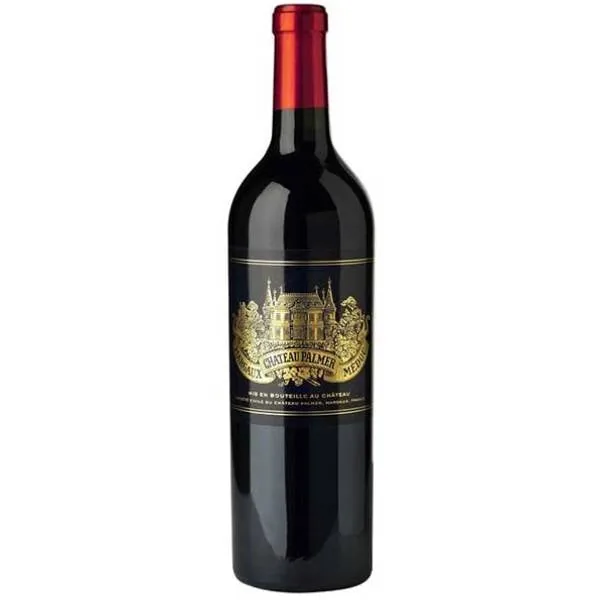
Third Growth that outranks Second Growths: Palmer plants Merlot on its finest Cantenac gravel — Left Bank heresy yielding Right Bank richness. 2010: peak 2025–2055.
When the Mähler-Besse and Sichel families consolidated ownership in 1938, they inherited an estate already defined by a deliberate transgression: Merlot planted at 47% of the vineyard on the same Gunzian Garonne alluvial gravel croupes where Médoc orthodoxy demands Cabernet Sauvignon.
That single decision — maintained across decades — is the structural origin of Palmer's singular character.
The Margaux-Cantenac plateau sits across 122 plots in three communes, its mosaic of 18 distinct gravel, sand, and clay types moderated by the Gironde estuary's thermal buffer. The highest-gravel Issan sector anchors the Cabernet component; the gravel-clay plateau behind the château gives the Merlot its voluptuous weight without sacrificing definition.
The 2010 Grand Vin was fermented plot-by-plot in 42 temperature-controlled stainless steel vats with indigenous yeasts, followed by a 20–22 month élevage: the first year in 225-litre French oak barriques at under 50% new wood, the second in 30-hectolitre oak vats to integrate without over-oaking. Bottled unfined and unfiltered, sealed with a Prooftag anti-counterfeit seal.
The 2010 is considered one of the greatest modern Palmer vintages — classically structured, dense, and precise — with a 96/100 critic consensus and a drinking window of 2025–2055.
** Vintage may change — please confirm with our team.
Sommelier’s pick: Roasted rack of lamb with black truffle jus · Dry-aged côte de boeuf with bone marrow butter · Braised short rib with celeriac purée
Loading notes…
Tasted this?
Ask us on LINE.
Ask about this item