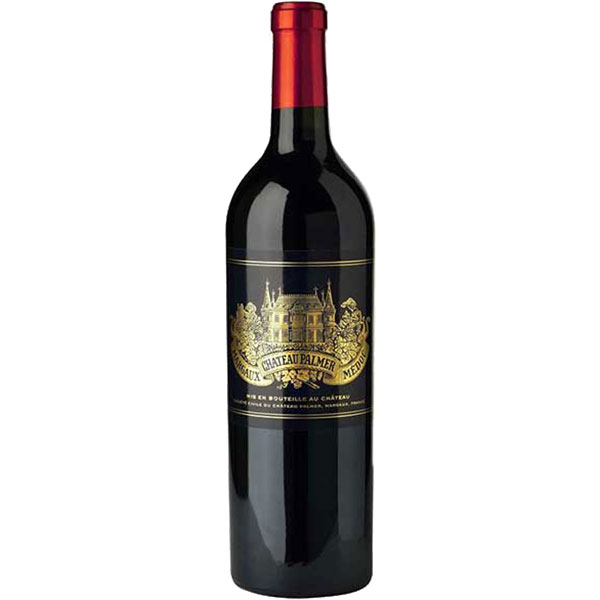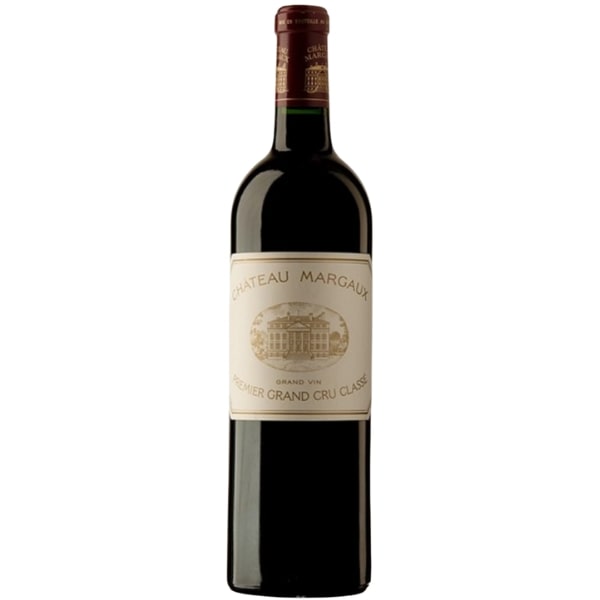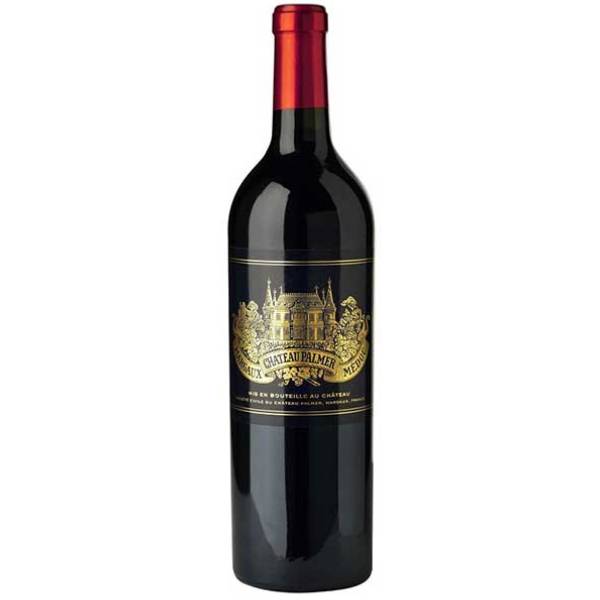
Chateau Palmer Margaux 2015
฿฿฿฿
SaleRated 100/100 by James Suckling (top 1% of their reviews).
From our sommelier team
Producer history
The property's origins trace to the 18th century under the Gasq family. It took the Palmer name in 1814 after Charles Palmer, a British army general, acquired and expanded the estate. Financial difficulty eventually forced a sale, and in 1853 the Pereire banking family took control, only two years before the 1855 classification fixed Palmer as a third growth — a ranking that reflected the estate's commercial standing at that specific moment rather than its full long-term potential. The estate later passed to a consortium of négociant families (Ginestet, Miailhe, Mahler-Besse and Sichel among them), of which Mahler-Besse and Sichel remain the estate's owners today, providing the continuity that allowed the biodynamic conversion and the estate's modern reputation to be built.
Signature pairings
- Roast duck breast with port jus — The wine's aromatic, floral lift and moderate tannin (thanks to the high Merlot share) pair with the richness of duck without the tannin clash a more Cabernet-dominant Margaux might risk; the fruit-sweetness in the glass echoes a fruit-based jus.
- Massaman curry with beef (แกงมัสมั่นเนื้อ) — Massaman is a mild, warmly spiced (cinnamon, cardamom, coconut) curry rather than a chile-forward one; its sweetness and spice echo the wine's own cinnamon and dark-fruit tones, and the low chile heat avoids clashing with the wine's tannin structure.
- Aged Comté or Gruyère — A firm, nutty aged cheese has enough density to stand up to the wine's structure without the acidity or funk that would clash with its perfumed fruit character.
When Major General Charles Palmer renamed Domaine de Gascq in 1814, he could not have anticipated that two centuries later his estate would deliberately invert Médoc orthodoxy by planting 47% Merlot on its finest Gunzian Garonne alluvial gravel croupes — the very parcels where Médoc convention demands Cabernet Sauvignon. That transgression defines every bottle. The Cantenac-Margaux plateau's mosaic of 18 distinct gravel, sand, and clay soil types — gravel-clay behind the château, pure-gravel Issan sector to the south — combined with Gironde estuary temperature moderation, delivers the long, even phenolic ripening that makes the 2015's density possible without coarseness. The 2015 growing season brought a hot, dry summer with textbook phenolic maturity; the result is described as 'extravagant and perfectly structured,' with high alcohol anchored by dense tannin architecture. Vinification proceeded plot-by-plot across 42 temperature-controlled stainless vats, with indigenous yeasts, no sulfur at harvest, and a three-week fermentation. Élevage ran 20–22 months: the first year in 225-litre French oak barriques at under 50% new wood, the second in 30-hectolitre oak vats to add patina without oak dominance — then bottled unfined and unfiltered. No peer classified growth in the Médoc combines full biodynamic trajectory, this Merlot proportion on gravel, and a two-vessel aging protocol simultaneously. Critic consensus: 96/100; drinking window 2025–2050.
Details
- Country
- France
- Region
- Bordeaux
- Subregion
- Margaux
- Variety
- Cabernet Sauvignon, Merlot, Petit Verdot
- Vintage
- 2015 **
- Bottle size
- 750 ml
** Vintage may change — please confirm with our team before ordering.
Taste profile
- Body
- Full
- Acidity
- Medium
- Tannin
- High
Pairs well with
- Lamb dishes
- Cured meats & charcuterie
- Braised & slow-cooked meat
- Hard & aged cheese
- Game meats
Sommelier’s pick: Roasted rack of lamb with black truffle jus · Dry-aged côte de bœuf with bone marrow butter · Braised short rib with Périgueux sauce
Interested? Talk to us
Message us to check item availability and information.
Community rating
Loading reviews…