 Log in to view
฿฿฿
Product information compiled from producer, importer and reference sources.
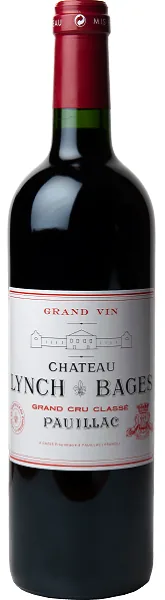
Fifth Growth Pauillac trading at Second Growth level — deep Garonne gravel, 75% new French oak, ripe-harvest house doctrine on the Bages plateau.
When Jean-Michel Cazes launched a 15-year modernisation programme in 1975, his stated ambition was full phenolic ripeness — Lynch-Bages was famously among the last estates in Pauillac to harvest, a deliberate gamble on concentration over caution that redefined the château's trajectory.
That doctrine is written into every bottle. The Bages plateau sits south-southwest of Pauillac town, its soils a deep, homogeneous bed of Garonne gravel — slow Pyrenean erosion deposited over limestone sub-strata — delivering the free drainage that forces vine roots deep and concentrates flavour while the Gironde estuary moderates temperature extremes.
Parcel-by-parcel fermentation across 80 temperature-controlled stainless vats is followed by malolactic fermentation split one-third in vat, two-thirds in barrel, then 15–18 months in French oak barriques at 75% new oak — a regime that builds structural density without sacrificing the estate's signature mid-palate generosity.
The 2013 vintage in Bordeaux was cool and uneven, demanding rigorous selection; the result at Lynch-Bages is a leaner, more Cabernet-driven expression than the opulent 2015 or 2019, with graphite, cedar, and dark cassis in a tighter frame and notably fresh acidity for the appellation.
A Fifth Growth by 1855 decree, Lynch-Bages has long traded at Second Growth prices — the 2013 offers a rare entry point into that quality tier at a fraction of the cost of its warmer-vintage siblings; drink 2024–2035.
** Vintage may change — please confirm with our team.
Sommelier’s pick: Rack of lamb with rosemary and black olive tapenade · Duck breast with Périgueux sauce and celeriac purée · Aged côte de bœuf with bone marrow butter
Loading notes…
Tasted this?
Ask us on LINE.
Ask about this item