Bangkok does not appear on lists of the world's great wine cities. Tokyo does — for its fanatical cellar culture and pristine importing chains. Singapore does — for the auction houses and the zero-duty access. Hong Kong has held its crown long enough that the world takes it as given. Bangkok, meanwhile, gets filed under "interesting food scene" and left there.
That filing is wrong, and increasingly out of date. Over the past five years, a confluence of structural changes — direct importer-to-consumer models, an explosion in restaurant wine programs, and a domestic wine industry that nobody outside Thailand saw coming — has made Bangkok one of the most compelling cities in Asia to buy, drink, and think seriously about wine. The people who live here already know this. The people passing through are starting to figure it out.
This is the case for Bangkok as a wine city. Not despite the import duties. Not despite the heat. Because of everything else.
The Import Duty Reality — and Why It Matters Less Than You Think
Let's address the obvious friction point directly. Thailand applies a layered tax structure to imported wine: import duty at 54% of the CIF (cost, insurance, freight) value, followed by excise duty calculated on a tiered basis, and then VAT at 7% stacked on top of both. The arithmetic is genuinely punishing if you work through it on paper, and it explains why a bottle that costs €8 at a French supermarket might retail for ฿950 in Bangkok.
What the arithmetic doesn't account for is the distribution model. The old Thailand wine market ran through importers who sold to hotels and restaurants who marked up again to cover their costs and margins. The final consumer paid for three levels of markup on top of the tax stack. That era is not quite over, but it is being disrupted.
Direct importer-to-consumer operations — the model that WNLQ9 operates on — eliminate the restaurant middleman entirely. The result is that the real price gap between Bangkok retail and, say, London retail is often considerably smaller than the raw duty numbers would suggest. A bottle retailing at ฿1,500 in Bangkok and £28 (approximately ฿1,270) in London for the same producer, same vintage, same label is not unusual. The gap exists, but it is the gap of one distribution step, not the catastrophe the duty headline implies.
The comparison that matters most is not Bangkok versus London. It is Bangkok retail versus Bangkok restaurant. Pour the same bottle at a hotel bar in the Sathorn district and you may pay ฿4,500. The math for buying retail and drinking at home — or at a rooftop among friends — is not subtle.
"The gap between Bangkok retail and London retail is often a single distribution step. The gap between Bangkok retail and a Bangkok hotel bar is a different number entirely."
Bangkok vs Singapore vs Hong Kong: A More Honest Comparison
Singapore's zero-duty status on wine is real and it matters — for fine wine auctions, for high-volume importing, and for the city's image as a wine hub. But zero duty is not the same as cheap wine. Singapore's underlying cost of living, its premium retail rents, and the "Singapore premium" applied to almost every imported consumer good mean that mid-range bottles — the ฿800–2,000 range that represents the real market for most buyers — are often more expensive in Singapore than in Bangkok, not less.
| Factor | Bangkok | Singapore | Hong Kong |
|---|---|---|---|
| Import duty on wine | 54% CIF + excise + VAT | Zero | Zero |
| Mid-range bottle retail (est.) | ฿900–1,800 | SGD 30–60 (~฿800–1,600)* | HKD 180–380 (~฿820–1,730)* |
| Restaurant markup culture | Avoidable via retail | Moderate–high | High |
| Domestic wine production | Yes (Khao Yai, Hua Hin) | None | None |
| SKU depth via direct import | 5,000+ | Broad | Broad (auction-skewed) |
| 24-hour delivery available | Yes | Yes | Yes |
Approximate baht equivalents at mid-2026 exchange rates. Retail pricing varies significantly by retailer and vintage.
Hong Kong's wine market is genuinely exceptional for trophy bottles and auction lots — no argument there. But Hong Kong has also become one of the most expensive cities on earth to live in and shop in, and the everyday wine market reflects that. A buyer spending ฿1,200 on a Spanish Reserva in Bangkok is often getting a comparable product at a lower real-world cost than the same buyer in Central or Wan Chai.
The narrative that Bangkok loses on wine purely because of its tax structure is a narrative that serves the marketing interests of zero-duty cities. The reality, once you look at final retail prices and distribution access, is considerably more nuanced.
More Than 5,000 SKUs — Available Tomorrow
Selection depth is where Bangkok's argument becomes genuinely difficult to contest. The WNLQ9 catalogue carries more than 5,000 in-stock SKUs — available for next-day delivery across the city — spanning Burgundy Grand Cru through to single-malt Scotch, Khao Yai natural wine, craft rum from Phuket distilleries, and Junmai Daiginjo sake from Fushimi. There is no comparable single point of access for this breadth of selection in the region.
Singapore's retail scene is excellent for the wines that its importers have decided to bring in — typically French, Italian, and high-profile New World. The long tail of Spanish and German producers, the more obscure Japanese spirits, the emerging Thai wines: coverage thins out. Bangkok, precisely because it serves a large expatriate population with varied tastes and an increasingly sophisticated local market, has been forced to build the long tail.
That depth matters for a specific buyer: the person who knows what they want and wants to find it in one place. Chateau Pichon Baron and an aged Rhum Barbancourt and a Granmonte Syrah from the Asoke Valley, all for delivery on Saturday. Bangkok can do this. Bangkok's competitors, largely, cannot.
The Thai Wine Story That Singapore and Hong Kong Cannot Tell
Thailand should not, by most viticultural logic, make good wine. The climate is wrong — tropical rainfall, high humidity, a monsoon season that punishes vines and promotes fungal disease. And yet.
Siam Winery, operating since the early 1980s near Hua Hin, proved the concept by planting Malaga Blanc and Muscat of Alexandria on raised trellis systems designed to manage water and airflow. Monsoon Valley, their flagship label, now ships to multiple export markets. The wines are what they are — accessible, fruit-forward, honest — but they established that Thailand could produce something drinkable. That was the necessary first move.
Granmonte in the Asoke Valley, Khao Yai province, is the more interesting story. Planted on higher-altitude red clay soils that drain better than the river plains, Granmonte produces estate Syrah, Viognier, and Chenin Blanc under winemaker Nikki Lohitnavy — a graduate of Adelaide's Roseworthy programme who returned home to prove a point. The point is being proved. Their Syrah, tasted blind, has won sceptics who wouldn't have given it the time of day with the label visible.
The New Latitude Wines movement — producers working in tropical and subtropical climates that conventional wisdom dismissed — has created a framework for understanding what these wines are trying to do. Bangkok wine buyers have the rare privilege of drinking these wines where they're made, in the culture that produced them, alongside the food they were designed for. That is an experience Singapore and Hong Kong simply cannot replicate.
 Selection depth is Bangkok's strongest card — a range that spans old-world classics, emerging Thai wines, and Japanese spirits unavailable elsewhere in the region.
Bangkok's Restaurant Wine Programs Have Arrived
The knock on Bangkok wine culture, historically, was that the fine dining scene leaned heavily on beer, spirits, and imported prestige labels with predictable markups and little imagination behind the list. That era had a long run. It is ending.
Bangkok's Michelin-starred tier now includes restaurants with genuine wine programs — not trophy-bottle lists designed to impress corporate expense accounts, but curated lists that reflect the chef's palate and the kitchen's direction. Saawaan, operating a modern Thai tasting menu, has built a list that takes natural wine seriously and pairs producers from the Loire and Jura against dishes that don't read as "wine food" in any conventional sense. Sühring, the German twin-chef restaurant in Sathorn, sources broadly across Germany and Austria with the kind of depth that would be notable in Berlin. Le Du, consistently on Asia's 50 Best, maintains a list that reflects chef Thitid Tassanakajohn's thinking about what Thai cuisine can do with European wine.
These programs matter beyond their individual excellence. They create a market signal: wine knowledge has value in Bangkok. Sommeliers with serious credentials are working here. The job of the direct retailer becomes easier in a city where restaurants have raised the baseline understanding of what wine can be.
The Cultural Context: Premium Without Pretension
Thai culture has a relationship with premium imported goods that differs from several of its neighbours in a useful way. There is no particular class guilt attached to enjoying expensive imported things — wine included. Status goods are not hidden. But Bangkok also has a directness about pleasure that prevents the worst excesses of wine snobbery. People drink what they like and talk about what they like. The hierarchy is more relaxed.
This creates a market dynamic that benefits buyers. A wine merchant here can sell Yamazaki 12 alongside Chambolle-Musigny alongside a Khao Yai Chenin Blanc without the customer needing a framework to justify crossing categories. The city's food culture — which is among the world's most adventurous in its willingness to move between price points and styles within a single meal — has trained a tolerance for range that translates well to wine.
The expatriate community, one of the largest in Southeast Asia, has also accelerated the market. Long-term expats from wine-drinking cultures (British, French, Australian, American) have built the demand base that justifies a 5,000-SKU catalogue. But that community has now been joined by a generation of Thai consumers for whom wine is not an imported affectation but a normal part of how they eat and socialise. The market has genuine two-sided demand, and that is what makes it durable.
The WNLQ9 Selection — Five Bottles That Make the Case
Frescobaldi Castelgiocondo Brunello di Montalcino DOCG — ฿3,205
One of the benchmark Brunellos — Sangiovese Grosso at altitude, aged in large Slavonian oak for four years before release. The kind of bottle that costs considerably more at a restaurant a few streets away. Available for delivery in Bangkok.
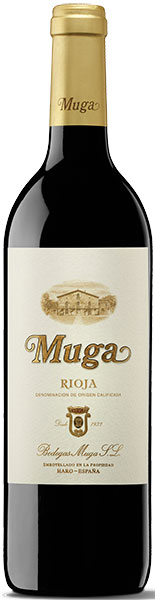
Bodegas Muga Reserva Rioja DOC — ฿1,758 (sale)
The Spanish benchmark — Tempranillo and Garnacha aged in American and French oak, tight-grained and structured. Available at a price that makes it a weekly opener rather than an occasion bottle.
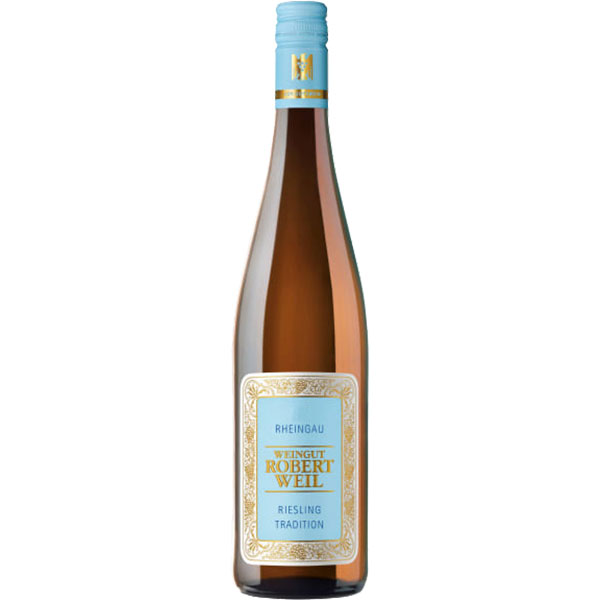
Weingut Robert Weil Riesling Rheingau Tradition — ฿1,200
Weil is Rheingau's most serious estate. The Tradition bottling is the reliable entry point into their house style — precise, mineral, with the slate-and-petrol complexity that makes Rheingau Riesling impossible to substitute.
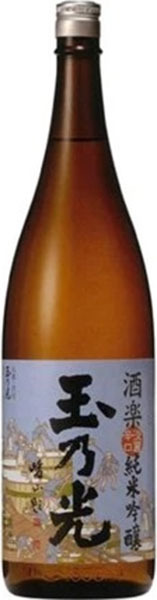
Tamanohikari Junmai Ginjo Shuraku Sake — ฿489
Fushimi's water — known for softness — shapes this. Clean fermentation with melon and white flower notes. At ฿489 for a genuine Junmai Ginjo from a respected Kyoto kura, this is where the Bangkok price argument becomes hard to refute.
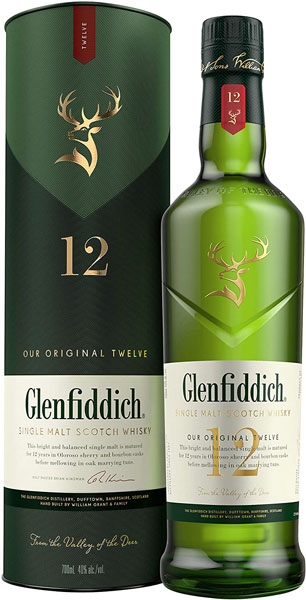
Glenfiddich 12 Year Old — ฿2,399
The world's best-selling single malt, offered at retail price without the bar or hotel markup. The benchmark case for why buying direct in Bangkok changes the economics of drinking well.
Keep reading: Veneto · The WNLQ9 Sommelier's Personal Picks · all Deep Dives stories.
Frequently Asked Questions
Is Bangkok a good place to buy wine?
Yes — and increasingly so. Bangkok has one of the deepest direct-to-consumer wine markets in Southeast Asia, with selection depth (5,000+ SKUs) and next-day delivery infrastructure that rivals any city in the region. The import duty structure adds cost relative to duty-free markets, but direct importer models bypass restaurant markups, which more than compensates for most buyers in the mid-range.
Is wine cheaper in Bangkok than Singapore?
Often yes, for mid-range bottles bought retail. Singapore's zero-duty status is real but Singapore's cost of living, retail rents, and distributor margins mean final retail prices on mid-range bottles (SGD 30–60 range) are frequently comparable to Bangkok retail or higher. Where Singapore genuinely wins is on fine wine auction lots and trophy bottles, where the duty saving at the higher price point is substantial. For the ฿800–2,000 everyday market, Bangkok is competitive.
Where can I buy wine for delivery in Bangkok?
WNLQ9 offers next-day delivery across Bangkok from a catalogue of 5,000+ wines, spirits, sake, and craft beverages — from Burgundy Grand Cru to locally-made Thai wine and Japanese whisky. Orders placed before the daily cut-off arrive the following day. Villa Market and Gourmet Market carry a curated selection for immediate pickup. For auction lots and mature fine wine, specialist retailers in the Silom and Sukhumvit corridors are the right destination.
What is the import duty on wine in Thailand?
Thailand applies a layered tax structure to imported wine: import duty at 54% of the CIF value (cost, insurance, freight), followed by excise duty calculated on a tiered schedule based on the bottle's assessed value, and then VAT at 7% applied to the combined total. The effective total tax burden on an imported bottle can reach 150–200% of the ex-winery cost depending on origin and declared value. This is why direct importer-to-consumer pricing, which eliminates further distributor and restaurant markups, materially changes the economics for end buyers.
Bangkok's Wine Moment Is Now
The wine city of the future in Asia will not be defined by which market has zero duty. It will be defined by which market has the selection, the infrastructure, the restaurant culture, the domestic production story, and the consumer base to sustain a serious relationship with wine at every price point.
Bangkok has all of those things, and it has had most of them longer than the headlines suggest. The question is not whether the city can compete with Singapore or Hong Kong on wine. It already does, across more dimensions than either city's partisans typically acknowledge.
The better question is why it took this long for anyone outside Bangkok to notice. Part of the answer is that Bangkok's wine culture has been built quietly, by importers and restaurateurs and farmers in the Khao Yai hills, without the marketing infrastructure that positions a city as a wine destination. That is changing. The infrastructure is being built. The next generation of serious wine buyers in Asia already knows where the conversation is happening.
It is happening here.