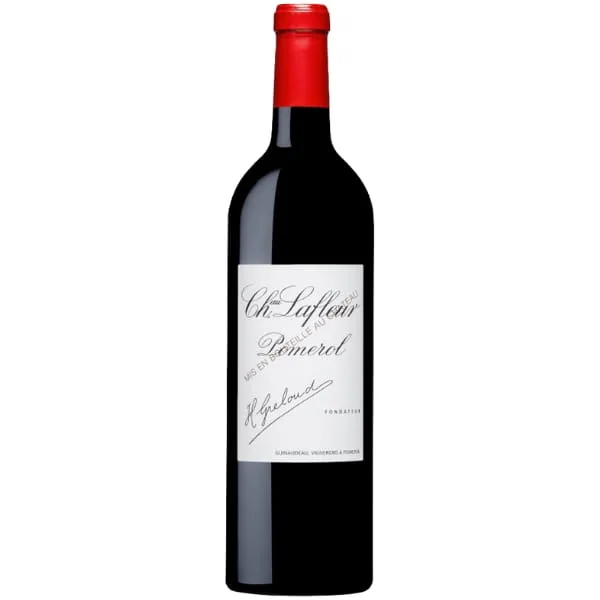
 เข้าสู่ระบบเพื่อดูภาพ
฿฿฿฿
Rated 100/100 by James Suckling (top 1% of their reviews).
WNLQ9 vintage signal, averaged from Wine Enthusiast Wine Vintage Chart 2026 Edition's 3 closely-agreeing Bordeaux 2020 ratings (Bordeaux Pomerol/Saint-Emilion; Bordeaux Medoc; Bordeaux Graves Red).
เกรดวินเทจประเมินสภาพฤดูเพาะปลูกในแหล่งผลิตของไวน์นี้ — ไม่ใช่การประเมินขวดนี้โดยเฉพาะ แหล่งข้อมูล.
ทีมของเราค้นข้อมูลจากผู้ผลิตและแหล่งอิสระ ไม่ใช่ข้อมูลที่ผู้ขายให้มา
A small-production Pomerol built on an unusually high proportion of old-vine Cabernet Franc (locally called Bouchet) alongside Merlot, giving a firmer, more structured, longer-aging profile than most of its Merlot-dominant neighbors.
Château Lafleur farms a compact plot of roughly 4.5 hectares on a gravel-and-clay rise in Pomerol, planted to roughly half Merlot and half old-vine Cabernet Franc — locally known as Bouchet — with sources putting the exact split anywhere from about 60/40 to
50/50 depending on vintage; whatever the precise figure, it is a proportion of Cabernet Franc far higher than almost any other Pomerol estate, most of which lean heavily on Merlot.
This unusual varietal balance is the estate's defining technical fact: it gives the wine a firmer tannic spine, more overt herbal and floral lift, and a slower-developing, longer-lived character than the plush, Merlot-forward style typical of the appellation.
Winemaking at Lafleur is deliberately restrained — native yeast fermentation, gentle extraction, and aging in a mix of new and used French oak barrels without excessive new-wood influence — in keeping with the estate's long-standing motto of quality over quantity.
Because volumes are so small, the wine is scarce and closely tied to the identity of whoever farms the vineyard, which is part of why ownership transitions here (there have only been a handful across two centuries) are closely watched by Bordeaux followers.
Lafleur was created in the 1870s when Henri Greloud, who also owned neighboring Château Le Gay, purchased a small parcel of vines and built the house and cellars that became Lafleur. The property passed to André Robin, who worked to establish massale plantings of Bouchet (Cabernet Franc) in the vineyard during the 1930s and set the estate's long-standing ethos of quality over volume.
From 1946 to the early 1980s, sisters Marie and Thérèse Robin ran Lafleur and Le Gay together with famously old-fashioned methods, farming without herbicides or pesticides and using oxen in the vineyard until the end of the 1970s. In 1984, Jacques and Sylvie
Guinaudeau — descendants of the original Greloud family — took over running the estate, later acquiring it outright after Marie Robin's death in 2001, and their son Baptiste and his wife Julie have since joined the domaine, continuing family stewardship into a new generation.
Roast duck breast with a red wine or fruit jus
Duck's fat and richness soften the wine's firm Cabernet Franc-driven tannin, while the wine's savory, herbal edge complements a jus-based sauce rather than competing with a sweeter glaze.
Grilled lamb chops with herbes de Provence
Lamb's fat and char stand up to the wine's structure, and the herbal quality of Cabernet Franc naturally pairs with rosemary and thyme seasoning.
Aged Comté or Gruyère
A firm, nutty aged cheese has enough density and umami to meet the wine's structure without a sweet or overly pungent note fighting the Cabernet Franc's herbal character.
ข้อมูลสินค้ารวบรวมจากผู้ผลิต ผู้นำเข้าและแหล่งข้อมูลอ้างอิง
ไวน์แดงจากบอร์โดซ์ · บอดี้เต็ม · แห้ง · เข้ากับอาหารจากเนื้อแกะ
ตัวเลือกของซอมเมอลิเยร์: Roasted rack of lamb with rosemary jus and gratin dauphinois · Périgueux-sauced beef tenderloin with black truffle shavings · Braised short rib with bone marrow and celeriac purée
กำลังโหลดบันทึก…
เคยชิมขวดนี้ไหม?
สอบถามเราทาง LINE
สอบถามเกี่ยวกับขวดนี้