 Log in to view
฿฿฿
Wine Enthusiast Wine Vintage Chart 2026 Edition rates Champagne 2007.
A vintage grade rates the growing season in this wine’s region — not this specific bottle. Source.
Product information compiled from producer, importer and reference sources.
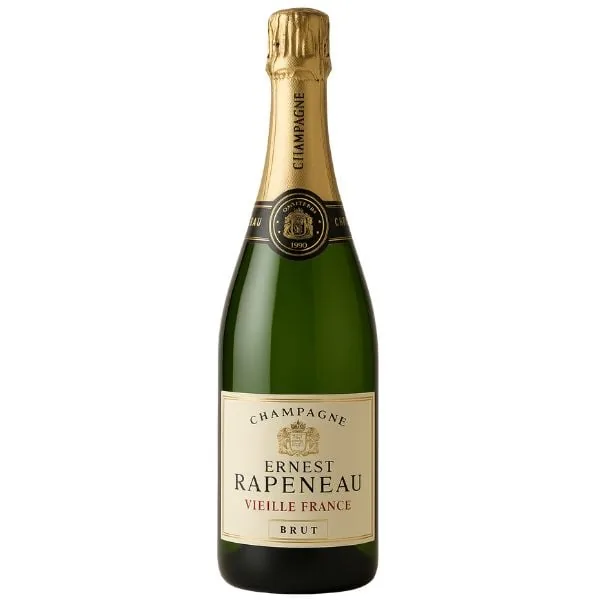
Champagne house Rapeneau's non-vintage brut from the chalk-rich soils of the Champagne region, built on traditional méthode champenoise.
Ernest Rapeneau is a grower-producer based in the Champagne region of northeastern France, where chalk-dominated subsoils and cool continental climate define the terroir. The Vieille France Brut is a non-vintage cuvée assembled from multiple vintages—a standard practice in Champagne that allows producers to maintain a consistent house style across years.
Production follows méthode champenoise: base wines undergo primary fermentation in temperature-controlled conditions, then are blended and bottled with a liqueur de tirage (yeast and sugar) to trigger secondary fermentation in bottle. The resulting wine ages sur lie (on its yeast sediment) for the legally mandated minimum of 15 months for non-vintage Champagne, though many producers extend this period.
The dosage (residual sugar added after disgorgement) is calibrated to the house's brut profile—typically 6–12 grams per liter.
As a non-vintage release, Vieille France Brut draws on Rapeneau's reserve wines, blending older reserve lots with younger vintage wine to achieve depth and complexity beyond a single harvest. This multi-vintage structure is the defining technical signature of Champagne's most consistent expressions.
Drink now through the next 3–5 years; Champagne's high acidity and protective CO₂ allow extended cellaring if desired.
Sommelier’s pick: Seared scallops with beurre blanc — acidity cuts through butter; brioche echoes shellfish sweetness · Charcuterie board with aged ham — minerality and acidity refresh palate between cured meats
Loading notes…
Tasted this?
Ask us on LINE.
Ask about this item