 Log in to view
฿฿฿
Product information compiled from producer, importer and reference sources.
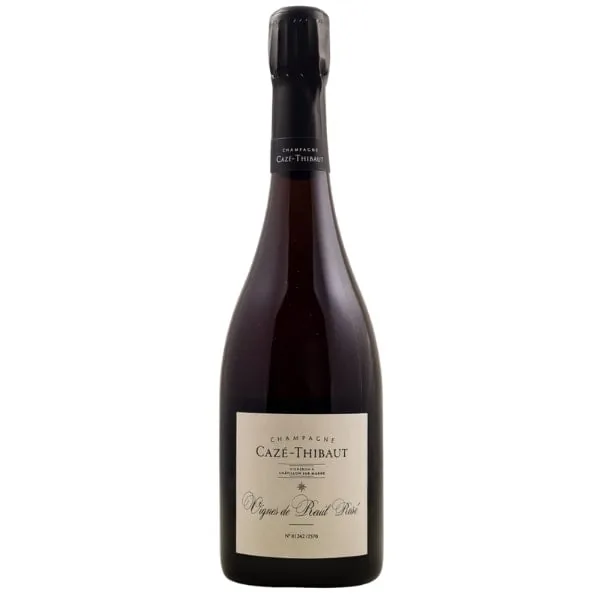
Grower Champagne from 2.66 ha of right-bank Marne clay-limestone; no MLF, native yeast, Extra Brut dosage — Pinot Meunier treated with Côte des Blancs seriousness.
Fabien Cazé — tenth generation, admitted into the Terres et Vins de Champagne collective alongside Bérêche and Agrapart after only his second release — built his rosé around the same anti-MLF, low-dosage philosophy that defines every cuvée from this 2.66-hectare holding.
This is the Jossias Rosé, a Pinot Meunier-anchored blend from right-bank Marne parcels split between Châtillon-sur-Marne (east-facing) and Vandières (south-facing slopes). Soils are clay-limestone over shallow chalk bedrock, a combination that delivers both textural weight and the mineral tension that distinguishes western Marne fruit from the richer, creamier profiles of the Montagne de Reims.
Fermentation is spontaneous with native yeasts, conducted slowly in the underground 19th-century chalk cellar on rue des Crayères in Venteuil — ambient cold temperatures that naturally suppress malolactic conversion, preserving the wine's raw malic acidity. No
fining, no filtration; dosage determined by blind tasting pre-disgorgement, typically Extra Brut at 1.7–2.7 g/L. What is unusual here: a rosé Champagne from an unclassified Marne Valley village, made without MLF and at near-zero dosage, that competes structurally with grower rosés from far more widely known terroirs.
As a non-vintage release, it draws on the estate's extended lees-aging protocol (24–72 months en tirage), giving the wine vinous depth without sacrificing the bright, straight acidity that is the house signature.
Sommelier’s pick: Grilled langoustine with bisque butter · Duck breast carpaccio with pickled cherries · Tuna tataki with yuzu kosho
Loading notes…
Tasted this?
Ask us on LINE.
Ask about this item