 Log in to view
฿฿฿
Wine Enthusiast Wine Vintage Chart 2026 Edition rates Champagne 2017.
A vintage grade rates the growing season in this wine’s region — not this specific bottle. Source.
Researched by our team from producer and independent sources — not supplied by the seller.
Steamed river prawns with lime (กุ้งแม่น้ำนึ่งมะนาว)
High malic acidity and a saline finish are built for shellfish; the citrus in the dish runs with the wine's own lemon register rather than against it.
Oysters on the half shell
The textbook chalk-soil Blanc de Blancs match — the wine's mineral, chalky texture and brisk acidity mirror the oyster's brine.
Roast chicken with almonds
The oak-fermented portion gives enough breadth for white meat, and the wine's own almond note in the producer's tasting description bridges directly to the dish.
Product information compiled from producer, importer and reference sources.
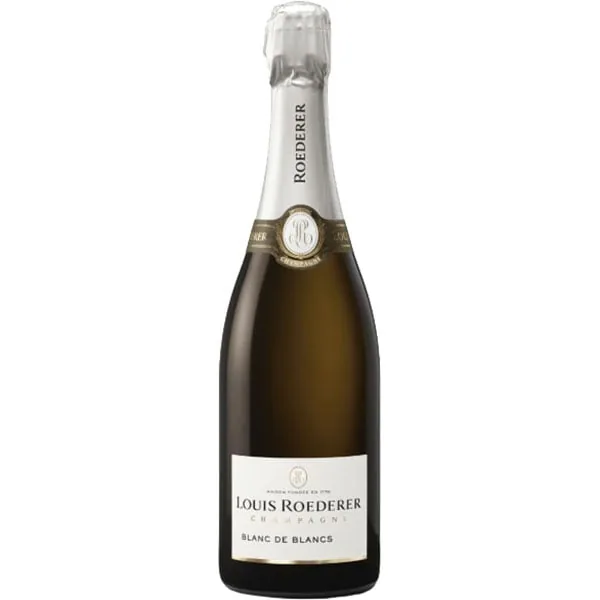
100% Cramant & Avize Grand Cru Chardonnay, 5 years on lees — parcel-by-parcel vinification from Champagne's largest biodynamic estate.
Under Chef de Cave Jean-Baptiste Lécaillon, Louis Roederer made a deliberate structural choice that separates this Blanc de Blancs from virtually every peer at this level: every parcel of fruit is vinified individually in small stainless-steel tanks or oak vats sized to just one or two hectares, preserving the distinct chalk signature of each plot before blending.
The fruit comes exclusively from Cramant and Avize — two Grand Cru villages on the Côte des Blancs — where Chardonnay roots into limestone mid-slopes with thin clay-loam topsoil over pure chalk bedrock, a geology that drives the wine's taut, saline mineral tension rather than any richness of soil.
Malolactic fermentation is partially blocked to retain structural acidity, and the wine rests on lees for a minimum of five years — a full year longer than Roederer's Brut Vintage — followed by six months post-disgorgement, building autolytic complexity without sacrificing the chalk-driven linearity that defines these two communes.
What makes this expression genuinely unusual is that 100% of the fruit is estate-grown from Roederer's own Grand Cru holdings, farmed under organic and biodynamic protocols — a grower-level terroir commitment inside a large Champagne maison. The 2017 vintage
in Champagne delivered ripe, generous Chardonnay with good natural acidity after a frost-reduced crop; the extended lees aging has integrated that ripeness into a wine with considerable tension and a drinking window extending well into the late 2020s.
Sommelier’s pick: Grilled Brittany lobster with beurre blanc · Steamed sea bass with yuzu kosho and dashi broth · Aged Comté with honeycomb
Loading notes…
Tasted this?
Ask us on LINE.
Ask about this item