 Log in to view
฿฿
Product information compiled from producer, importer and reference sources.
Founded 1743, Épernay: 200+ crus blended across chalky limestone Champagne, 24 months on lees — double the AOC minimum.
When Claude Moët established his house on the Avenue de Champagne in 1743, the ambition was scale without compromise — a philosophy that drove Moët to pioneer stainless steel thermoregulated fermentation and systematic malolactic fermentation before either became industry standard.
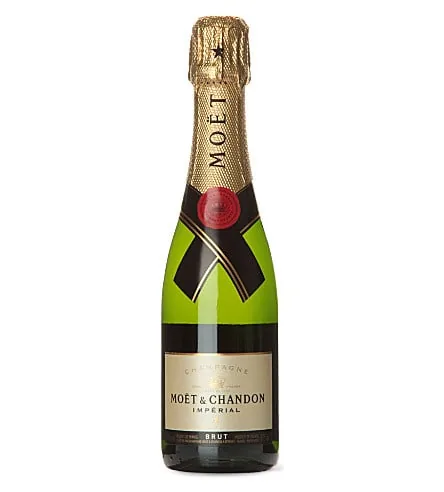
The Brut Impérial NV is the direct expression of that industrial-scientific rigour applied to non-vintage Champagne. Fruit is drawn from across 234 of Champagne's 319 crus — spanning chalky limestone soils of the Montagne de Reims, Vallée de la Marne, Côte des Blancs, Sézanne, and the Aube — with own-estate vineyards covering approximately 1,190 hectares, 50% of which hold Grand Cru status.
The chalk subsoil drives tension and preserves acidity through the growing season. A tasting committee of 10 oenologists evaluates 822+ base wines before Chef de Cave Benoît Gouez finalises the assemblage: Pinot Noir 30–40%, Pinot Meunier 30–40%, Chardonnay
20–30%, anchored by 20–30% reserve wines and dosed at approximately 7 g/L. The wine then ages a minimum of 24 months on lees in 28 km of chalk cellars beneath Épernay — 9 months beyond the AOC non-vintage minimum.
What no peer at this production volume (28–30 million bottles/year) replicates is the laboratory-grade blending discipline: the same house character, vintage to vintage, at a scale that makes it simultaneously the world's largest and one of its most technically consistent Champagne operations.
Sommelier’s pick: Tempura prawn with yuzu kosho aioli · Burrata with white truffle shavings and sea salt · Grilled Dover sole with brown butter and capers
Loading notes…
Tasted this?
Ask us on LINE.
Ask about this item