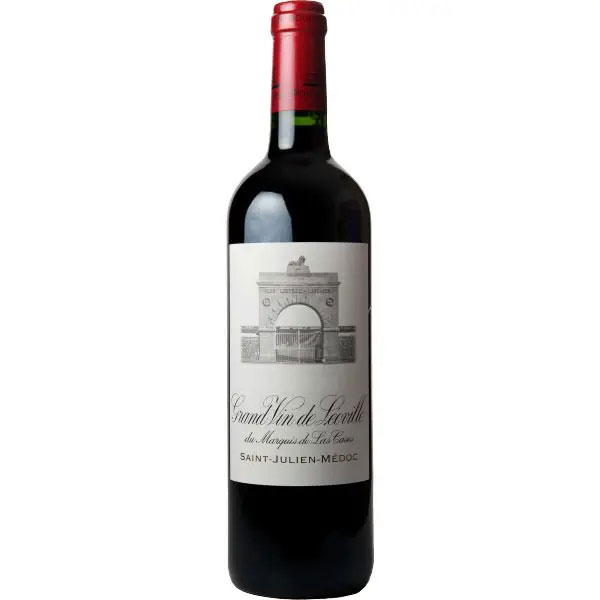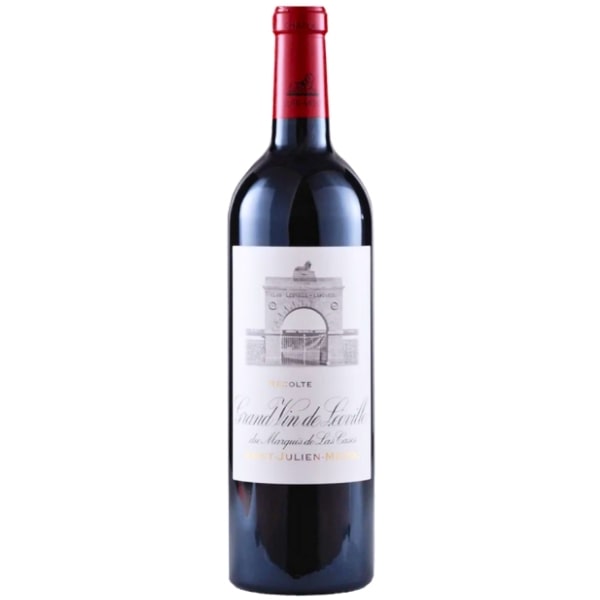
Saint-Julien 2017
฿฿฿฿
SaleRated 98/100 by James Suckling (top 6% of their reviews).
From our sommelier team
A Cabernet Sauvignon-dominant Saint-Julien second growth from the walled Grand Enclos parcel bordering Château Latour, consistently ranked among Bordeaux's most serious wines regardless of its official 1855 tier.
Léoville Las Cases is a Deuxième Cru (second growth) in the 1855 Bordeaux Classification, one of the largest estates in Saint-Julien at roughly 97 hectares. Its core vineyard, the Grand Clos (also called the Grand Enclos), is a walled parcel on the appellation's northern edge, separated from Pauillac's Château Latour only by a small stream, and its old, low-yielding vines are the backbone of the Grand Vin. The blend leans heavily on Cabernet Sauvignon (commonly around 65%), with Merlot, Cabernet Franc, and a small amount of Petit Verdot filling it out, giving wines built for long aging with firm tannic structure and dark-fruited concentration rather than immediate approachability. The estate is consistently discussed by critics and trade as performing above its second-growth ranking, often mentioned in the same breath as the first growths, though it has never been reclassified. Clos du Marquis, the well-regarded second wine, and Le Petit Lion, an entry-level bottling, are produced in considerably larger volumes than the Grand Vin itself. The style favors structure and longevity over early charm, needing a decade or more in good vintages before it opens up.
Producer history
The Léoville estate traces back to the 17th century as one large Saint-Julien holding under the Léoville name; it was progressively divided in the 19th century, first during the French Revolution era (giving rise to what became Château Léoville-Barton) and again around 1840 (splitting off Château Léoville-Poyferré), leaving Léoville Las Cases as the largest of the three heirs and holder of the original estate's historic core. The property has been under the Delon family's control for multiple generations; Michel Delon ran the estate for decades and built its modern reputation before his death in 2000, after which his son Jean-Hubert Delon became sole owner and continued running it in the same exacting style. The Delon family also owns Château Potensac in the Médoc and Château Nénin in Pomerol. Exact dates for when the Delon family first acquired the property are inconsistently reported across sources, so that detail is left general here rather than asserted with false precision.
Signature pairings
- Grilled ribeye or Chateaubriand — High tannin and Cabernet-driven structure need the fat and char of a well-marbled grilled beef cut to soften the wine's grip; a classic Bordeaux red-meat pairing.
- Roasted rack of lamb with herbs — Lamb's richness and the herb crust's savoriness match the wine's dark fruit and firm tannin without competing for dominance, a standard Médoc-style pairing.
- Thai-style grilled beef (เนื้อย่าง) — A simply grilled, minimally spiced beef preparation gives the wine's tannin something fatty and charred to work against without the capsaicin heat that would clash with a structured, high-tannin Cabernet blend; this is not a match for chile-forward Thai dishes.
Château Léoville Las Cases occupies the Left Bank's most storied ground: a south-facing gravel plateau in Saint-Julien, where Günz-era pebbles and clay subsoil create the thermal mass that ripens Cabernet Sauvignon to phenolic completeness. The 2017 vintage captures a warm, dry growing season across Pauillac's eastern flank.
The blend—approximately 87% Cabernet Sauvignon, 8% Merlot, 5% Petit Verdot—fermented in temperature-controlled concrete and oak, then aged 18 months in French oak (60% new). The extended skin contact and oak integration build the wine's structural backbone without masking the site's mineral signature.
This is a Léoville Las Cases that refuses softness: the tannin architecture remains assertive, the acidity cuts cleanly through dark fruit, and the finish extends into graphite and dried herb. The 2017 sits at the intersection of immediate pleasure and decade-long cellaring potential—a wine that drinks with authority now but will deepen through 2035.
Details
- Country
- France
- Region
- Bordeaux
- Subregion
- Pauillac
- Variety
- Cabernet Sauvignon, Merlot
- Vintage
- 2017
- Bottle size
- 750 ml
Taste profile
- Body
- Full
- Acidity
- Medium-High
- Tannin
- High
Pairs well with
- Lamb dishes
- Grilled red meat & steak
- Duck & game birds
- Game meats
- Hard & aged cheese
Sommelier’s pick: Grilled lamb chops with rosemary and fleur de sel · Duck breast with cherry gastrique and root vegetables · Venison loin with juniper and mushroom jus
Interested? Talk to us
Message us to check item availability and information.
Community rating
Loading reviews…