 Log in to view
฿฿฿฿
Researched by our team from producer and independent sources — not supplied by the seller.
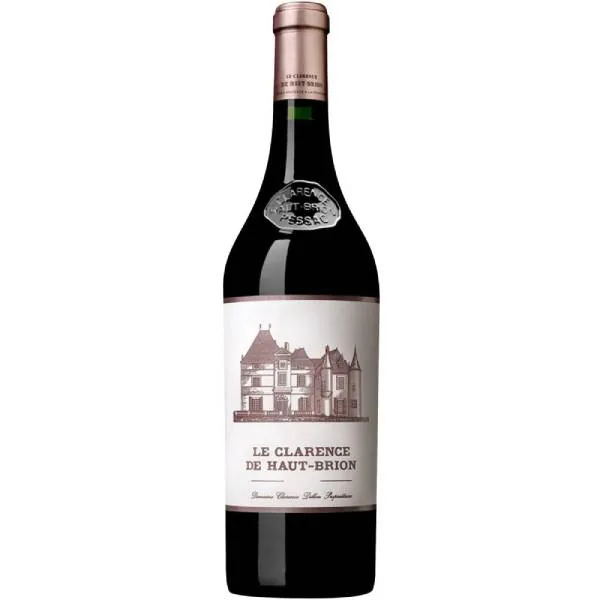
The wine carried the name Château Bahans Haut-Brion from the first years of the twentieth century, and was renamed Le Clarence de Haut-Brion beginning with the 2007 vintage. The new name honours the American financier Clarence Dillon, who acquired Château Haut-Brion in 1935.
Note that the separate Parisian restaurant Le Clarence, created by Domaine Clarence Dillon in November 2015, shares the name but is a distinct venture from this bottling.
Roast squab with root vegetables
The Merlot-led blend's softer tannin suits delicate game bird better than a firmer Left Bank red would.
Veal chop with wild mushrooms
Mild veal and earthy mushrooms complement the wine's earlier-maturing, supple texture without overwhelming it.
Beef short rib braised in red wine
Slow-braised beef and its reduced sauce meet the Cabernet portion's structure while the Merlot fills the mid-palate.
Product information compiled from producer, importer and reference sources.
Haut-Brion's second wine from Pessac's Günzian gravel croupes — early-blended, unfiltered, 2015's fruit-forward finesse at a fraction of the grand vin.
Le Clarence de Haut-Brion takes its name from Clarence Dillon, the American financier who purchased the estate in 1935 and rescued it from neglect — a lineage that grounds this second wine directly in the grand vin's winemaking infrastructure, not a separate operation.
The source is the same Günzian gravel croupes of Pessac — ancient Pleistocene-era quartz pebbles over clay subsoil, rising to 27 m above the Bordeaux norm, surrounded by urban buildings that trap heat and push harvest dates earlier than virtually any other Left Bank estate.
That warmth and drainage combination concentrates Merlot-dominant fruit while preserving aromatic lift. Fermentation takes place in Haut-Brion's proprietary double-skinned stainless steel vats (the estate introduced stainless steel to Bordeaux in 1961), with maceration of approximately 14–18 days and selected yeast.
Blending is completed unusually early — by November or December of the harvest year, before oak influence begins — a deliberate sequencing that prioritises fruit clarity over wood integration. Aging follows in French oak barrique, new oak percentage calibrated to vintage weight, then bottled unfiltered.
The 2015 vintage delivered fruit-forward texture and smooth tannin structure, approachable earlier than the more austere 2016, yet carrying genuine aging potential. As the only second wine produced from the sole First Growth outside the Médoc — and the only château classified in both the 1855 and 1959 systems — Le Clarence offers access to a terroir with no true peer on the Left Bank.
** Vintage may change — please confirm with our team.
Sommelier’s pick: Roasted rack of lamb with rosemary jus · Duck breast with black cherry reduction · Grilled Wagyu bavette with bone marrow butter
Loading notes…
Tasted this?
Ask us on LINE.
Ask about this item