 Log in to view
฿฿฿฿
Product information compiled from producer, importer and reference sources.
Unaged highland agave from Los Altos' red volcanic soils, triple-filtered and bottled at 40% — Clase Azul's deliberate break from artisanal convention.
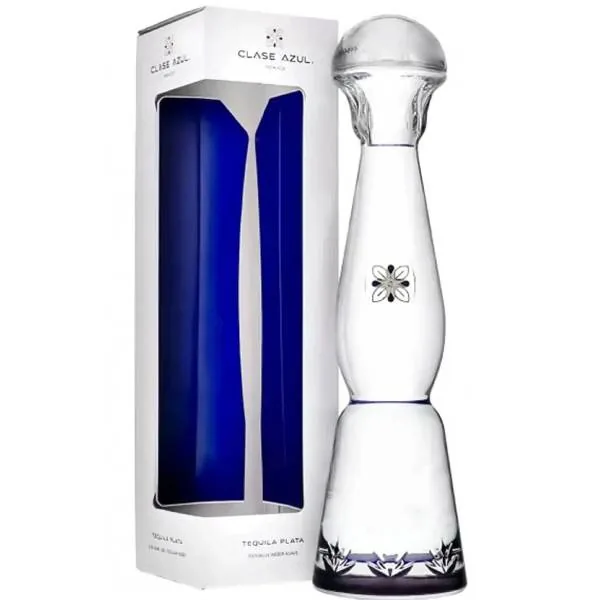
When Arturo Lomelí launched Clase Azul in 1997 at $100 a bottle — a moment when the category average sat near $18 — the Plata expression was a provocation: unaged tequila priced as a luxury object, its vessel hand-painted by Mazahua artisans over roughly two weeks, inseparable from the liquid inside. That positioning has since defined an entire tier of the category.
The agave source is Los Altos de Jalisco, the Jalisco Highlands around Jesús María near Arandas — red volcanic, mineral-rich soils at high altitude with a cool climate that pushes Tequilana Weber Blue Agave to larger, sugar-denser piñas than Lowland equivalents, yielding a rounder, fruit-forward raw material before distillation even begins.
Production centres on 100% organic agave harvested at 6–9+ years maturity, slow-cooked in traditional masonry ovens for a minimum of 72 hours, then fermented with a proprietary yeast strain and distilled twice in stainless-steel pot stills fitted with copper coils. The Plata is then triple-filtered and bottled at 40% ABV with no oak aging.
The special feature — and the ongoing industry debate — is precisely that triple filtration: a deliberate stylistic choice that produces a sweeter, lower-burn profile atypical of artisanal highland tequila, prioritising texture over raw agave expressiveness. No vintage notes apply; drink now or hold as a collectible.
Sommelier’s pick: Aguachile de camarón with habanero leche de tigre · Yellowfin tuna tostada with avocado crema and serrano · Grilled octopus with smoked paprika and charred corn salsa
Loading notes…
Tasted this?
Ask us on LINE.
Ask about this item