 เข้าสู่ระบบเพื่อดูภาพ
฿฿฿฿
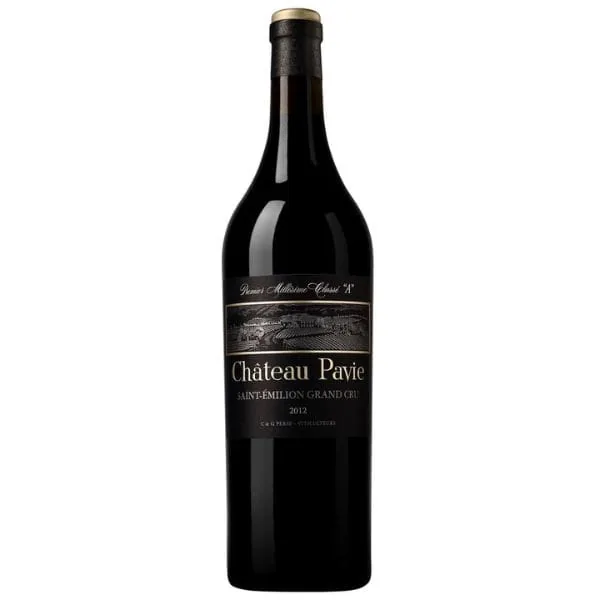
Chateau Pavie: curated benchmark producer.
WNLQ9 vintage signal, averaged from Wine Enthusiast Wine Vintage Chart 2026 Edition's 3 closely-agreeing Bordeaux 2012 ratings (Bordeaux Pomerol/Saint-Emilion; Bordeaux Medoc; Bordeaux Graves Red).
เกรดวินเทจประเมินสภาพฤดูเพาะปลูกในแหล่งผลิตของไวน์นี้ — ไม่ใช่การประเมินขวดนี้โดยเฉพาะ แหล่งข้อมูล.
ทีมของเราค้นข้อมูลจากผู้ผลิตและแหล่งอิสระ ไม่ใช่ข้อมูลที่ผู้ขายให้มา
Château Pavie sits on Bordeaux's right bank in Saint-Émilion, an appellation on the UNESCO World Heritage list since 1999. It was classified Premier Grand Cru Classé "B" in 1955, promoted to "A" in 2012, and had that rank confirmed in the 2022 Saint-Émilion classification, which left only two estates at the top tier, Pavie and Figeac.
The vineyard is a single contiguous block facing south, looking out over the appellation with Saint-Émilion's slope and medieval village above it to the north, and it spans three distinct terroirs. The limestone plateau, 85 to 110 metres above the Dordogne, has clay-limestone soils with asteriated limestone close to the surface; it holds about two-thirds of the vines and most of the Merlot.
The slope, around 55 metres, carries a thick clay layer — the molasse du Fronsadais — over friable limestone, and is planted to Cabernet Franc. The foot of the slope, around 35 metres, is lighter sandy-clay with some gravel and grows Cabernet Sauvignon. Merlot
accounts for about half the vineyard, Cabernet Franc for 30% of the plots, and Cabernet Sauvignon for 20% of the composition — high for the Libourne area, where around 7% is typical.
The estate credits limestone with absorbing winter rain and keeping soils cool in summer, prevailing winds with lowering disease pressure, and the slope with drainage and shelter from north winds and frost. Michel Rolland has consulted, and yields were cut from 55 to 30 hectolitres per hectare.
Pavie's slope was planted by the Romans in the fourth century, and before vines it was known for red-fleshed peaches — pavies — which gave the estate its name. By 1850 Pavie appears in Bordeaux et Ses Vins among the first classified growths of Saint-Émilion. Ferdinand Bouffard inherited the property in 1873 and expanded it to nearly 50 hectares; phylloxera cut into production from 1893.
In 1919 Albert Porte unified the various holdings into Château Pavie, and in 1943 Alexandre Valette took over. His grandson Jean-Paul Valette inherited in 1957 and sold the estate in 1998 to Gérard and Chantal Perse. Gérard Perse, a former cyclist and Paris
businessman who had sold supermarket chains, had already bought Château Monbousquet in 1993 and Château Pavie-Decesse in 1997; at Pavie he replaced most of the old equipment, installing temperature-controlled wooden fermentation vats and a new cellar, and brought in consultant Michel Rolland, under whom yields fell from 55 to 30 hectolitres per hectare.
Pavie was promoted to Premier Grand Cru Classé "A" in 2012. Angélique and Henrique Da Costa joined the family business in 2005, and following Gérard Perse's death in the summer of 2025 they now run the estate.
Slow-braised beef cheek in red wine with celeriac purée
A concentrated, Merlot-led right-bank wine with real tannic structure wants gelatinous, long-cooked meat: the braise's body matches the wine's weight, and the purée softens the tannin without adding competing sweetness.
Northern Thai pork and tomato curry with sticky rice (น้ำพริกอ่อง)
Nam prik ong is tomato-and-pork based and mild by Thai standards, so its umami and gentle spice meet a plush Saint-Émilion rather than stripping it. The tomato's acidity refreshes the palate between sips of a full-bodied wine, and sticky rice buffers the tannin.
Duck breast with cherries and black pepper
Duck fat carries tannin well, and dark cherry picks up the ripe-fruit register of a plateau-grown Merlot-dominant blend. Cracked pepper gives the Cabernet Franc component something aromatic to answer.
ข้อมูลสินค้ารวบรวมจากผู้ผลิต ผู้นำเข้าและแหล่งข้อมูลอ้างอิง
A powerful yet refined Right Bank icon with deep black fruit, opulent texture, and structured elegance—intense, layered, and built for aging.
Château Pavie is one of the most prestigious estates in Saint-Émilion, elevated to Premier Grand Cru Classé A status—placing it among Bordeaux’s elite.
Situated on a dramatic limestone hillside with terraced vineyards, Pavie benefits from sun exposure and drainage, allowing grapes to reach optimal ripeness and concentration.
The estate is known for producing wines of power, density, and longevity, with a modern style that emphasizes richness while maintaining structure.
** ปีวินเทจอาจเปลี่ยนแปลง โปรดยืนยันกับทีมของเรา
กำลังโหลดบันทึก…
เคยชิมขวดนี้ไหม?
สอบถามเราทาง LINE
สอบถามเกี่ยวกับขวดนี้