 Log in to view
฿฿฿฿
Wine Enthusiast Wine Vintage Chart 2026 Edition rates Champagne 2012.
A vintage grade rates the growing season in this wine’s region — not this specific bottle. Source.
Product information compiled from producer, importer and reference sources.
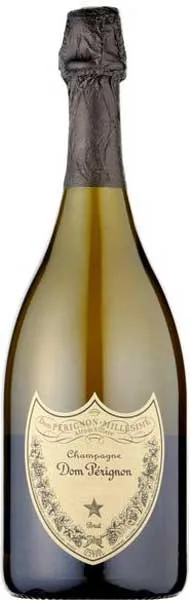
2012 P1: lush, hedonistic DP from warm harvest — reductive lees aging on deep Champagne chalk, zero oak, Hautvillers-anchored blend.
Dom Pérignon is the only major Champagne house that produces exclusively vintage wine — if a harvest falls short, no wine is made, full stop. The 2012 is the P1 (first Plénitude) release, disgorged after a minimum of eight to nine years on lees, representing the vintage's earliest maturation peak before any P2 or P3 window is considered.
Grapes are drawn from a fixed core of nine crus: Chardonnay from Chouilly, Cramant, Avize, and Le Mesnil-sur-Oger on the Côte des Blancs, and Pinot Noir from Aÿ, Bouzy, Mailly-Champagne, Verzenay, and Hautvillers — the last a south-facing Premier Cru slope above the Marne valley where Dom Pierre Pérignon himself worked as cellarmaster from 1668.
The underlying terroir is deep chalk and limestone, chalk acting as a moisture reservoir that sustains vine hydration and drives the house's signature mineral tension even in warmer years. Vinification is entirely stainless steel, no oak at any stage;
whole-cluster Coquard pressing minimises skin contact, and reductive handling throughout — oxygen exposure curtailed at every step — produces the house's characteristic smoky, mineral-driven aromatic.
Malolactic fermentation is conducted; dosage sits at approximately 4.5–5 g/L. The 2012 is the warmer, more generous pole of Dom Pérignon's stylistic range: tropical fruit, ripe pear, and a creamy mousse define the vintage character, drinking well now through 2035.
Sommelier’s pick: Grilled Maine lobster with brown butter and tarragon · Pan-seared scallops with cauliflower purée and caviar · Roast poulet de Bresse with morel cream sauce
Loading notes…
Tasted this?
Ask us on LINE.
Ask about this item