 Log in to view
฿฿฿
Rated 99/100 by James Suckling (top 3% of their reviews).
WNLQ9 vintage signal, averaged from Wine Enthusiast Wine Vintage Chart 2026 Edition's 3 closely-agreeing Bordeaux 2018 ratings (Bordeaux Pomerol/Saint-Emilion; Bordeaux Medoc; Bordeaux Graves Red).
A vintage grade rates the growing season in this wine’s region — not this specific bottle. Source.
Researched by our team from producer and independent sources — not supplied by the seller.
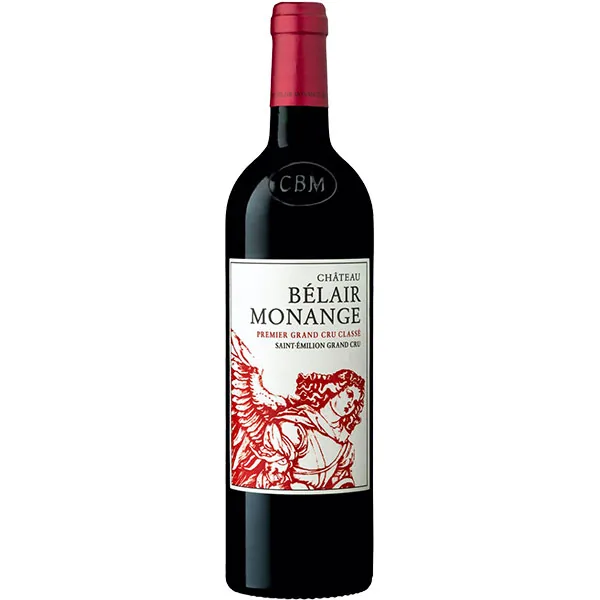
A Premier Grand Cru Classé B Saint-Émilion from limestone-plateau terroir bordering Château Ausone, made mostly from Merlot with a supporting share of Cabernet Franc; structured, mineral-driven, built for extended cellaring.
Château Bélair-Monange sits on the limestone plateau of Saint-Émilion, immediately next to Château Ausone, and is planted to roughly 80% Merlot and 20% Cabernet Franc. It has been under the ownership of Établissements Jean-Pierre Moueix since 2003-2008, when the historic Château Bélair passed to the Moueix family; the estate was subsequently renamed in memory of Anne-Adèle Monange, wife of Jean Moueix.
In 2012, following the Saint-Émilion reclassification that omitted the Moueix-owned Château Magdelaine from the Premier Grand Cru Classé B list, Magdelaine (90% Merlot, 10% Cabernet Franc, roughly 11 hectares) was formally merged into Bélair-Monange, enlarging the estate and its underground limestone quarries used for cellaring.
The wine reflects the Moueix house style found across their Saint-Émilion portfolio (Trotanoy, Petrus in Pomerol): Merlot-driven, precise, aiming for density and aromatic purity rather than overt power. Limestone plateau sites in Saint-Émilion typically give
firmer structure and more mineral lift than the sand-and-clay lower slopes, and Bélair-Monange is regarded as one of the more classically austere, long-aging wines in the appellation.
The site has old viticultural roots in Saint-Émilion (plantings on the property date to the 1730s-1750s under Jacques Canolle), later passing through the Canolle family and, from 1916, the Dubois-Challon family (who also owned neighboring Château Ausone). Pascal Delbeck managed the estate for the Dubois-Challon family from 1975.
Établissements Jean-Pierre Moueix acquired a 30% stake in 2007 and the remainder in 2008, renaming the property Bélair-Monange. The 2012 merger with Château Magdelaine — prompted by Magdelaine's exclusion from that year's Premier Grand Cru Classé B list — consolidated two of the Moueix family's most historic Saint-Émilion holdings under one label and one larger vineyard.
Roast duck breast with red-wine jus
The wine's firm limestone-derived structure and Merlot-based fruit need the fat and savory depth of duck to soften its tannin and match its weight.
Braised beef short rib
Slow-braised, collagen-rich beef mirrors the wine's dense texture and gives the tannins something to grip without being overwhelmed.
Massaman beef curry (แกงมัสมั่นเนื้อ)
Massaman is only mildly spiced and its warm, sweet spice notes (cinnamon, cardamom) and tender braised beef suit the wine's structured, dark-fruited profile without the capsaicin clash that riskier Thai dishes would cause.
Product information compiled from producer, importer and reference sources.
Elegant Saint-Émilion blend of Merlot and Cabernet Franc with ripe red fruit, soft tannins, and food-friendly structure.
Château Belair Monange's 2018 Saint-Émilion showcases the classic elegance of the Right Bank. A 90% Merlot and 10% Cabernet Franc blend, this wine displays ripe plum and black cherry on the nose, with subtle herbaceous notes and a whisper of oak. The palate is medium-full bodied with balanced, approachable tannins and good acidity, offering layers of red fruit and earthy minerality.
A food-friendly Bordeaux that bridges casual dining and special occasions.
** Vintage may change — please confirm with our team.
Loading notes…
Tasted this?
Ask us on LINE.
Ask about this item