You sit down at one of Bangkok's better restaurants — Sühring, Savelberg, a serious Thai-contemporary place on the river — and the wine list lands in your lap like a brick. Forty pages, three hundred labels, prices that make your eyes water. Most diners default to the second-cheapest bottle or ask for "something red." Both moves cost you more than they should. Here's how to do it properly.
What Bangkok Restaurant Markup Actually Looks Like
Before you can find value, you need to know what the baseline is. Bangkok restaurant markup on wine runs 2.5× to 4× retail, with the lower end reserved for high-volume bottles at casual bistros and the upper end appearing wherever there's a chandelier and a celebrity chef. Import duties, VAT, and cold-chain logistics mean a bottle that costs ฿800 at WNLQ9 can sit at ฿2,800–฿3,200 on a restaurant list without anyone breaking a sweat.
This isn't cynicism — it's useful calibration. A 2× markup at a Bangkok restaurant is genuinely rare and worth rewarding. A 4× markup on a famous Burgundy or Napa Cabernet is standard and not worth arguing about; the restaurant knows exactly who they're selling it to. Your leverage lies in the bottles where the restaurant doesn't know the retail price is low: lesser-known appellations, southern French reds, overlooked South American producers.
The Second-Cheapest Bottle Myth
Every dinner-party conversation eventually surfaces the advice: "Always order the second-cheapest bottle — restaurants price it highest because that's where insecure diners hide." This was broadly true in London in 2003. It is not reliably true now, and in Bangkok it's almost irrelevant.
Modern restaurant buyers, especially at the better Bangkok properties, know this trick. The second-cheapest bottle is often a perfectly fine, fairly priced wine. The real value anomalies are scattered throughout the mid-list — the €12 Languedoc at retail that appears at ฿1,600 when the Bordeaux next to it retails for €30 and appears at ฿3,800. You won't find those anomalies by counting from the bottom. You find them by knowing your regions.
The Regions That Over-Deliver at Restaurant Prices
Three categories consistently punch above their weight on Bangkok wine lists:
Southern France: Languedoc-Roussillon and the Southern Rhône
Grenache-dominant blends from the Rhône — Côtes du Rhône, Gigondas, Vacqueyras — and the big, structured reds of Languedoc (Faugères, Saint-Chinian, Minervois) are chronically underpriced at retail, which means even a 3× restaurant markup lands them in a range that looks reasonable next to a Châteauneuf-du-Pape at four times the price. Look for these on any French-leaning list. A Grenache-Syrah-Mourvèdre from Vacqueyras at ฿2,200 is almost always better value than a Saint-Émilion at ฿4,500.
Famille Perrin Réserve Côtes du Rhône Rouge — from ฿1,000
South America: Argentina and Chile Beyond the Entry Level
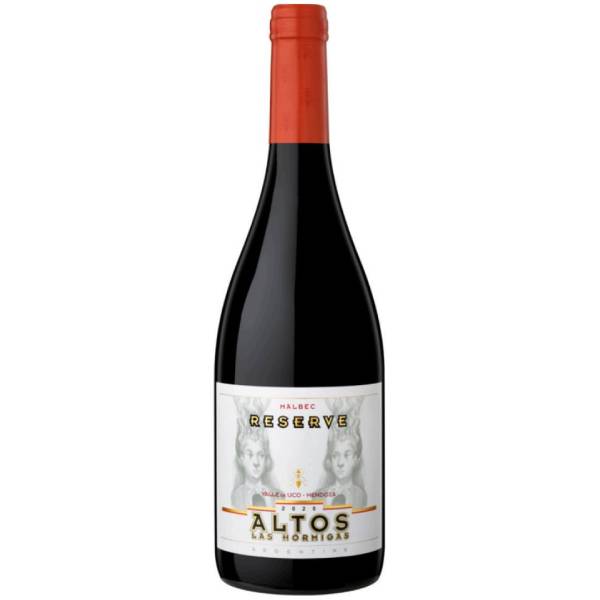
Argentine Malbec from Mendoza's high-altitude Luján de Cuyo or Valle de Uco, and Chilean Carménère from Colchagua, are deeply unfashionable in the fine dining world — which is precisely why restaurants price them fairly. Restaurants want their French and Italian bottles to look like the prestige tier, so the South American mid-list often gets a more restrained markup. A serious Malbec from a single-vineyard producer in Uco at ฿2,800 on a restaurant list is often retailing for ฿950. That's still a markup, but it's honest.
Altos Las Hormigas Reserve Malbec, Mendoza — from ฿1,400
Alsace and Northern Italy for Whites
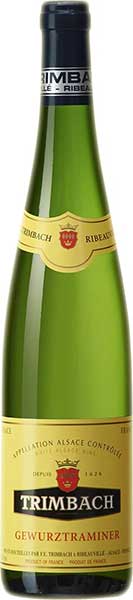
White wine markup in Bangkok is generally more aggressive than red because the cold-chain costs are real and the audience for serious white wine is smaller. The exception: Alsatian whites (Riesling, Pinot Gris, Gewurztraminer) and northern Italian whites (Soave Classico, Vermentino, Greco di Tufo) that appear on wine lists as supporting acts. Restaurants rarely put these in the spotlight, so they're priced to move rather than to impress. An Alsatian Pinot Gris at ฿2,000 with Thai food is one of the smartest calls you can make.
Trimbach Gewurztraminer, Alsace — from ฿1,289

Reading Old World vs New World Labels on a Bangkok Wine List
One practical skill that pays dividends immediately: understanding why Old World wines are listed differently from New World wines. A French wine list entry reads "Château Pichon Baron, Pauillac, 2018" — the producer, the appellation, the vintage, in that order. The grape variety is absent because the list assumes you know Pauillac is Cabernet Sauvignon-dominant. A Chilean entry reads "Concha y Toro Cabernet Sauvignon, Maipo Valley, 2021" — grape first, because that's the commercial identity.
When you're scanning a list quickly, use this to navigate: Old World entries require you to know the regional implication (Burgundy = Pinot Noir/Chardonnay; Barolo = Nebbiolo; Rioja = Tempranillo). New World entries tell you the grape directly. Wine Folly's regional reference guides are worth bookmarking for pre-dinner research.
How to Talk to a Bangkok Sommelier
A good sommelier — and Bangkok now has several world-class ones — is not trying to upsell you. They're trying to not be embarrassed by the wine they put in front of you. Use that alignment.
The most useful thing you can tell them is not your budget (though you can say that) — it's your texture and weight preferences and what you're eating. "I want something that won't fight the curry" or "I'm eating the 60-day dry-aged beef and want a red with structure but not a monster" gives them something to work with. "Something nice around ฿3,000" gives them almost nothing.
If you want to signal that you know what you're doing without being obnoxious, ask: "What's getting overlooked on this list?" or "Is there a regional producer here that doesn't often get ordered?" Every sommelier has a bottle they're quietly proud of that diners keep walking past. That bottle is usually fairly priced and genuinely good.
Budget conversations should be direct. "We're thinking around ฿2,500 to ฿3,500 for a bottle" is clear and professional. Don't hint or approximate — Bangkok restaurant sommeliers work across a clientele with vastly different expectations, and ambiguity just makes the conversation harder.
Wine by the Glass vs. Bottle: When to Switch
Wine by the glass in Bangkok is expensive in proportion, but it earns its keep in two situations: when the table is split between fish and steak, and when you want to try something before committing to a bottle. A restaurant with a serious glass program — rotating selections, Coravin access for premium pours — is worth paying the per-glass premium. A restaurant with four by-the-glass options that haven't changed in eighteen months is not.
As a general rule: if two people are having the same food and both drinking wine, a bottle is almost always better value than two glasses each. The tipping point is around 2.5 glasses per person — at that point, the bottle math decisively wins even at Bangkok markups. One glass each, or mismatched food, is the exception where by-the-glass makes sense.
What to Order When the List Is Weak
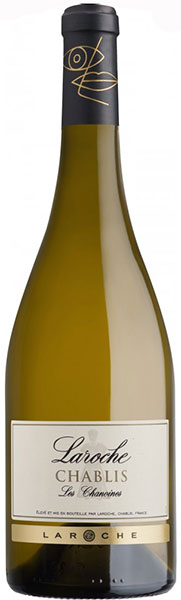
Some Bangkok restaurants — particularly hotel all-day dining and neighbourhood bistros — have wine lists that are genuinely thin: thirty labels, heavy Bordeaux markup, nothing interesting under ฿3,000. In these cases, don't torture yourself trying to find value. Pick the most food-friendly option rather than the most prestigious one. An unoaked white Rioja or a simple Chablis will make Thai-leaning food better than a big Napa Cab that the menu wasn't designed around.
Domaine Laroche Chablis Les Chanoines — from ฿1,199
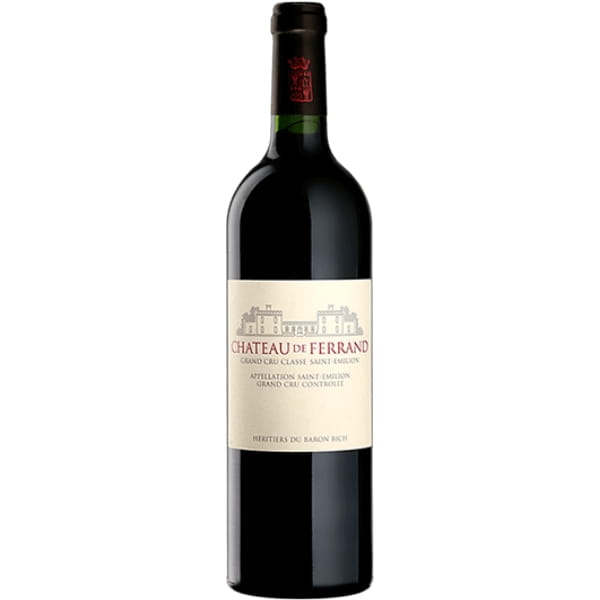
Château de Ferrand, Saint-Émilion Grand Cru Classé — from ฿2,100
Keep reading: How to Store Wine in Bangkok Heat · How to Read a Wine Label — A Bangkok Shopper's Guide · all Guides stories.
FAQ
What's a reasonable wine budget for a mid-range Bangkok restaurant?
For a bottle at a solid mid-range restaurant in Bangkok — the kind with proper glassware, attentive service, and a menu in the ฿800–฿1,500 per-person range — expect to spend ฿2,000–฿4,000 for a wine that's genuinely enjoyable and appropriately matched to your food. Below ฿1,500 at a restaurant in this tier, you're likely looking at entry-level commercial wines with nothing interesting happening. Above ฿4,000 is where prestige labels begin; they're not necessarily better to drink, just better known.
Should I always tell the sommelier my budget?
Yes. Stating a clear budget range removes the awkwardness and lets the sommelier do their job. They are not judging you for having a ceiling — they're relieved to have concrete parameters. Saying "we'd like to stay under ฿3,500 if possible" is a completely normal, professional thing to say at any Bangkok restaurant, including the most formal ones.
Are older vintages on Bangkok wine lists worth the premium?
Occasionally, but with caution. Storage conditions in Bangkok — where humidity and heat are constant enemies of wine — vary significantly between restaurants. A 2015 Rioja Gran Reserva at a restaurant with proper cellar infrastructure is a joy. The same bottle at a restaurant where the cellar is a converted broom cupboard with a domestic wine fridge is a risk. Asking "how is this stored?" is not rude; it's sensible, and a good sommelier will answer honestly.
Is it acceptable to bring your own wine to a Bangkok restaurant?
Some restaurants allow it with a corkage fee, typically ฿500–฿1,500 per bottle. This is more common at neighbourhood bistros than at hotel fine dining rooms, where the wine program is a revenue pillar. Always call ahead and ask — don't arrive with a bottle and hope. If corkage is ฿1,000 and the wine you're bringing retails for ฿2,500, the math still usually works out better than buying an equivalent bottle from the list.
Which Thai dishes pair best with wine at a Bangkok restaurant?
The general principle from Decanter's food and wine matching guide holds well in Bangkok: the enemy of wine is chilli heat and fish sauce in high concentration, not Thai food per se. Dishes with coconut milk as the base fat — Massaman, mild green curry — work beautifully with off-dry Alsatian whites or a light Grenache. Grilled seafood and larb lean toward high-acid whites: Vermentino, Grüner Veltliner, unoaked Sauvignon Blanc. The full-heat dishes (Pad Kra Pao, intensely spiced soups) are genuinely better with beer or water; pushing a serious wine through that heat is a waste of the bottle.
All bottles in stock at WNLQ9 as of July 2026. Prices in THB. Sale prices as marked.