 เข้าสู่ระบบเพื่อดูภาพ
฿฿฿
ทีมของเราค้นข้อมูลจากผู้ผลิตและแหล่งอิสระ ไม่ใช่ข้อมูลที่ผู้ขายให้มา
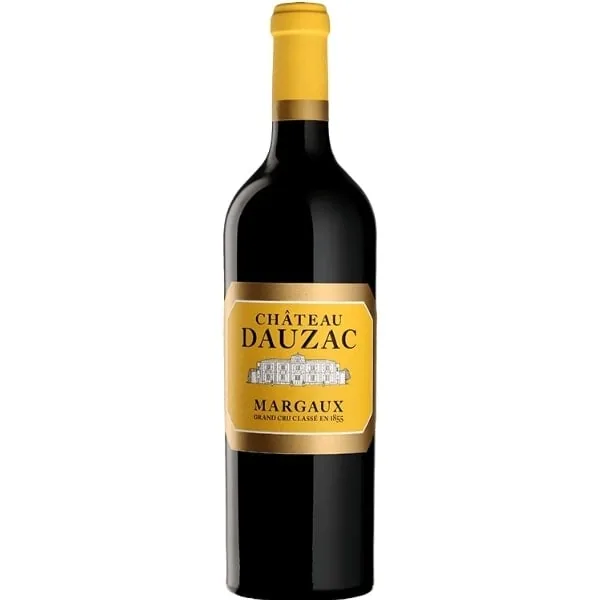
Château Dauzac is a Margaux Grand Cru Classé under the 1855 Médoc classification. The estate works a single 49-hectare vineyard, of which 45 hectares sit within the Margaux appellation and 4 hectares in Haut-Médoc, and the block lies roughly 350 metres from the Gironde estuary.
The vines grow on a deep gravel outcrop, the remnant of ancient alluvial terraces, over a clayey, gravelly subsoil; the gravel layers vary in thickness across the property. Vineyard plantings run 69% Cabernet Sauvignon, 29% Merlot and 2% Petit Verdot at a density of 10,000 vines per hectare, and the annual blend shifts with the vintage.
Harvest is manual, and each plot is fermented separately in thermoregulated vessels; since 2014 the cellar has used wooden vats fitted with two transparent staves, designed by Seguin Moreau, with a pump-over method reworked to avoid pumping the wine itself. Fermentation runs at 28°C and the wine completes malolactic fermentation.
The grand vin then ages 15 months in French oak barrels, 65% of them new, with racking decided by tasting. Since 2016 Dauzac has fined with vegetable proteins rather than egg white and describes itself as the first 1855 Grand Cru Classé making wholly vegan wines.
Éric Boissenot consults on harvest and blending. The wine is Cabernet-led, with Merlot supplying roundness.
Dauzac's documented line runs long. The estate records Pétrus d'Auzac receiving the land from Richard the Lionheart in 1190, and in 1545 the Benedictine monks of Sainte-Croix Abbey in Bordeaux described the place as a "Bourdieu" — a country house with a vineyard.
In 1685 Pierre Drouillard, a Bordeaux wine merchant and Treasurer General of France, built it into one of the Médoc's leading properties; his grandson Jean-Baptiste Lynch was made mayor of Bordeaux under Napoleon and later a Peer of France under Louis XVIII.
Dauzac's place in viticultural history was fixed in 1884, when Alexis Millardet developed the copper sulphate and quicklime mixture known as bouillie bordelaise here, working with estate manager Ernest David.
The Johnstons, who also owned Ducru-Beaucaillou, took over in 1924 and introduced the yellow label still used today. In 1939 Mr Bernat of Glacières Bernat bought the estate and began placing ice blocks in the vats, an early step toward the thermoregulation used from 1940.
After the Miailhe and Chatellier families, the insurer MAIF became sole owner in 1989 and built a gravity-flow cellar in 2004. The Roulleau family bought Dauzac in 2020, returning it to family ownership.
Rib of beef grilled over vine cuttings with bone marrow
A Cabernet-led Margaux carries firm, fine tannin that needs protein and fat to soften it. Charred beef and marrow give both, and the smoke echoes the oak without competing with the wine's red fruit.
Massaman beef curry with potato and peanut (แกงมัสมั่นเนื้อ)
Massaman is the mildest of the Thai curries, built on cinnamon, cardamom and star anise rather than chilli heat, so it meets a gravel-grown Cabernet blend on sweet spice rather than fighting it. The slow-cooked beef and coconut richness cushion the tannins.
Aged Comté, eighteen months
A hard, nutty cow's-milk cheese has the salt and fat to round out Cabernet tannin, and its brothy, dried-fruit character suits a mature Médoc better than a soft or blue cheese would.
ข้อมูลสินค้ารวบรวมจากผู้ผลิต ผู้นำเข้าและแหล่งข้อมูลอ้างอิง
ไวน์แดงจากบอร์โดซ์ · บอดี้เต็ม · แห้ง · เข้ากับเนื้อแดงย่างและสเต๊ก
กำลังโหลดบันทึก…
เคยชิมขวดนี้ไหม?
สอบถามเราทาง LINE
สอบถามเกี่ยวกับขวดนี้