 เข้าสู่ระบบเพื่อดูภาพ
฿฿
ข้อมูลสินค้ารวบรวมจากผู้ผลิต ผู้นำเข้าและแหล่งข้อมูลอ้างอิง
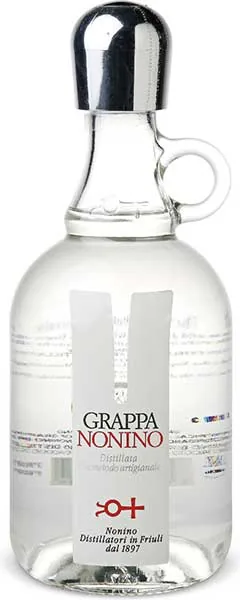
Percoto distillery, 1897: fresh Friulian pomace in copper steam stills within hours of pressing — grappa as terroir document, not by-product.
When Orazio Nonino founded his distillery in Percoto in 1897, grappa was a peasant's afterthought — the rough residue of winemaking. It was his granddaughter-in-law Giannola and husband Benito who, in 1973, broke that convention entirely by separating
individual Friulian grape pomaces and distilling each variety alone, creating the legally recognized Monovitigno® category and forcing Italian spirits law to rewrite itself around them.
Grappa Friulana draws on that same philosophy: pomace sourced from Friuli-Venezia Giulia's northeastern vineyards, transported to the five artisanal sub-distilleries at Percoto and loaded into fermentation tanks within one hour of pressing — a logistical commitment that eliminates oxidation and preserves volatile aromatic compounds that silo-stored pomace irreversibly loses.
Distillation runs through handcrafted copper steam discontinuous stills (batch by batch, never continuous column), with precise head-and-tail cuts made by hand. The steam-injection method — rather than direct flame — protects delicate esters from scorching.
The result is a grappa that carries the floral and stone-fruit register of Friulian white varieties with structural clarity rather than the harsh ethanol burn that defined the category before Nonino.
Zero color additives are used across all expressions. What is unusual here: this is a grappa that treats pomace as primary raw material, not waste — a category transgression that is now the category standard, because Nonino invented it.
ตัวเลือกของซอมเมอลิเยร์: Prosciutto di San Daniele with grissini · Seared scallop with white truffle shavings · Ricotta-filled pasta with brown butter and sage
กำลังโหลดบันทึก…
เคยชิมขวดนี้ไหม?
สอบถามเราทาง LINE
สอบถามเกี่ยวกับขวดนี้