 Log in to view
฿฿฿
Product information compiled from producer, importer and reference sources.
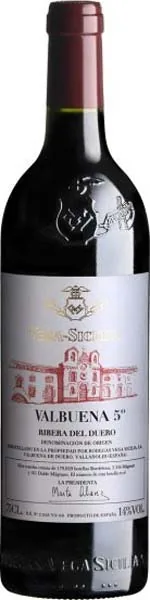
Valbuena de Duero's eroded colluvial lower slopes yield Vega Sicilia's 'second wine' — 5 years in French & American oak before release.
When Vega Sicilia declines to produce Únco in a given vintage, that fruit is declassified entirely to Valbuena — making this not a second wine in the commercial sense but a deliberate editorial act by one of Spain's oldest continuously operating estates, founded in 1864 by Don Eloy Lecanda y Chaves.
Valbuena 5° draws from younger parcels (~25 years average) on the eroded colluvial lower slopes near the Duero River, where gentler gradients and subsoil quartz gravel in sandy deposits retain moisture differently from the limestone-fragment hillside plots reserved for Único — producing a wine with rounder texture and earlier accessibility at the same 700–750 m continental elevation.
Fermentation proceeds with native yeast in stainless steel at controlled temperature; malolactic fermentation is also completed in stainless steel, preserving primary fruit clarity before the wine enters a five-year aging cycle across 225-litre French and American oak barriques plus 20,000-litre oak vats, combining oxidative barrel influence with the gentler integration of large-format wood.
The 2017 blend is predominantly Tinto Fino with a variable Merlot component — the only Vega Sicilia expression to incorporate Merlot in current production, distinguishing it structurally from the Cabernet-anchored Único. The estate received organic
certification in 2023 after more than 30 years without herbicides or chemical fertilizers; 2017 reflects that long-standing agronomic discipline in a vintage of measured ripeness and structural clarity.
Sommelier’s pick: Roast suckling lamb (lechazo) with rosemary and garlic · Ibérico presa with black truffle shavings · Slow-braised oxtail with Castilian chickpeas
Loading notes…
Tasted this?
Ask us on LINE.
Ask about this item