 Log in to view
฿฿
Product information compiled from producer, importer and reference sources.
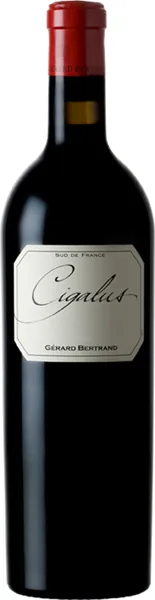
Domaine de Cigalus — Bertrand's first biodynamic estate (2002) — blends Bordeaux varieties with Syrah and Grenache under IGP Aude Hauterive, aged in French oak.
When Gérard Bertrand converted Domaine de Cigalus to biodynamics in 2002, it became the founding experiment of what would grow into the world's largest Demeter-certified wine operation — every harvest decision, from picking date to bottling, governed by the lunar calendar.
That origin story matters technically: two decades of biodynamic soil management on this IGP Aude Hauterive estate has built microbial complexity in the ground that no chemical shortcut can replicate.
Cigalus sits within the Aude Hauterive IGP, a designation that grants Bertrand the latitude to plant Cabernet Sauvignon, Cabernet Franc, and Merlot alongside indigenous Syrah, Grenache, and Carignan — a transgression of Languedoc convention that no AOP framework would permit.
The warm Mediterranean climate is tempered by the estate's inland position, and the 2021 vintage's cooler, later-ripening conditions delivered fresher acidity across the Languedoc, moderating what can otherwise be a sun-saturated, heavy-footed profile.
Vinification follows the house protocol of separate parcel fermentation in concrete vats, with aging in French oak barrels — the precise new-oak percentage undisclosed for this cuvée but consistent with Bertrand's graduated approach that reserves 100% new oak for Clos d'Ora alone.
The Bordeaux-Languedoc assemblage is Cigalus Rouge's defining structural anomaly: Cabernet's cassis frame and Merlot's mid-palate flesh are anchored by Syrah's dark olive and pepper, producing a red that sits outside any single regional archetype. Drink 2024–2029.
Sommelier’s pick: Slow-braised lamb shoulder with herbes de Provence · Duck confit with lentils du Puy · Grilled côte de bœuf with bone marrow butter
Loading notes…
Tasted this?
Ask us on LINE.
Ask about this item