 Log in to view
฿
Researched by our team from producer and independent sources — not supplied by the seller.
Sacha Lichine, who acquired Château d'Esclans in the mid-2000s (sources give 2005 or 2006), is widely credited with helping to reposition pale, dry Provençal rosé as a premium, year-round lifestyle wine in the US market rather than a cheap summer-only category
— he brought in former Château Mouton Rothschild winemaker Patrick Léon and scaled the estate's production from roughly 135,000 to around 5 million bottles a year over the following decade.
Som tam (green papaya salad), light on chili (ส้มตำ)
The rosé's delicacy and bright acidity work with the salad's lime and fish-sauce tang only if chili is dialed back significantly — a fiery som tam would overpower this wine's subtlety, so this pairing only works at low heat.
Steamed dumplings with light dipping sauce
A neutral, delicate dish that lets the wine's fresh red-berry and citrus notes lead without competing flavors.
Product information compiled from producer, importer and reference sources.
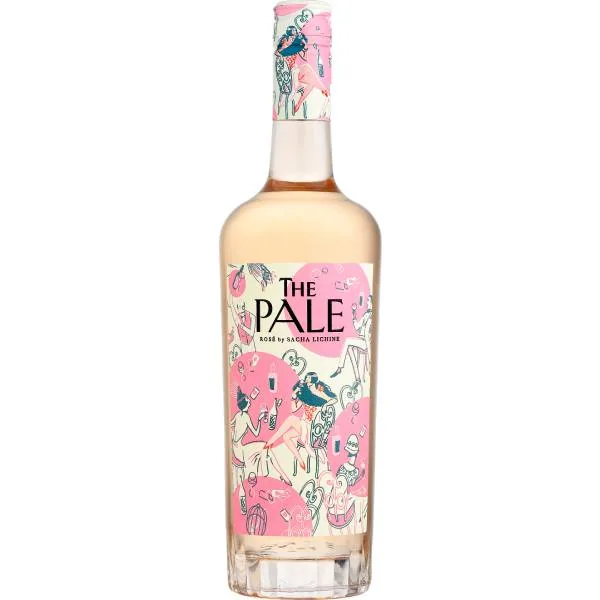
Sacha Lichine's entry-level Provence rosé from Les Baux-de-Provence — Grenache-led, direct-press, built for immediate vivacity.
When Sacha Lichine acquired Château d'Esclans in 2006, he set out to prove that Provence rosé could command serious prices — The Pale is the foundation of that argument, produced in volume without sacrificing the estate's commitment to low-intervention winemaking.
Les Baux-de-Provence sits at the western edge of Provence, where limestone-rich soils and the cooling influence of the Alpilles massif slow ripening and preserve natural acidity in the Grenache, Rolle (Vermentino), and Cinsault blend. The direct-press approach
— minimal skin contact, temperature-controlled fermentation in stainless steel — locks in the pale copper-blush color and keeps the palate taut rather than textured.
No oak is used at any stage, and the wine is bottled early to retain aromatic lift. What separates The Pale from the broader Provence rosé crowd is its deliberate positioning as a terroir-transparent, non-oaked expression carrying the d'Esclans house style, while the upper cuvées (Whispering Angel, Rock Angel, Les Clans, Garrus) absorb the estate's barrel-aging program.
Drink within 12–18 months of vintage for peak freshness.
Sommelier’s pick: grilled sea bass with lemon-caper butter · burrata with heirloom tomatoes and basil oil · chilled poached prawns with aioli
Loading notes…
Tasted this?
Ask us on LINE.
Ask about this item