 Log in to view
฿฿฿฿
Grand Cru.
WNLQ9 vintage signal, averaged from Wine Enthusiast Wine Vintage Chart 2026 Edition's 2 closely-agreeing Burgundy Red 2021 ratings (Burgundy Cote de Nuits Red; Burgundy Cote de Beaune Red).
A vintage grade rates the growing season in this wine’s region — not this specific bottle. Source.
Product information compiled from producer, importer and reference sources.
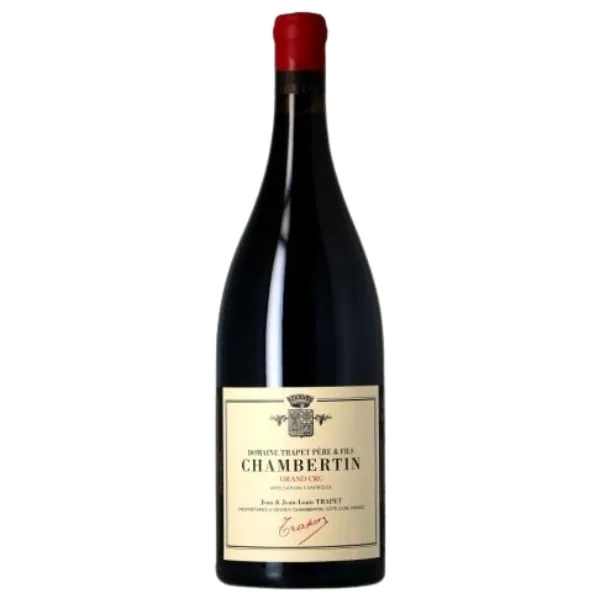
1.85 ha across 3 parcels; vines to 1919; up to 100% whole clusters, zero sulphur through ageing — Trapet's Chambertin in magnum format.
When Jean-Louis Trapet's ancestors illegally grafted vines onto American rootstock during the 1880s phylloxera crisis — before the practice was legalised in 1888 — they were acting on the same instinct that defines the domaine today: do what the vineyard demands, not what convention permits. That transgressive clarity now governs every decision in the cellar.
The 1.85-hectare Chambertin holding, spread across three distinct parcels with the oldest vines planted in 1919, sits on gravelly and marl topsoil over a limestone subsoil — a structure that drains freely while retaining enough mineral charge to give the wine its characteristic tensile backbone and site-specific salinity.
Fruit is double-sorted (vineyard and winery, up to 10% rejected), then fermented with native yeasts in open vats with 80–100% whole-cluster inclusion for Grand Crus — a proportion that builds structural complexity and aromatic lift without the extraction typical of Gevrey.
No sulphur is added at harvest, during fermentation, or during ageing; a minimal dose is added at bottling only. Ageing runs 18–20 months in French oak barriques (30–75% new, vintage-dependent), with gravity-fed transfers. Bottled unfined and unfiltered.
The philosophical rupture here is rare: Trapet uses near-maximum whole-cluster percentages while simultaneously rejecting the reductive, low-oxygen winemaking that most whole-cluster practitioners rely on — producing a Chambertin that is open and legible from release rather than locked behind reductive shell.
The 1.5L magnum format slows oxygen ingress proportionally, extending the drinking window and deepening the mid-palate development over time. The 2021 vintage, a cool and precise year in the Côte de Nuits, delivered wines of vivid acidity and fine-grained tannin structure — expect this to resolve beautifully through the 2030s and beyond.
Sommelier’s pick: Roasted Bresse pigeon with black truffle jus · Venison loin with juniper and beetroot reduction · Braised short rib with bone marrow gremolata
Loading notes…
Tasted this?
Ask us on LINE.
Ask about this item