 Log in to view
฿฿฿฿
Product information compiled from producer, importer and reference sources.
Puente Alto's rocky Andean alluvial fan, gravity-only vinification, 70–73% new French oak — and Carmenère where Bordeaux uses none.
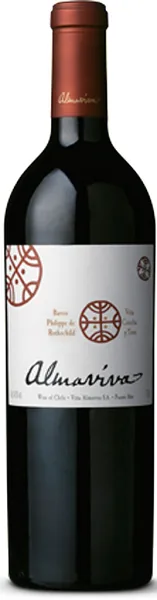
When Baroness Philippine de Rothschild and Eduardo Guilisasti Tagle formalized their joint venture in 1997, they imposed a single constraint no Chilean producer had attempted at scale: one estate, one bodega, one technical team, one wine — the French Château model transplanted to the foot of the Andes.
That founding discipline is the reason every technical decision here is non-negotiable rather than commercial.
The single estate sits in Puente Alto at 620–650 m, the highest sub-zone of the Maipo Valley. Soils are shallow loamy clay over sandy loam, gravel, and Andean alluvial rock — poor, fast-draining, naturally low pH. The Cordillera's diurnal swings preserve acidity and aromatic precision even as the site delivers full phenolic ripeness.
Fruit is hand-harvested into shallow bins, hand-sorted, and transferred by gravity only — no pumps — into parcel-specific stainless tanks. Cold maceration extracts color and aromatics before alcoholic fermentation; malolactic fermentation is spontaneous, triggered immediately before or after gravity drainage into barrel.
Aging runs 20 months in French oak, 70–73% new, in the estate's Grand Chai vault.
The house signature — Cabernet Sauvignon dominant with Carmenère at up to 24% — delivers roasted pepper and dark spice. Almaviva was also the first non-Bordeaux wine admitted to La Place de Bordeaux. Drink 2024–2038.
Sommelier’s pick: Grilled bone-in ribeye with chimichurri · Slow-braised lamb shoulder with dried chili and cumin · Duck confit with black cherry reduction
Loading notes…
Tasted this?
Ask us on LINE.
Ask about this item