 Log in to view
฿฿฿
Product information compiled from producer, importer and reference sources.
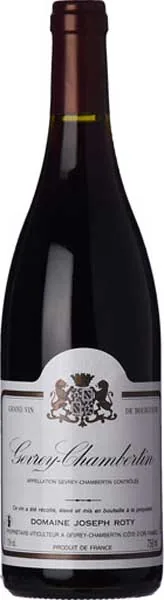
11th-generation Gevrey from marl-limestone hillsides; 100% destemmed, ~50% new heavily toasted oak, wild yeast since 1987 — built for the cellar.
When Joseph Roty took over the family's Gevrey-Chambertin vines in 1968, he inherited a winemaking philosophy already three centuries deep — and chose to deepen it further rather than modernise. The village-level Gevrey-Chambertin draws from hillside parcels
on the marl-and-limestone soils of the Côte de Nuits, a geology that drives pronounced tannic backbone and structural density into the Pinot Noir even at village appellation level.
Planting density runs to ~10,000 vines/ha, yields are held to 25–32 hl/ha, and no pesticides or herbicides touch the soil. In the vat room — modernised in the same 2014 vintage year — fruit is 100% destemmed, double-sorted, then cold-soaked before fermentation with exclusively indigenous yeasts (a house commitment since 1987) at a controlled 25–26°C over a ~three-week cuvaison.
Élevage follows in French oak barrels up to two years old, heavily toasted, at ~50% new oak for approximately 15–18 months, then a further ~10 months of bottle rest before release. The heavy-toast, high-new-oak regime at village level is the house's deliberate counter-position to Gevrey's increasingly reductive, whole-cluster orthodoxy.
The 2014 vintage delivered cool-season precision and firm natural acidity, producing wines with taut structure and a long integration arc — drink from 2025 through 2035+.
Sommelier’s pick: Roasted duck breast with cherry jus and lentils du Puy · Braised short rib with bone marrow and root vegetable gratin · Aged Époisses or Comté with walnut bread
Loading notes…
Tasted this?
Ask us on LINE.
Ask about this item