 Log in to view
฿฿
Product information compiled from producer, importer and reference sources.
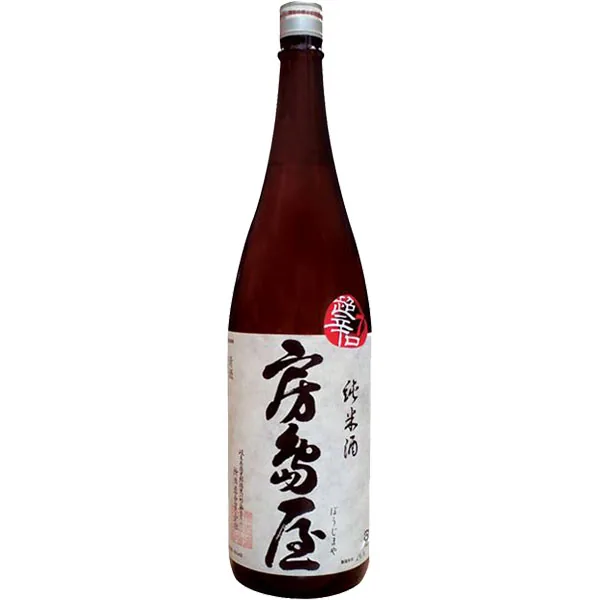
Hyogo junmai, hi-ire pasteurized twice for stability—bone-dry structure built for food.
Bojimaya's Junmai Cho Karakuchi originates in Hyogo Prefecture, Japan's premier sake-brewing region, where mineral-rich water and centuries of rice-polishing tradition converge. The name itself—"cho karakuchi" (ultra-dry)—signals intent: this is a junmai sake with no added alcohol or sugars, relying entirely on rice fermentation for its profile.
The production employs hi-ire (heat pasteurization) applied twice—once post-fermentation and again before bottling—a technique that stabilizes the sake for extended shelf life while locking in a crisp, mineral character. The dual pasteurization prevents oxidation and microbial drift, preserving the dry, linear structure that defines the style.
No specific polish ratio is documented for this expression; junmai classification alone indicates the rice was milled to ≤70% of its original grain.
The "cho karakuchi" designation places this at the extreme dry end of the SMV scale, making it a food-forward sake built for umami-rich dishes rather than standalone sipping. The hi-ire process strips away some of the delicate aromatics found in nama (unpasteurized) sakes, trading complexity for reliability and a clean, mineral finish.
Drink at cellar temperature (10–12°C) or slightly warmed (45–50°C) to unlock savory depth. Best consumed within 2–3 years of bottling.
Sommelier’s pick: Grilled mackerel with miso glaze—the dryness cuts through oily fish and fermented depth · Aged hard cheeses (Comté, Parmigiano)—mineral notes mirror salt and umami · Sashimi with soy and wasabi—the sake's linearity doesn't compete with raw fish
Loading notes…
Tasted this?
Ask us on LINE.
Ask about this item