 Log in to view
฿
Product information compiled from producer, importer and reference sources.
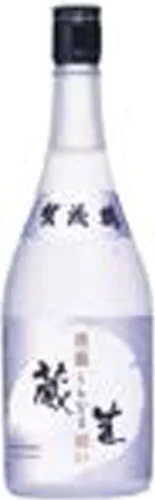
Kuranama from Saijo's soft-water pioneer — unpasteurised, tank-fresh, brewed where Hiroshima's mineral-poor mountain water demands slow, low-temperature fermentation.
Kamotsuru released the world's first commercially sold daiginjo in 1958 — but the brewery's deeper legacy is proving that Hiroshima's ultra-soft subsoil water, filtered through the Kamo Mountains and nearly devoid of minerals, could produce ginjo-grade sake of the highest order.
That technical breakthrough, mastering slow low-temperature fermentation to compensate for water that would otherwise stall yeast activity, defines every bottle that leaves Saijo's Sakagura-dori.
Kuranama is the nama (unpasteurised) expression, drawn from contract-grown sake rice cultivated in the northern Hiroshima highlands where clay-loam soils and pronounced diurnal temperature variation produce dense, starch-rich grain. Rice is steamed in
traditional wooden steamers, koji is cultured deeply into the inner rice structure to maximise saccharification, and fermentation proceeds at low temperature in a slow moromi — the house method that yields the distinctively silky, aromatic Kamotsuru profile described in-house as Ama-Kara-Pin-Uma: mildly sweet, dry, refreshing, and tasteful.
As a nama release, Kuranama bypasses pasteurisation entirely, preserving the volatile aromatic compounds and lively enzymatic texture that heat-treatment would suppress — a deliberate departure from Kamotsuru's standard bottling philosophy. The result is a tank-fresh expression that captures the brewery's soft-water ginjo character at its most immediate and unguarded.
Sommelier’s pick: Chilled oysters with ponzu mignonette · Steamed sea bass with ginger and scallion oil · Burrata with white asparagus and yuzu zest
Loading notes…
Tasted this?
Ask us on LINE.
Ask about this item