 Log in to view
฿฿
Product information compiled from producer, importer and reference sources.
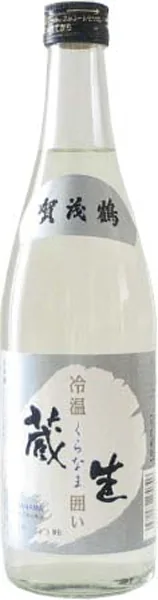
Kuranama nama sake from Saijo's soft-water kura — unpasteurised, bottled fresh from the moromi, 1.8 L magnum format.
Kamotsuru's Kura No. 4 — the brewery's refrigerated, modern-equipped brewhouse — was built specifically to handle the technical demands of cold-chain nama production, a deliberate infrastructural investment that separates this expression from the brewery's pasteurised portfolio.
Saijo, Higashihiroshima, draws ultra-soft subsoil water filtered through the Kamo Mountains: mineral-poor, low in the ions that drive vigorous yeast activity in Nada or Fushimi. To compensate, Kamotsuru employs slow, low-temperature moromi fermentation with
deeply cultured koji — maximising saccharification before fermentation begins — a technique the brewery helped pioneer as proof that Hiroshima's 'liability' water could produce ginjo-grade sake.
Kuranama is released unpasteurised (nama), meaning the lactic enzymes and live yeast character present at bottling are preserved intact, delivering a profile that pasteurised expressions from the same kura cannot replicate. The 1.8 L format (isshobin) is the
traditional brewery-direct vessel, historically reserved for kura consumption and trade accounts — its volume slows oxidation after opening relative to 720 mL bottles.
Contract-grown sake rice from Hiroshima's northern highland clay-loam elevations, where diurnal swing is significant, is polished in-house. As a nama, this is a time-sensitive expression: the freshness window is finite, and cold storage is non-negotiable from production through service.
Sommelier’s pick: Chilled oysters with ponzu mignonette · Steamed snow crab with sudachi · Sashimi of flounder (hirame) with shiso and sea salt
Loading notes…
Tasted this?
Ask us on LINE.
Ask about this item