 Log in to view
฿฿
Product information compiled from producer, importer and reference sources.
Pinot Noir-dominant Grand Cru blend from 100–120 crus; dosed at 6–9 g/L — measurably drier than most Brut Grandes Marques.
When Mumm installed a press house directly in its Verzenay Grand Cru vineyard in 1840 — pressing grapes on-site to eliminate oxidation during transport — it set a structural precedent the entire Champagne region would eventually follow. That same obsession with source integrity underpins Cordon Rouge today.
160 of the house's ~218 hectares carry Grand Cru classification, spread across eight villages: Aÿ, Bouzy, Ambonnay, Verzy, Verzenay, and Mailly on the Montagne de Reims, plus Avize and Cramant on the Côte des Blancs — chalk and limestone soils throughout, delivering the taut mineral backbone the house style depends on.
The assemblage draws from 100–120 individual crus, blended at Pinot Noir 45%, Chardonnay 30%, Pinot Meunier 25%, with 25–30% reserve wine integrated at assemblage. Fermentation proceeds in stainless steel at 18–20°C with natural yeasts; full malolactic fermentation is house policy; a portion of reserve wine is aged in oak vats before blending.
Lees aging runs a minimum 20 months, with house practice closer to 2.5 years in chalk cellars beneath Reims. The defining transgression: dosage of just 6–9 g/L against the 12 g/L Brut category norm — one of the lowest among major Grandes Marques — a deliberate decision to let the Pinot Noir-dominant terroir read without sweetness interference.
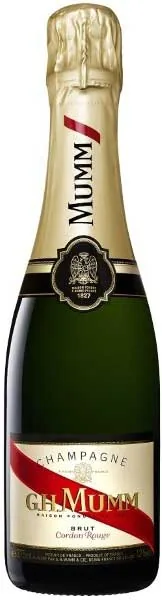
The 375 ml format accelerates secondary development; drink within 2–3 years of disgorgement.
Sommelier’s pick: Grilled langoustine with brown butter and tarragon · Tuna tartare with yuzu kosho and sesame oil · Comte aged 18 months with walnut bread
Loading notes…
Tasted this?
Ask us on LINE.
Ask about this item