 Log in to view
฿฿฿
Wine Enthusiast Wine Vintage Chart 2026 Edition rates Champagne 2018.
A vintage grade rates the growing season in this wine’s region — not this specific bottle. Source.
Product information compiled from producer, importer and reference sources.
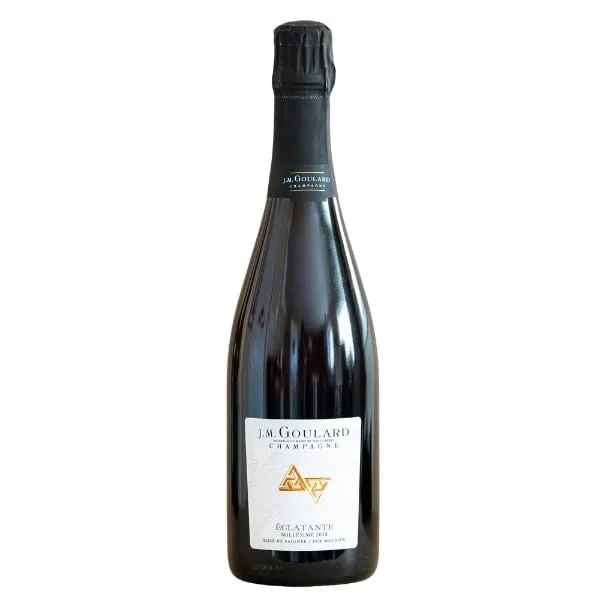
Grower Champagne from the sandy-clay Massif de Saint-Thierry — Meunier-dominant, parcel-vinified, extra brut discipline from a 2018 vintage.
When Damien Goulard returned to Prouilly in 2012 and introduced barrel ageing to a house his father Jean-Marie had built from cooperative departure in 1995, he was making a deliberate argument: that the Massif de Saint-Thierry — a plateau northwest of Reims whose viticulture dates to 532 AD — deserved the same parcel-level scrutiny as the Côte des Blancs.
The Éclatante 2018 is the vintage expression of that argument. The Massif's sandy-clay soils over chalk at approximately 130 m elevation on south- and southeast-facing slopes produce Pinot Meunier with a leaner, more mineral profile than the variety achieves in the Marne Valley — less plush, more taut.
Grapes are hand-harvested and pressed in a traditional 4,000 kg Coquard basket press, cold-settled for 12 hours, then fermented in stainless steel with full malolactic fermentation completed before bottling. Selected parcels receive oak barrel ageing, a technique Damien introduced against the house's stainless-steel heritage.
Low dosage (4–7 g/L range) across the Goulard range keeps the Massif's chalky tension unmasked. What sets this expression apart: a vintage-dated Champagne from a terroir almost entirely absent from international grower-Champagne conversation, where Meunier — not Pinot Noir or Chardonnay — carries the structural weight.
The 2018 growing season delivered generous ripeness and natural balance; expect the wine to drink well now through 2028.
Sommelier’s pick: Grilled langoustine with brown butter and tarragon · Pork belly glazed with honey and five-spice · Aged Comté with walnut bread
Loading notes…
Tasted this?
Ask us on LINE.
Ask about this item