 Log in to view
฿฿฿
Product information compiled from producer, importer and reference sources.
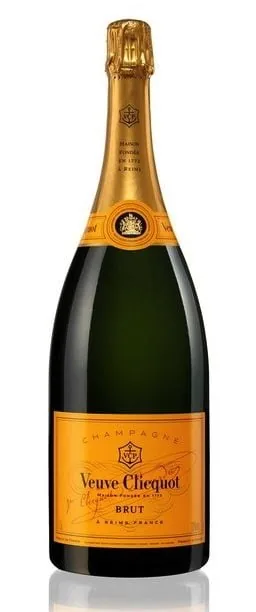
Pinot Noir-dominant NV built from 50–60 crus, 25–50% reserve wines, 30+ months on chalk-cellar lees — the house that invented riddling, in Magnum.
In 1816, Barbe-Nicole Clicquot Ponsardin — a 27-year-old widow with no legal right to run a business — devised the riddling table, the pupitre, that made mass clarification of Champagne possible. Every bottle of Yellow Label that exists owes its clarity to that single decision.
The Magnum format extends that logic: greater lees-to-wine ratio, slower secondary fermentation, and a more gradual development of autolytic complexity than the standard 75cl.
Fruit is drawn from shallow chalk (craie) hillside soils across 12 Grand Cru villages — Bouzy, Ambonnay, Verzenay, Aÿ, Avize, Le Mesnil-sur-Oger among them — where natural drainage concentrates sugars and chalk's high pH preserves acidity through to harvest.
The blend runs ~50–55% Pinot Noir, 28–33% Chardonnay, 15–20% Pinot Meunier, assembled from 50–60 crus by Cellar Master Didier Mariotti across roughly 700–800 individual base wine samples.
Alcoholic fermentation proceeds in stainless steel over 8–10 days; full malolactic fermentation is carried out across the range. Since 2008, a proportion of base wines pass through large oak foudres for textural layering. Reserve wines — held anywhere from 1 to 30 years — constitute 25–50% of the final blend, providing the house's signature consistency.
Minimum 30 months on lees in bottle, double the AOC requirement, before disgorgement at 9 g/L dosage.
The Magnum is the only format in which Yellow Label's Pinot Noir-dominant architecture fully resolves its tension between generosity and chalk-driven tension before release.
Sommelier’s pick: Pan-seared scallops with cauliflower purée and brown butter · Roast chicken with tarragon cream sauce · Tempura king prawn with yuzu kosho
Loading notes…
Tasted this?
Ask us on LINE.
Ask about this item