 Log in to view
฿฿฿฿
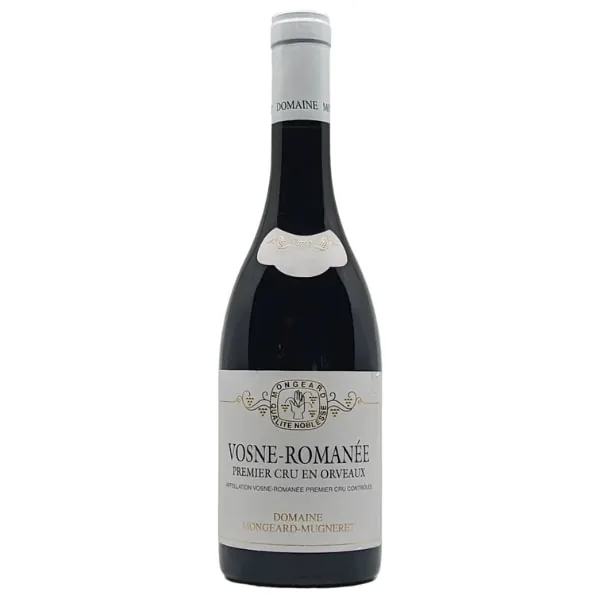
Premier Cru, Vosne-Romanee.
WNLQ9 vintage signal, averaged from Wine Enthusiast Wine Vintage Chart 2026 Edition's 2 closely-agreeing Burgundy Red 2022 ratings (Burgundy Cote de Nuits Red; Burgundy Cote de Beaune Red).
A vintage grade rates the growing season in this wine’s region — not this specific bottle. Source.
Product information compiled from producer, importer and reference sources.
En Orveaux Premier Cru from a 400-year Vosne family: clay-limestone soils, 'Pinot Mongeard' clone, unfiltered after 18–22 months in Allier oak.
The Mongeard family has tended vines in Vosne-Romanée since 1620, and their proprietary massal selection — the 'Pinot Mongeard' — was identified in the 19th century by Jean-Baptiste Mongeard as a serrated-leaf, low-yielding clone of high concentration, preserved at the Beaune Viticultural School since 1884.
That genetic continuity is the invisible backbone of En Orveaux. The Premier Cru sits on clay over Bajocian limestone, mid-slope on a south-east aspect in Vosne-Romanée, where the limestone base drives mineral tension and the clay fraction retains just enough moisture to sustain the vine through Burgundy's increasingly warm summers.
Hand-harvested fruit undergoes cold pre-fermentation maceration for 4–5 days, followed by native yeast fermentation in temperature-controlled stainless steel at ~30°C for 12–15 days, with gravity transfer to barrel. Élevage runs 18–22 months in French oak from
Allier, Nièvre, and Vosges forests, with new-oak calibrated at Premier Cru level to approximately 30–50% — Vincent Mongeard determines the exact ratio by palate at pressing rather than by formula.
The wine is bottled unfiltered, preserving textural density. What distinguishes En Orveaux within the Mongeard hierarchy is its position as the most terroir-transparent Premier Cru in the portfolio: less structural weight than Les Suchots, more site-specific mineral drive than Les Petits Monts.
The 2022 vintage in Burgundy delivered small, concentrated berries from a dry, warm growing season, producing wines of deep colour and supple tannin structure with freshness preserved by cool nights — expect this to open generously within 5–8 years while rewarding a decade of cellaring.
Sommelier’s pick: Roast duck breast with cherry jus and wilted radicchio · Braised short rib with bone marrow and root vegetable gratin · Aged Époisses with walnut bread
Loading notes…
Tasted this?
Ask us on LINE.
Ask about this item