 Log in to view
฿฿฿
Product information compiled from producer, importer and reference sources.
Puente Alto's rocky Andean alluvium at 620–650 m, gravity-only vinification, 70–73% new French oak — Bordeaux architecture with irreducibly Chilean Carmenère.
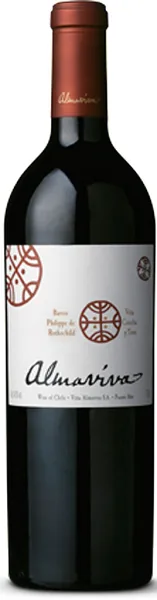
Almaviva was born from a 1997 handshake between Baroness Philippine de Rothschild and Eduardo Guilisasti Tagle of Concha y Toro — a deliberate act of transatlantic ambition to execute the French Château concept on Chilean soil: one estate, one bodega, one wine.
That founding philosophy dictates every technical decision made here. The single estate sits in Puente Alto at the foot of the Andes, 620–650 m elevation, on classic alluvial fan deposits — loamy clay to 50 cm, then sandy loam, gravel, and rock — soils so poor and free-draining they force deep root penetration and concentrate phenolic intensity while the Andes' diurnal swings preserve acidity at high ripeness.
Harvest is hand-picked into shallow bins, hand-sorted, and transferred by gravity alone — no pumps — into parcel-specific stainless tanks for cold maceration before alcoholic fermentation; malolactic fermentation occurs spontaneously, immediately before or after gravity-draining into barrel.
The wine ages 20 months in French oak, 70–73% new, in the estate's Grand Chai vault. The defining transgression: deliberate inclusion of Carmenère — a variety phylloxera erased from Bordeaux and rediscovered in Chile — woven into a Cabernet Sauvignon-dominant frame, producing roasted pepper, dark spice, and herbal depth that no Médoc or Napa equivalent can structurally replicate.
The 2012 vintage, now over a decade in bottle, has resolved its tannin architecture into a composed, mineral-driven expression; drink through 2030.
Sommelier’s pick: Grilled bone-in ribeye with chimichurri · Slow-braised lamb shoulder with black olive and rosemary · Duck confit with lentils and smoked bacon
Loading notes…
Tasted this?
Ask us on LINE.
Ask about this item