 Log in to view
฿฿
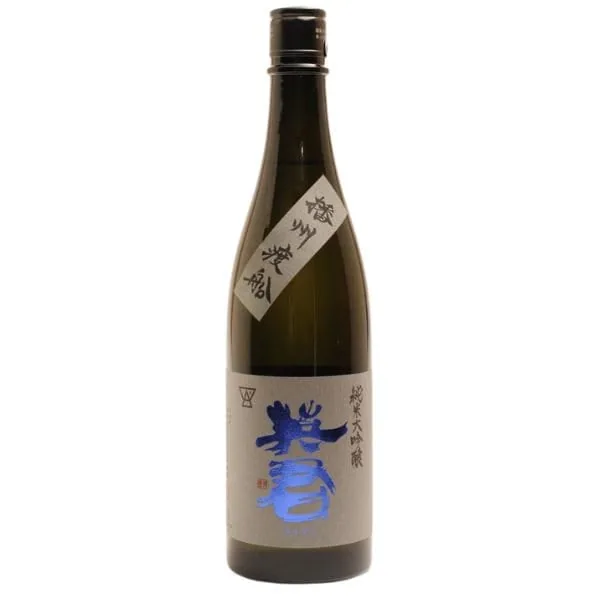
Junmai Daiginjo.
Product information compiled from producer, importer and reference sources.
Fushimi kura, Banshuu Wataribune rice polished to daiginjo grade — a hyper-regional variety resurrected for its structural precision and melon-driven aromatics.
Saito Shuzo has brewed along the Takase River in Fushimi, Kyoto since 1895, drawing exclusively from Fusui — a soft, low-iron underground spring beneath the Momoyama Hills, designated one of Japan's top 100 water sources. That mineral-lean water is the structural reason Eikun's sake sits in the onna-zake tradition: texturally yielding, with aromatics that are never hardened by mineral interference.
This expression departs from Eikun's house rice, Iwai, in favour of Banshuu Wataribune — a heritage variety from Hyogo Prefecture, the genetic ancestor of Yamada Nishiki, prized for its large grain and high starch core (shinpaku). Polished to ≤50% seimaibuai (daiginjo grade), the grain yields a clean, high-clarity fermentation.
Cold fermentation proceeds using Kyoto-sourced yeast under the supervision of a Nanbu Toji guild brewmaster, following traditional sandan jikomi (three-stage addition) protocol.
The special feature here is the rice itself: Wataribune was nearly extinct before deliberate revival, and its use at daiginjo polish by a Kyoto kura — rather than a Hyogo brewery — is a cross-regional transgression that produces a broader, more grain-expressive profile than Eikun's Iwai-based flagship.
Drink now through three years from production; best served at 10–12°C to preserve aromatic lift.
Sommelier’s pick: Steamed chawanmushi with sea urchin and dashi · Sashimi of flounder (hirame) with ponzu · Lightly grilled scallop with yuzu butter
Loading notes…
Tasted this?
Ask us on LINE.
Ask about this item