 Log in to view
฿฿
Junmai.
Product information compiled from producer, importer and reference sources.
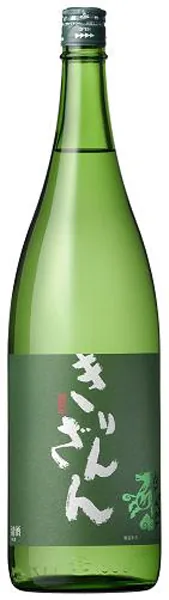
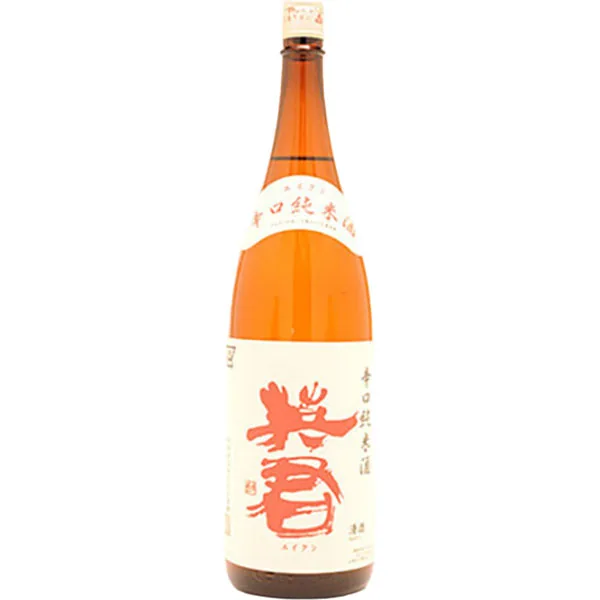
Fushimi kura, Fusui soft-spring water, Iwai rice polished to 70% — Eikun's entry-point Junmai in a 1.8 L magnum format.
When the Saito family adopted the name Eikun in 1915 to mark Emperor Taisho's ascension, they were already two decades into building a reputation on a single hyper-local conviction: that Fushimi's underground spring water — Fusui, designated one of Japan's top 100 water sources — could produce a style of sake no other district could replicate.
That water, drawn from beneath the Momoyama Hills along the Takase River, is very soft and low in iron, suppressing harsh fermentation byproducts and yielding the mellow, texturally smooth character Fushimi calls onna-zake.
The Karakuchi Junmai is built on Iwai rice — a Kyoto-exclusive variety developed in 1933, revived in 1988, and sourced almost entirely by Eikun, which controls roughly 40% of total Iwai production in the prefecture. Polished to a seimaibuai of approximately 70%, the grain retains enough starchy body to deliver umami weight while the Fusui water keeps the texture from turning heavy.
Fermentation follows traditional sandan jikomi (three-addition) cold brewing under a Nanbu Toji guild brewmaster, using Kyoto-sourced yeast.
What sets this expression apart within its own house is the 1.8 L tokkuri format — a deliberate choice for table service and communal drinking, where the larger volume maintains temperature stability and allows the dry, food-harmonious profile to evolve across a full kaiseki-style meal.
The SMV reads on the dry side, with medium acidity that keeps the finish clean rather than lingering.
Sommelier’s pick: Grilled white-flesh fish with yuzu kosho · Chilled tofu with dashi and bonito flakes · Chicken karaage with sudachi
Loading notes…
Tasted this?
Ask us on LINE.
Ask about this item