 Log in to view
฿฿
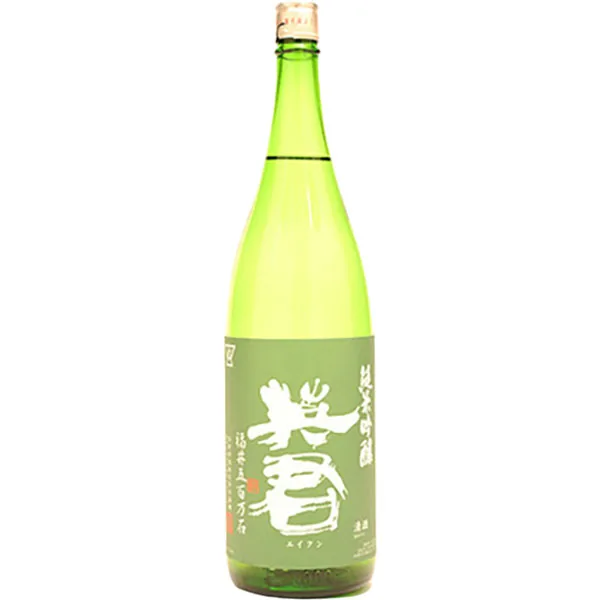
Junmai Ginjo.
Product information compiled from producer, importer and reference sources.
Fushimi soft-water ginjo from the kura controlling ~40% of Kyoto's hyper-regional Iwai rice — the unreplicable terroir of onna-zake.
When the Saito family adopted the name Eikun in 1915 to commemorate Emperor Taisho's ascension, they were already brewing from one of Japan's most consequential water sources: Fusui, the soft, low-iron underground spring beneath the Momoyama Hills in Fushimi, Kyoto — designated among Japan's top 100 water sources by the Ministry of the Environment.
That mineral-stripped softness is the structural engine of Fushimi's onna-zake (feminine sake) tradition, producing a texture that is mellow and enveloping rather than dry and assertive in the manner of rival Nada.
Midori-No-Eikun is built on Iwai rice, a Kyoto-exclusive variety developed in 1933, revived in 1988, and sourced almost entirely through Eikun — the kura controls roughly 40% of all Iwai grown in the prefecture, making this a genuinely proprietary terroir. The
rice is polished to 60% remaining (seimaibuai), meeting Junmai Ginjo grade, then fermented via traditional cold sandan jikomi (three-addition) method using Kyoto-sourced yeast under the guidance of a Nanbu Toji guild brewmaster.
No distilled alcohol is added — junmai designation is absolute.
The 1.8 L magnum format preserves the delicate ginjo aromatic profile across extended service, an unusual choice for a style typically bottled at 720 ml. Expect the characteristic Fushimi softness — a low-mineral water signature that no brewery outside Kyoto can replicate — alongside the gentle, melon-adjacent ginjo lift that Iwai rice delivers at this polish level.
Sommelier’s pick: Kyoto-style simmered tofu (yudofu) with dashi · Steamed sea bream with ginger and scallion · Chawanmushi with lily bulb and mitsuba
Loading notes…
Tasted this?
Ask us on LINE.
Ask about this item