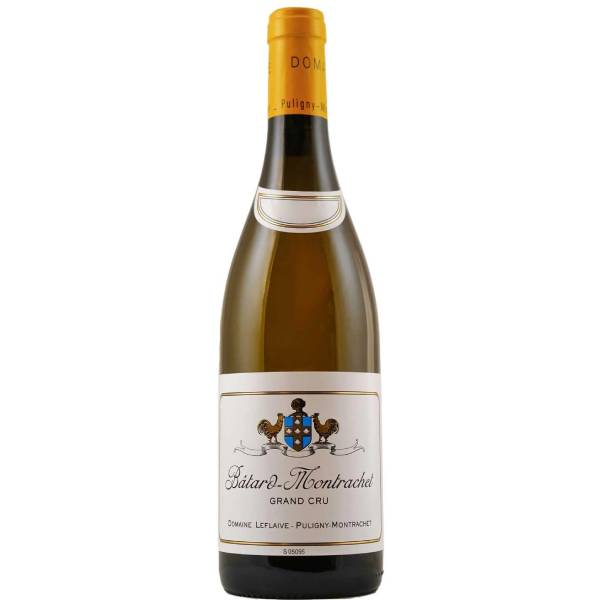
Batard Montrachet Grand Cru
฿฿฿฿
SaleRated 98/100 by Wine Spectator (top 1% of their reviews).
From our sommelier team
Producer history
Domaine Leflaive's modern estate was built by Joseph Leflaive, who bought roughly 25 hectares of Puligny-Montrachet vineyard in 1905 in the aftermath of phylloxera and began estate-bottling under his own label. After his death in 1953 his sons Vincent and Jo Leflaive ran the domaine; Vincent's daughter Anne-Claude Leflaive and cousin Olivier Leflaive took over management in 1990, with Anne-Claude assuming sole control in 1994. In 1997 she began converting the domaine to biodynamic viticulture, making Leflaive one of the earliest top Burgundy estates to farm biodynamically; the domaine remains family-owned following Anne-Claude's death in 2015.
Signature pairings
- Steamed white fish with light butter or citrus sauce (ปลานึ่งซีอิ๊ว (light version, no chili)) — The wine's dense fruit and mineral-driven acidity need a mild, buttery or citrus-forward preparation; strong chili or fish sauce heat would overwhelm its subtlety and clash with the oak-derived spice notes.
- Lobster or crab with cream or butter sauce — Classic pairing for weighty Grand Cru white Burgundy — the wine's richness and acidity cut through cream and match the sweetness of shellfish without competing flavors.
- Aged Comté or other hard mountain cheese — The wine's nutty, buttery-pastry notes and firm acid structure are a traditional match for nutty aged cheeses, which don't compete with its delicate aromatics the way spicier dishes would.
When Anne-Claude Leflaive completed the estate's full biodynamic conversion by 1997 — then considered radical across the Côte d'Or — her stated aim was not philosophy but precision: to make the soil speak without interference. Bâtard-Montrachet is where that ambition is most audible. The Grand Cru sits on argilo-calcaire soils, the calcareous clay matrix delivering both the weight that distinguishes Bâtard from the more aerially tense Chevalier above it and the limestone-driven tension that separates it from richer, flatter sites. Horse-ploughing preserves soil structure and mycorrhizal integrity across Leflaive's Grand Cru parcels — a labour-intensive commitment that directly influences root depth and mineral uptake. Vinification begins with manual harvest, parcel-by-parcel sorting, and long pneumatic pressing, followed by 24-hour static settling before the must is racked directly into French oak — Vosges and Allier — for alcoholic fermentation on indigenous yeasts only. New oak reaches approximately 25% at Grand Cru level, with 12 months in barrel and a further 6 months in stainless steel before spring bottling with minimal intervention — effectively near-unfiltered. What is unusual here: Leflaive deliberately withholds the richness Bâtard's clay could easily produce, using the stainless-steel second winter to sharpen rather than soften. The 2022 vintage — sunny and warm — delivers ripe stone fruit and white flower alongside saline and flint, more approachable in youth than cooler years yet carrying the structural architecture for a decade-plus of development.
Details
- Country
- France
- Region
- Burgundy
- Subregion
- Puligny-Montrachet
- Variety
- Chardonnay
- Vintage
- 2022 **
- Bottle size
- 750 ml
** Vintage may change — please confirm with our team before ordering.
Taste profile
- Body
- Medium-Full
- Acidity
- High
- Sweetness
- Dry
Pairs well with
- Shellfish & crustaceans
- Grilled & roasted fish
- Hard & aged cheese
- Caviar & luxury seafood
- Veal & sweetbreads
Sommelier’s pick: Brittany lobster with beurre blanc and tarragon · Turbot roasted on the bone with capers and brown butter · Comté aged 24 months with walnut bread
Interested? Talk to us
Message us to check item availability and information.
Community rating
Loading reviews…
