 Log in to view
฿฿฿
Product information compiled from producer, importer and reference sources.
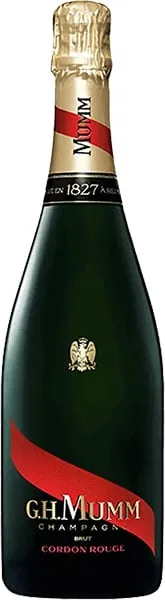
Pinot Noir-dominant Grand Cru blend from 100–120 crus; dosed at 6–9 g/L — measurably drier than most Grandes Marques Brut. 1.5 L magnum.
In 1840, Mumm built a press house directly in Verzenay — its first Grand Cru parcel acquisition — to eliminate oxidation during grape transport, a practice radical at the time and now standard across Champagne. That same obsession with source integrity underpins Cordon Rouge today.
160 ha of estate vineyards, rated 98% average on the échelle des crus, span eight Grand Cru villages across Montagne de Reims and Côte des Blancs: Aÿ, Bouzy, Ambonnay, Verzy, Verzenay, Mailly, Avize, and Cramant — chalk and limestone soils that drive the wine's taut, mineral backbone and the Pinot Noir's characteristic golden-fruit density.
The assemblage draws from 100–120 individual crus, blended as Pinot Noir 45%, Chardonnay 30%, Pinot Meunier 25%, with 25–30% reserve wine integrated at assemblage for cross-vintage depth. Fermentation proceeds in stainless steel at 18–20°C with natural yeasts; full malolactic fermentation is house policy; each cru is vinified separately before blending.
Lees aging runs a minimum of 20 months in chalk cellars beneath Reims, with house practice closer to 2.5 years. The defining transgression: dosage held at 6–9 g/L — well below the 12 g/L Brut category norm — a deliberate refusal to let sugar mask the Pinot Noir-dominant terroir.
The 1.5 L magnum format slows secondary fermentation and lees contact, adding textural weight and aging potential beyond the standard bottle.
Sommelier’s pick: Grilled langoustine with brown butter and tarragon · Roast free-range chicken with morel cream sauce · Aged Comté with honeycomb
Loading notes…
Tasted this?
Ask us on LINE.
Ask about this item