 Log in to view
฿฿฿
Grand Cru.
Wine Enthusiast Wine Vintage Chart 2026 Edition rates Champagne 2011.
A vintage grade rates the growing season in this wine’s region — not this specific bottle. Source.
Product information compiled from producer, importer and reference sources.
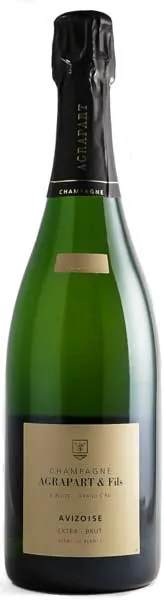
Where Agrapart's Minéral draws from pure belemnite chalk, the Avizoise is built on a deliberate geological detour: the Les Robards and La Voie d'Épernay parcels in Avize, where clay sits over limestone rather than open chalk — a shift of roughly 600 metres that produces measurably broader texture and a rounder mid-palate weight absent from the house's other single-terroir cuvées.
Those clay-over-limestone soils slow drainage and moderate heat retention differently from the chalk parcels, yielding Chardonnay with more flesh and less saline austerity, while the east-facing Côte des Blancs slope preserves the acidity that defines the appellation.
Vinification follows the house's uncompromising parcel protocol: hand-harvest, indigenous yeast fermentation in old 600 L oak demi-muids (no new wood), full malolactic fermentation, and a minimum six years on lees in chalk cellars at constant 10 °C. Second fermentation proceeds under cork (agrafé), not crown cap — a labour-intensive choice that produces finer, more integrated bubbles.
Dosage is held at Extra Brut, 3 g/L; the wine is bottled unfined and unfiltered.
The 2011 vintage — not among the library's documented benchmark years — demands patience; the structural density of the clay-influenced terroir and the extended lees aging suggest this is still in its formative drinking window, best approached from 2024 onward.
Sommelier’s pick: Grilled langoustine with beurre blanc and tarragon · Aged Comté with walnut bread · Seared scallop with cauliflower purée and brown butter
Loading notes…
Tasted this?
Ask us on LINE.
Ask about this item