 Log in to view
฿฿
Product information compiled from producer, importer and reference sources.
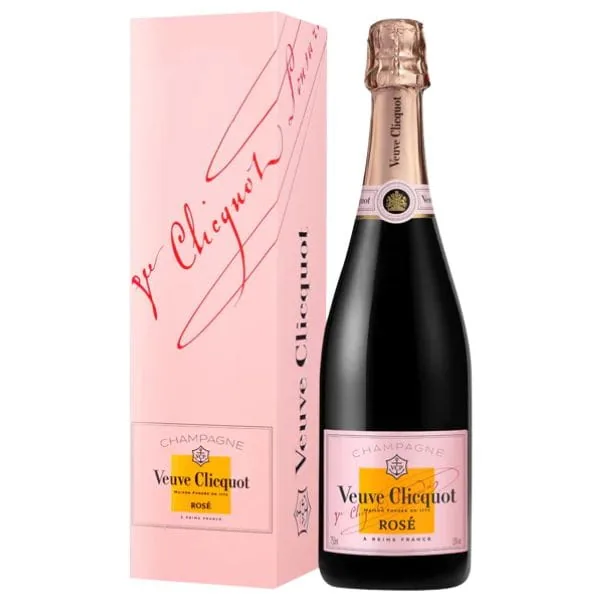
In 1818, Barbe-Nicole Clicquot Ponsardin — a 27-year-old widow with no legal right to run a business — produced the world's first blended rosé Champagne, establishing the assemblage method that defines this cuvée today. The Rosé NV is built on fruit from 12 of
17 Grand Cru villages across the Montagne de Reims, Côte des Blancs, and Vallée de la Marne, grown on shallow chalk (craie) hillside soils that force root systems deep, concentrate extract, and deliver the structural backbone the house's Pinot Noir-dominant philosophy demands.
The blend runs 44–48% Pinot Noir, 25–29% Chardonnay, 13–18% Meunier, with a critical 12% addition of still red wine — not saignée — for colour and red-fruit depth. Alcoholic fermentation proceeds in stainless steel over 8–10 days, followed by full malolactic fermentation to integrate acidity.
The wine ages a minimum of 30 months on lees in the house's 24 km of UNESCO-listed chalk crayères beneath Reims, nearly double the AOC minimum, before disgorgement at 9 g/L dosage.
The assemblage rosé method — rather than skin-contact saignée — gives Cellar Master Didier Mariotti precise control over colour intensity and tannin contribution, producing a fuller-bodied rosé than most saignée-based peers. Reserve wines drawn from up to 50–60 crus, held between 1 and 30 years, anchor the non-vintage consistency across every release.
Sommelier’s pick: Grilled king salmon with beurre blanc · Duck breast with cherry gastrique · Burrata with heirloom tomato and aged balsamic
Loading notes…
Tasted this?
Ask us on LINE.
Ask about this item