 Log in to view
฿฿
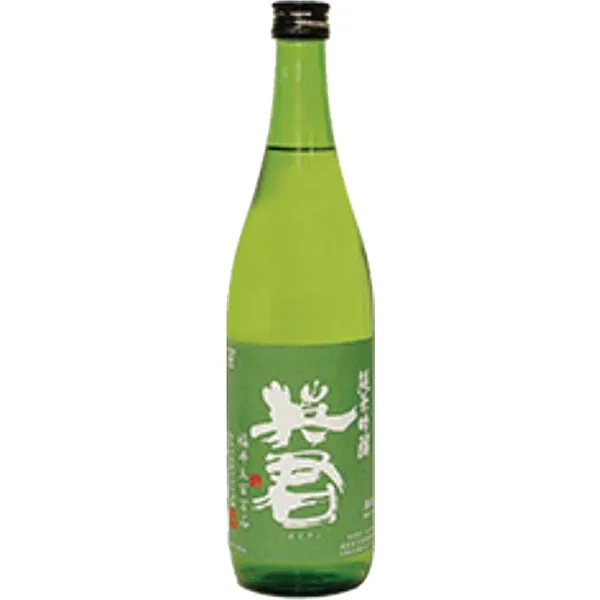
Junmai Ginjo.
Product information compiled from producer, importer and reference sources.
Fushimi kura, Fusui soft-spring water, Kyoto-exclusive Iwai rice polished to 60% — the house 'onna-zake' philosophy in a ginjo frame.
When Saito Shuzo adopted the name Eikun in 1915 to mark Emperor Taisho's ascension, the family was already two decades into building a house identity around a single, non-negotiable raw material: Iwai rice, a Kyoto-exclusive variety developed in 1933, revived
in 1988, and today sourced almost entirely by Eikun — the brewery controls roughly 40% of all Iwai grown in the prefecture, making this terroir expression structurally unreplicable outside Kyoto.
The kura sits along the Takase River in Fushimi's Momoyama Hills, drawing from Fusui, a low-iron, low-mineral soft underground spring designated among Japan's top 100 water sources — softness that suppresses harsh fermentation byproducts and yields the region's signature onna-zake texture.
Midori-No-Eikun is brewed via sandan jikomi (three-addition cold fermentation) using Kyoto-sourced yeast under the direction of a Nanbu Toji guild brewmaster, with Iwai polished to a 60% seimaibuai (ginjo grade); no distilled alcohol is added, preserving the full grain character.
What distinguishes this expression within the Eikun range is its positioning as the ginjo entry point to a house whose flagship Ichigin Junmai Daiginjo holds a 14-consecutive-year Gold Award record at the National New Sake Appraisal — the same rice, the same water, a different polish.
Drink now through near-term; serve well-chilled at 10–12°C to preserve the delicate Iwai aromatics.
Sommelier’s pick: Grilled amadai (tilefish) with sudachi · Chilled somen noodles with shiso and myoga
Loading notes…
Tasted this?
Ask us on LINE.
Ask about this item